Showing posts with label Featured. Show all posts

Saturday, November 19, 2016

Fault vs. Responsibility: Dangerous Ideas for Our Time

Review: Freedom Evolves by Daniel Dennet


Daniel Dennett is my favorite philosopher, for many reasons. One trivial reason: he writes to communicate, not obfuscate. On second thought, that's not trivial at all. His works on paper include web links, for another, and he chooses accessible illustrations to make his points. 

In the first section of Freedom Evolves, Dennett is discussing whether determinism—the idea that all outcomes/choices/decisions are set by the initial conditions, that "everything's fixed, and you can't change it," as 
Andrew Lloyd Webber's Judas complains to Jesusmeans that no one is responsible for their choices in life. 

To illustrate that 
whether or not you believe in it, determinism cannot affect guilt, Dennett tells the story of the French Foreign Legionnaire who is hated by all at the fort. Tom, knowing that he will be sent on patrol the next morning, poisons the water in his canteen. Dick, unaware of Tom's actions, empties the Legionnaire's canteen and fills it with dry sand. Harry, also unaware of the previous interventions, pokes a small hole in the canteen so its contents will trickle away as the hated fellow marches out in the morning. When the Legionnaire does march off into the desert with his adulterated canteen, and eventually perishes of the lack of potable water, which man is responsible for his death? 

Dennett has said of Freedom Evolves, "If I accomplish one thing in this book, I want to break the bad habit of putting determinism and inevitability together. Inevitability means unavoidability, and if you think about what avoiding means, then you realize that in a deterministic world there’s lots of avoidance. The capacity to avoid has been evolving for billions of years. There are very good avoiders now. There’s no conflict between being an avoider and living in a deterministic world. There’s been a veritable explosion of evitability on this planet, and it’s all independent of determinism." [Emphasis mine, Dennet quote from a 2004 interview in ReasonOnline

Exercise for the reader: Was the Legionnaire's death by dehydration avoidable?*

This review is a brief visit because this is not a book to be grasped in a quick scan; that's the main reason I like Dennett's work. I read several pages, then sit back, stunned by the light of reason. Aha! And I must go reread this article, or that book, or even turn back to reread a few pages in Dennett, in the light of that new understanding. 

"Inevitable" is a word I'm hearing a lot these days. So is "guilt," and "blame." Dennet helps put them all into perspective for me.


Liner Notes:

My involvement with Dennett pre-dates this blog by decades; Darwin's Dangerous Idea was the my first encounter. I enjoyed the philosophical exploration of this scientific revolution, with its the pro-and-con arguments from Darwin's time and ours so much that I went Dennett-hunting. Consciousness Explained was next. I found this the toughest to read, because I was also reading Stephen Pinker's How the Mind Works at the time, and many of Dennett's thoughts on Thought run counter to Pinker's. Then I got Elbow Room: The Varieties of Free Will Worth Wanting, and had to reread both of those books in the light of what I learned. All, including Freedom Evolves, are now available on Kindle.

Other writings by Dennett are available on the Web: The Bright Stuff and Two Brights Side-by-Side are on The Brights web site. Kelby Mason does a good job of boiling down the naturalistic world view in Thoughts as Tools: The Meme in Daniel Dennett's Work
Google "naturalistic" or "determinist" plus "Daniel Dennett" for more. You may also be interested in the TED Talk: Dangerous Memes.

*And the Legionnaire's "inevitable" death? There was a fourth man involved with his canteen, the only one who ultimately needed to rely on its contents, whose responsibility it was to make sure the canteen was functional, and filled with clean water. A fourth man, who might, had he thought about it, have suspected that the canteen might have been tampered with. So while his death in the desert was not his fault—I'm not blaming the victimit certainly was avoidable.
Wednesday, October 5, 2016

Ebola, Marburg and HIV-AIDS

Review: The Hot Zone by Richard Preston


A classic NCIS episode1 I watched again this week focused on an anthrax attack that took down two of the agents. Marburg deaths have been slowly increasing in Angola over the past decade and AIDS statistics on the continent continue to amplify. Whether news or fiction, virulent infections capture our attention.

The fear of plague is deeply rooted in us. The thought of a disease that wipes out one in five, one in three, or nine of ten panics us, even when the infection is happening in a remote part of the world and is nominally under control. 

How much more terrifying is the realization that there is no part of the world remote enough to contain contagion? That these agents enter our borders daily, taking up residence in our population centers, smoldering unrecognized?

The chilling tale in Preston's book is a true story, lightly fictionalized in its details, and vastly amplified in the disturbing coincidences it presents. It opens with the description of a death in western Kenya, a horrifying account of how the Marburg virus kills. We meet Charles Monet, who dies in a gruesome fashion in a hospital in Nairobi. We meet the physicians and nurses who contract the disease from him. 

More horrifying, we learn that Marburg is the least lethal filovirus of three related agents. Ebola Sudan, which surfaced in the war zone of southern Sudan, kills half of those infected. Ebola Zaire kills eight to nine of ten infected. In this context, Marburg is relatively safe, killing "only" an average of one in two infected. (Unfortunately, one current strain in Angola is much more virulent; in May 20052, for example, the WHO reported that 276 of 316 reported Marburg cases were fatal. That's 87%, beginning to rival Ebola Zaire!)

I first read Hot Zone in 1999, when bioterror was a collegium topic rather than a keyword in current events. The tale of the discovery of a fourth filovirus—Ebola Reston—in a monkey house on the outskirts of Washington, D.C. was an eye-opener for all. Preston's dry, matter-of-fact style gives the already-chilling tale a liquid-helium twist. See, he says on more than one page, we dodged the bullet this time. Next time, we might not be so lucky. The tale of the discovery, containment and disinfection of the building is interspersed with equally factual tales of the devastation wrought by Ebola and Marburg in Africa.

We are already seeing the slow spread of a much more lethal agent, HIV-AIDS3, through the human race. AIDS is more successful than Marburg or Ebola, Preston argues, because it doesn't kill so swiftly and nastily. The virus has much more time to transmit itself. As horrifying as death from AIDS can be, the early stages of the disease may actually make the victim more capable of infecting others, especially in cultures where a slender physique is considered attractive.

Even so, the plague Preston details in this book is terrifying enough, an Ebola-like infection that travels through the air like the common cold, killing 100% of the non-human primates who are exposed to it. This particular game of Russian Roulette turned out to land on an unloaded chamber for the human race.

Do we really want to keep playing?


Liner Notes

  1. It was NCIS Season 2, Episode 22, "SWAK." Tony got the anthrax-laden letter.
  2. The most recent Ebola outbreak was brought under nominal control in June of 2016.
  3. In July 2016, WHO warned of growing HIV-AIDS drug resistance.

Wednesday, July 27, 2016

A Sideways Look at God

Review: Raising the Stones by Sheri S. Tepper


A recurring theme in Sheri Tepper’s work is the urge toward God, and the ways in which that urge motivates personal and cultural choice. This theme is blatantly obvious in Raising the Stones, Tepper’s 1990 novel in the Arbai Gates sequence.
Beside the ruined temple north of Settlement One, shallow in the soil lay Birrabat Shum. Shallow he lay, with fragments of roots and crumbs of leaves on his eyes…

Like Grass, which preceded it, and which I reviewed in December 2014, this novel is set on a human-settled world which already hosts a native life-form. The Owlbrit are already declining when humans arrive, and they soon die out, leaving behind their curiously shaped temples, one of which still boasts a sparkling, stony Owlbrit “god”. Some time after this, after the human settlements are already well-established, this remnant of Owlbrit life mysteriously dies.
Shallow under the soil, near the temple at Settlement One, straight fibers ramified into feathers, and the feather into lace, which reached beneath the houses and the storage yards, beneath the settlement buildings, beneath the old temples, out toward open country in a tenuous cottony web which enclosed in its fibrous reticulation all the land from the temples north of the community to the fields in the south…

Sam Girat, the Topman of Settlement One, is a genially efficient manager, capable and brave, but he’s not prepared for what happens next. The children of Settlement One set out to restore an older temple in the Owlbrit style, not as a religious practice, but “as a way, a convenience, a kindness.” Mysteriously, they acquire a new god to raise in the restored temple. Like his predecessor, the god Birrabat is a hard fibrous mass with evanescent sparkles running along just under the surface. Perhaps this god-stone is blasphemous, but Settlement One is suddenly running very well indeed, so the adults decide to let it go.

And the children prove to be very apt missionaries for their fibrous god. Elderly settlers, near death, are recruited to “lie shallow under the soil,” to be resurrected as helpful, intrusive Hobb’s Land gods. Gradually, this beneficently quiet infection spreads to fill the world. Everywhere the god-stones are raised, people are kinder to each other, readier to help, more attuned to each other’s needs.

But the infection has been noticed—unfortunately, by the Baidee, a culture that is obsessively opposed to “letting anyone mess with their heads.” This ukase from the mysterious Prophetess1 Morgori Oestrydingh, who arrived on their world through the long-inactive Arbai Gate, has been variously interpreted to mean “don’t cut your hair,” "never accept psychiatric help," and “don’t allow anyone to change your mind.”

Sam Girat, meanwhile, has himself begun to obsess about fatherhood, a concept that is not much honored in Hobb’s Land. In seeking his own father, he has raised a stone that hides a poisonous insect. Sam becomes ensnared by the life-negating Voorstoders2, a slave-owning group on another world, Ahabar, who assert their control over the pagan Gharm. Soon it is the Gharm, one or two at a time, who lie buried “shallow beneath the soil,” ready to provide a source on Ahabar for these very helpful gods. We encounter the slimy Porsa of Ninfadel (who scarcely qualify as sapient), bubbling and offensive, like physical manifestations of the Voorstoders’ hatred.

Tepper weaves these disparate cultures together to create an astounding tapestry of choice. The Baidee speak of preserving choice, but only for themselves; they act to quarantine the infected worlds, with disastrous unintended consequences. The Voorstoders preach choice, but only once; they believe their ancient contract with the Gharm has sway on a new world, and the Gharm may not chose again. The settlers on Hobb’s Land did not chose their gods, but would not chose to let them go now. Sam Girat chose his own myths and heroes in his father’s people, and now must make a better choice.
“What will you do without your books?” she asked again, worried about him… “Write new ones, China Wilm,” he told her… “Listen to the God and write new ones.”

Whenever I read this novel, I am reminded of a quote (I believe it is Spider Robinson’s, but I apologize if I am mistaken) to the effect that “cultural imperialism means you have a tasty culture in which others would like to partake.” When politics become contentious, when people get nasty, and progress is obstructed by the Baidee and Voorstoders of our own world, I wonder if, given the choice, we would accept the Hobb’s Land gods.

I must admit, the prospect entices. When my time comes, I would volunteer to lie shallow under the soil. It would be a way, a convenience, a kindness.


Liner Notes:

  1. It took me a long while after my first reading to translate the name of the mysterious Prophetess: Marjorie Westriding, the protagonist of Grass. Many characters in the Arbai Gate novels appear in wide-spread times and places due to the transportative powers of the Gates, which play a central part in this novel. 
  2. The Voorstoders are obviously meant (in name and culture) to invoke the Afrikaaner Voortrekkers. 


Wednesday, March 23, 2016

The First Race Across America

Review: Horatio's Drive, documentary by Ken Burns

In late May 1903, Horatio Nelson Jackson, a doctor from Vermont eating in a restaurant in San Francisco with his new bride, overheard a statement made at a nearby table, to the effect that automobiles were a fad that would not last because they could not carry a man across the country. 

On a whim, Jackson laid down a $50 bet that he could drive to New York City in 3 months or less. He bought a "slightly used" Harry Winton car, hired a bicycle racer/mechanic named Sewall Crocker to come with him, and three days later, they left San Francisco on the trip. 

Jackson's wife "gave him his independence" to do this, but declined the chance to accompany him. She returned to Vermont to await his arrival and keep the rest of his family posted on his progress. 


In addition to the bet, Jackson would have competition. Unknown to him, the Packard and Oldsmobile companies had well-planned manufacturer-funded and -supplied expeditions, one starting a few weeks later from San Francisco, the other from Pasadena. These entries in the race would find advance supplies along their routes, including guaranteed petrol caches. Jackson, on the other hand, turned down the offer from the Harry Winton factory to sponsor him (made only when he had reached the Mississippi), rather than lose the independence of making his own way.

"Nel" Jackson's commentary (voiced by Tom Hanks) comes from the many letters and postcards he wrote to his wife. Reactions to the arrival of an automobile crossing the country are garnered from newspaper clips, memoirs, and the PR efforts of the other two competitors. 

The documentary by Ken Burns detailing this first trans-continental road trip is poetic and thrilling. Using clips supplied from archives, plus a realistic "Horatio Cam" view crafted by Alan Moore, the film gives us a real sense of what it might have been like to travel any distance by automobile at a time when the roads were little more than cart tracks and game trails, and there were no roadside inns, restaurants or filling stations. 

The final thrilling note comes almost as an afterword. All three cars drive the entire way in 1903; the Oldsmobile even goes the extra distance to dip its front wheels in the Atlantic (touting its trip as the "only true sea-to-sea transit of the United States"). But that same year, two bicycle mechanics in South Dakota were making history with another kind of vehicle, as Teddy Roosevelt sent the first telegraph "message sent 'round the world". 

And in October 1903, two things happened. Harry Winton drove a car from his factory to set the world record speed of 68 mph. And Horatio Nelson Jackson, behind the wheel of the same car he had driven across the country that year, was pulled over to receive a speeding ticket—for driving faster than 6 mph. 

Monday, March 14, 2016

Judicial Activism and the Power of Life and Death

Review: Decision by Allen Drury

When Pulitzer Prize winner Allen Drury wrote Decision, the US was deeply entrenched in the Cold War, the crime rate in the US was sky-rocketing, domestic terrorists wore peace signs, black berets and tie-dyed shirts, and the Supreme Court was already a center of "judicial activism," with decisions like Brown v. Board of Education and Roe v. Wade.


Drury's power does not lie in elegant phrases and interesting metaphors, but in his profound understanding of how men and women in positions of power work with each other. Drury wrote of a Supreme Court under fire from both sides of the American political spectrum; a court which, although divided inside by the passions and beliefs of its associate justices, must present a united front to reach a decision. This was a Supreme Court just coming to realize the potentials of its power:
"They can't just arbitrarily set aside one sentence and impose another!" gasped the young lady from the Des Moines Register, a new reporter at the Court. "Who says they can't?" the Washington Post responded tartly. "They're the Supreme Court of the United States, aren't they? Who's to stop them?"

Drury wrote from a conservative stance, and at the time he wrote this novel, was still willing to embody reasonable people in his more-liberal characters. So we meet new Associate Justice Taylor Barbour, coming to the court after a whirlwind confirmation by a conservative Senate, appointed by the Eisenhower-esque President for whom he had served as Secretary of Labor. Barbour has a good friend and former Yale study-partner, Moss Pomeroy, already on the court. He comes to a court that is precariously balanced between conservative and liberal. Taylor Barbour intends to embody that balance within himself, as he has all his life.

As these events transpire in Washington, DC, a shadowy figure gradually emerges into the light in Moss Pomeroy's home state, South Carolina. At first glance, Earle Holgren is a survivalist living modestly to avoid detection. But we learn of the inheritance that bankrolls his bitter fanaticism and of his plan to "make a statement" about the local nuclear power plant that has finally been completed.
...He estimated that at the time of the explosion, it would be quite dark. It would be a pretty sight against the looming mountains and trees. It would flower like a fountain. It would be a rose of death... He neared the roped-off area where uniformed guards watched impassively as a small group, some students and some leftovers like himself from an earlier age, stomped and shouted, their placards proclaiming hatred, dire prediction and fear. He stopped for a moment and watched them with contempt. What children they were... He felt no community with them any more. His methods were more direct.

What makes this novel echo so eerily in this millennium is the central emotional issue in the subsequent trials of Earle Holgren. Taylor Barbour's bright daughter Janie is visiting Sarah Pomeroy on the day of the power station opening. The explosion kills Moss Pomeroy's daughter outright, but injures Jane Barbour severely, and as the trial commences, she is in a persistent vegetative state. Barbour must set these emotional reactions aside as the suspected perpetrator comes to trial, much as Chief Justice Charles Evans Hughes advised a new colleague on the court in 1939:

Justice Douglas, you must remember one thing. At the constitutional level where we work, ninety per cent of any decision is emotional. The rational part of us supplies the reasons for supporting our predilections.  —The late Chief Justice Charles Evans Hughes, quoted by Justice William O. Douglas in his autobiography.

Drury's novel brings other characters into the fray: a huge national organization named Justice NOW! that seeks to strengthen criminal penalties, including the death penalty; as well as a curious amicus curiae filed on behalf of "CBS, et al" (the alii in that "et al" comprise all the major TV news broadcasters of the time) which seeks a judgment from the court to allow televising the execution of Earle Holgren, once his sentence has been imposed.

Allen Drury is always compelling reading, and of his novels, perhaps only his Pulitzer-winning Advise and Consent is more meaningful to current events than Decision. If your local library doesn't have them both, I'll be surprised.

Wednesday, December 23, 2015

Comedy of Manners and Time Travel

Review: To Say Nothing of the Dog by Connie Willis

Connie Willis has a unique twist on time travel: the "net" through which travelers access other times is self-correcting. Not only can one not travel to a time in which one has already lived, one cannot bring "through the net" anything that might cause an anachronistic incongruity. Crisis points are even more tightly controlled: no one can travel to Waterloo, for example, or get close to the grassy knoll. 

So when in To Say Nothing of the Dog, Ned Henry is dragooned by Lady Shrapnell into traveling back in time to research the "bishop's bird stump" at Coventry Cathedral just before it was destroyed in the Blitz, he is baffled by his inability to find it. Back and forth he goes, getting more and more time-lagged as he visits jumble sales ("maybe it was sold as a white elephant"), the bombed-out smoking remains of the cathedral ("That's a cat! I thought it would be the size of a wolf, somehow...") and the putative peace and quiet of the Victorian age. 

The last visit is necessary because somehow, a cat (extinct in 2067) has been brought forward through the net. Ned is volunteered to take it back, and somehow get Lady Shrapnell's great-great-great-grandmother to visit Coventry so that she will write about the bishop's bird stump in her diary, because, so Lady Shrapnell will be inspired to rebuild Coventry Cathedral and restore the bishop's bird stump to its rightful place in history and the hearts of Englishmen. 

Mr. Dunworthy and Finch, whom we met in The Doomsday Book, are back. They want to make sure the net stays open and history happens. Lady Shrapnell is determined to get the cathedral rebuilt on time, with the bishop's bird stump, despite the laws of physics—besides, "laws are made to be broken." Professor Peddick wants to defeat his rival Overforce with his ideas of a "Grand Design" that "shapes our ends, rough-hew them how we may." Verity Kindle wants to make sure the cat she rescued isn't drowned, "incongruity or not." Ned just wants to get a full night's sleep. 

What transpires out of this knot of competing ambitions is a wonderful comedy of manners, with modern perspective applied with liberal amounts of humor and allusion. History is used as a sustaining structure seen by the participants in the way we note limbs, leaves and stems on a tree: as a confusing mass dimly perceived in detail, and really understood only as a gestalt "tree." (Even while Lady Shrapnell reminds us that "God is in the details," we see clearly that using computer models to guide our choices is a poor strategy, because "that's the problem with models—they only include the details people think are relevant...".)


It is also an Agatha-Christie-style mystery whose deftly-handled clues span 700 years of history. At least. The wonder of Willis' writing is that the novel succeeds brilliantly on every level, and rewards re-reading with new insights each time.

I recommend it highly. 

Tuesday, September 29, 2015

Meaning and Consciousness in a Real World

Review: Anathem by Neal Stephenson


Some novelists give us popcorn: snacks of characters interacting in episodes of tasty enjoyment, to be read and then forgotten three hours later. I like popcornbut whether it is a pricey gourmet treat with truffle oil or capers and cheddar, or an almost-scorched microwave bag of munchies, popcorn is not memorable. You consume and move on. 

Other authors provide a solid meal, with two sides and a biscuit. Realistic characters, impressive plot twists, inventive conflicts and resolutions leave you with plenty to digest. Still, by time you open the covers of the next book, you've digested what is enjoyable and nutritious from this one, and you're hungry again.

Neal Stephenson is more like the world-class chef who takes everyday ingredients and whips them into a life-changingly succulent repast. I have yet to read a Stephenson novel once and know how I feel about it. I must ruminate. I must re-read. 

Anathem is no different. I can scarcely believe this rich meal is available for less than $2 as a Kindle novel. The novel begins with a compelling look at a cloistered culture, which seems religious until you realize that here it is science and philosophy that must be protected from the ordinary world—the extramuros world outside the cloister walls. 

The denizens of the intramuros cloister, the concent, are kept focused on their studies. They forego possessions, limiting themselves to a Bolt of newmatter cloth (which can be reconfigured in size, texture, and other characteristics of fabric), a newmatter Chord (a rope or cord of similar diversity), and a newmatter Sphere. These three possessions serve as clothing, bedding, pack and tools for all sorts of purposes. They also provide identification of the owner as an avout (whether male fraa or female suur): someone who lives the cloistered life.

Residing in their "Tenner" cloister, the four fraas Erasmus, Lio, Jesry and Arbilast obey the Discipline while they eagerly await the day the gates will open to allow them to interact with the "Extras" for ten days. For these four, this Apert holiday happens once every ten years. The "One-Offs" in the Unitarian cloister of their concent have Apert once a year, while the "Hundreders" will not exit until ten years from now for their once-a-century mingle with the world outside the walls and the fraas (and suurs) from other cloisters. None of them, Extras, One-Offs, Tenners or Hundreders, can imagine the mindset of the "Millennarians" who live cloistered for a thousand years before they emerge.

Just this one detail might provide a lesser writer with a complete novel. In Anathem, it is the initial baseline stroke of paint on a vast canvas that includes philosophical colleges, cultural upheavals, alien visitors, vast works of engineering and gadgetry, and a central theme: What does it mean to be conscious in the world? How do our minds perceive reality, and how do they affect reality?

Philosophers from Thales through Kant and Gödel to Husserl have thought about these questions and written or spoken about their attempts to unravel meaning from them. Stephenson's novel takes these snooze-worthy tomes and distills them into an adventure, complete with complex characters whose actions we can cheer or hiss (sometimes both for the same person).

Anathem is a challenging read in the most delightful sense. I noticed as I re-read it on Kindle that every few pages, I was prompted to visit Wikipedia to expand on the details of the story. The Teglon, a crucial mathematical tiling problem in the novel, led me to Penrose prototiles and Wang dominoes. The concept of Cnoös as a personalization of the interaction of thought and reality led me to Husserl's theory of intentionality, and onward to noesis (nuos) and the Gnostic philosophies.

I know this is not the last time I will read and enjoy (and spend quite a while digesting) this complex tale. Like all great works of literature, Stephenson rewards the devoted fan with new vistas of thought each time you enter his world.

Monday, September 21, 2015

Odds Are Against Us

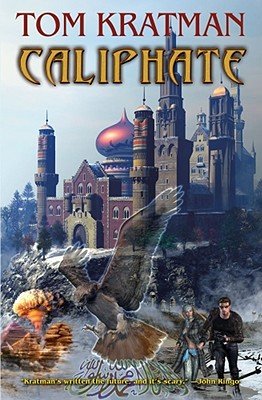
Review: Caliphate by Tom Kratman


Those who are concerned about the flood of "Syrian" refugees being predominantly single and male may be missing the point of the danger they represent. 

Kratman's novel Caliphate explores the future of Europe as a Muslin-dominated society, its Christian population relegated to second-class citizens. Multiple factors are the cause: different reproduction rates of the two groups, failure of Muslim immigrants to assimilate into the society they have joined, and the basic philosophy of Islam as antithetical to democracy. (In the afterword, Kratman adds another: the widespread choice of Christian Europeans for present-day benefits over the welfare of their grandchildren.)

You may debate Kratman's conclusions, but the information that triggers his story is incontestable. When I was a youngster, a similar tale by Cyril Kornbluth was titled Marching Morons. Whether the out-producing parents are Muslim or moron, the result is the same: you get more of whichever you breed more of. Eventually, moron or Muslim values and goals prevail, and society changes irrevocably.

I first read Caliphate in 2009, and enjoyed it more then as military sci-fi than as societal commentary. The story is gripping: two Christian children are removed from their parents in payment of the tax assessed on non-Muslim citizens in Germany. The boy becomes a janissary, "reverts" to Islam—and then becomes a rebel secret Christian again after he is forced to crucify a priest. The girl becomes a slave, first as a companion for a favored Muslim daughter, then as a sex slave in a brothel. Unlike her brother, the girl is allowed—even encouraged—to continue to display her Christian faith, as a titillation to her rapists.

Kratman avoids the "Evil Nazis/Good Allies" trap. The nastiest characters in the story are Christian (or at least non-Muslim) scientists eager to produce a biological weapon in exchange for money and "objects of lust." Slavery of the obvious kind is practiced by Christians from South Africa in support of the native slavery in the Muslim world. Chinese and Americans opposed to Islam use "chipped agents"—humans enslaved by control circuits built into them—to infiltrate the Islamic countries.

The action reads like a mashup of Spartacus, Where Eagles Dare, Andromeda Strain, and The Giver. But however you read the novel, you are left with the queasy realization that, while it may be fiction, it is far too close to real-world events to sleep easy at night.

Friday, September 11, 2015

Diving Into the Front Range

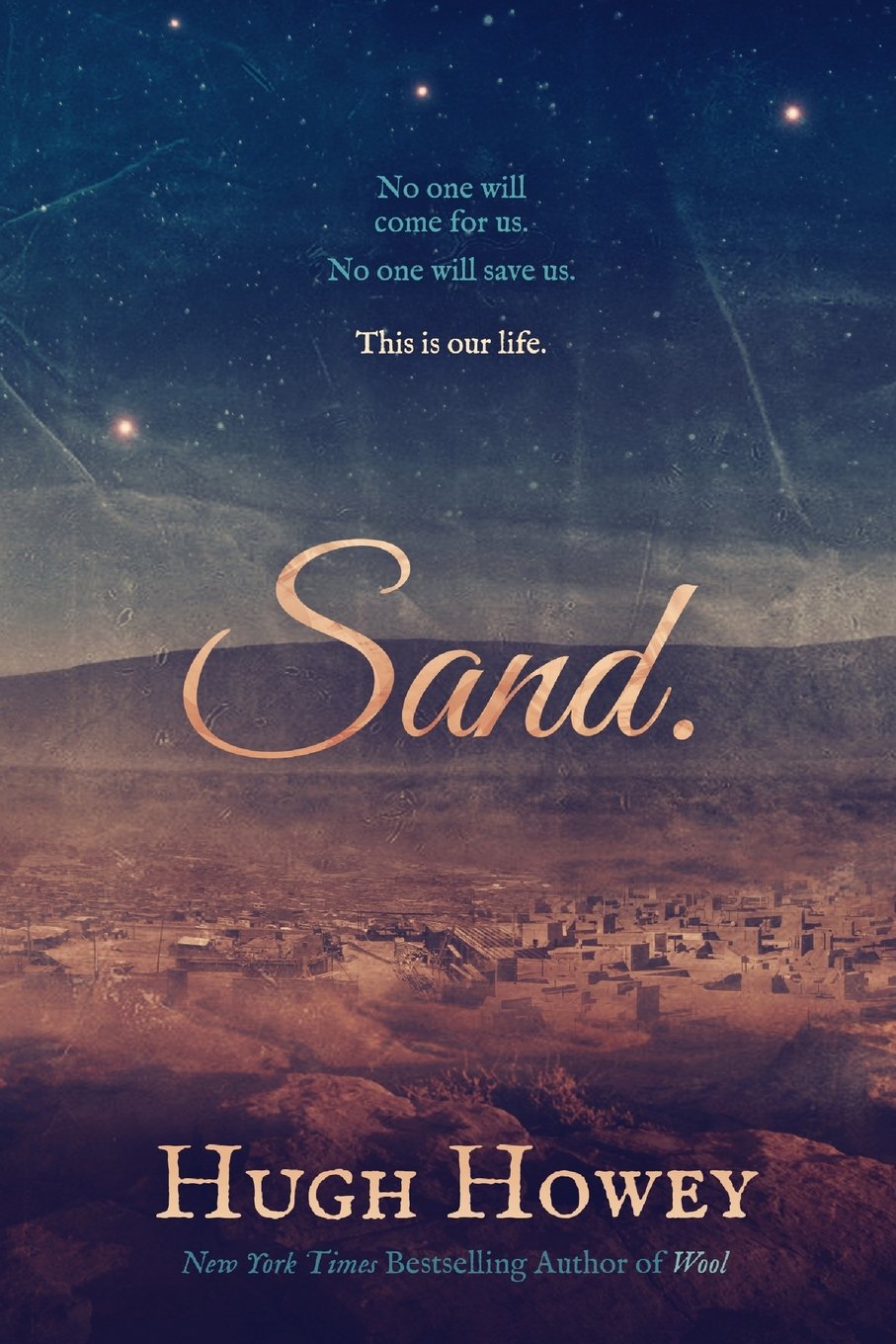
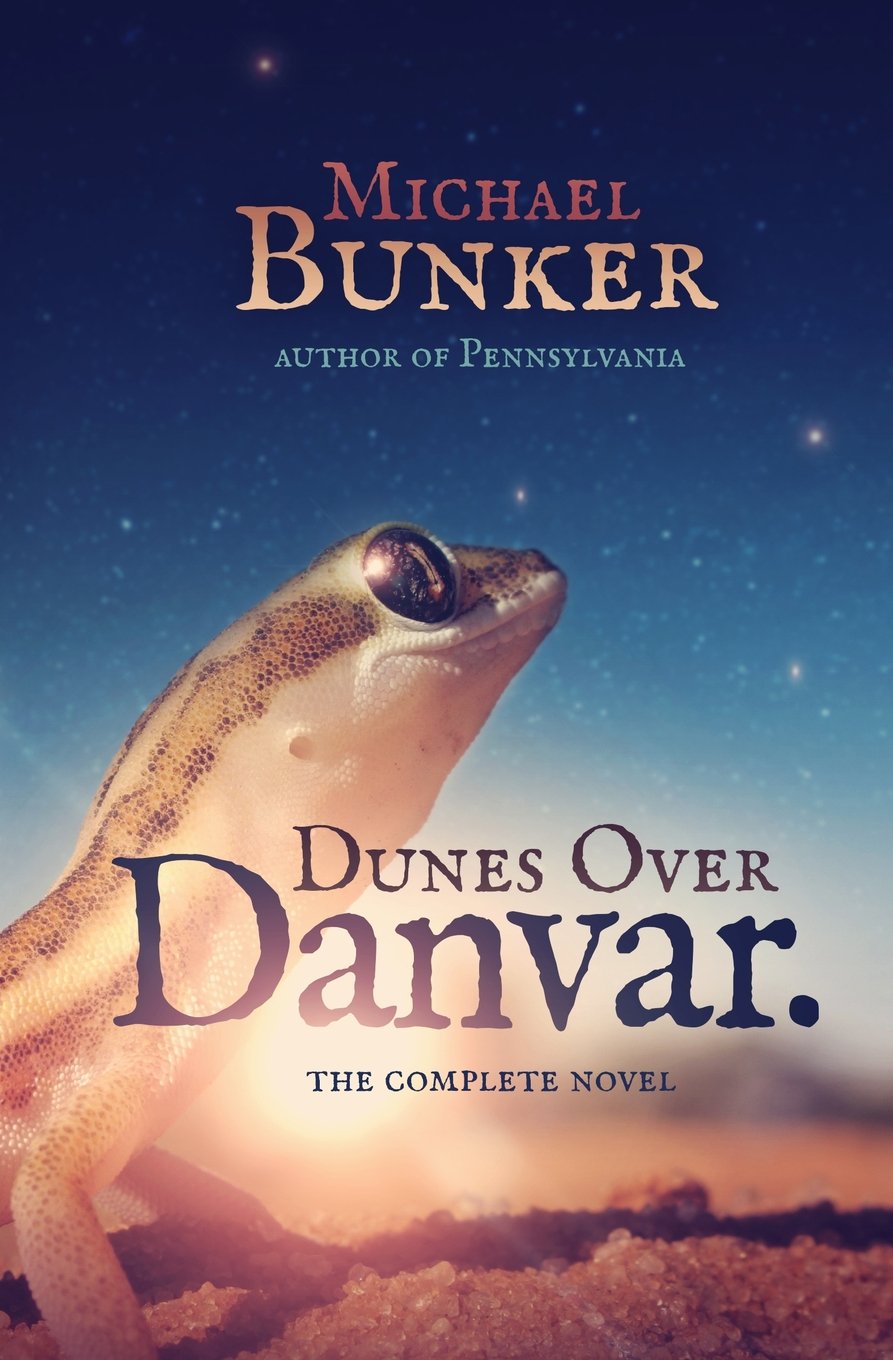
Review: Sand Omnibus by Hugh Howey; Dunes Over Danvar by Michael Bunker


Hugh Howey's Wool Omnibus was the last trade paperback I bought before I bought a Kindle several years ago. I had planned to read it on a one-week business trip that ballooned to five weeks, necessitating the eBook reader purchase. (No way I could pack all the books I'd read in five weeks away from home into a single suitcase.)

Instead of adorning my mind, it lay on an end-table, unread from then until now. 

It took a recent acquaintance, Michael Bunker, to reawaken my interest in Howey. Looking for something else after Pennsylvania (reviewed last month as Unsettling Future Settlers), I found Bunker's novella written for the world of Sand, and decided I needed to read Sand Omnibus first.

You know how the Inuit, who live in a world defined by snow and ice, are said to have a thousand words for snow? The natives of Springston and Low-Pub live in a world of sand. They have a different term for each of sand's behaviors and habits; scoop and sift and sag and spill, rush and cake and stonesand, gunk and matte and grit

Sand is onmipresent in their lives; it defines their status. Lords live on the wall that holds back its westward march before the never-ending wind, while in Shantytown shacks are built on layers of sunken structures that have vanished into the ever-deeper sand. Sissyfoots carry a quota of buckets each day to keep the well clear and pay for their schooling. (The name is an obvious echo of "Sisyphus," a  signal of the unending nature of their task.) Between Springston and its Shantytown lies the Honey Hole, a brothel/bar where beer is cheaper than water. After all, beer can be brewed from water that isn't fit to drink.

Howey's background in yachting can be clearly seen in his treatment of the sand as a kind of solid ocean. Pirates and brigands and working people alike sail across its expanse, and the wealth of its waves is harvested by divers. The sand-divers don special suits that let them carry their air to depths beneath the dunes, down to the buried sandscrapers of an ancient city to scavenge what they can.

The waves of sand, the infinite wind blowing always east-to-west, the dry, dust-laden sky, the line of stone mountains to the west, and the three towns in a line along the mountains called up my memories of the geology west of Denver. Specifically, I remembered Red Rocks Amphitheater and the Flatirons farther north. The hundreds of feet of oxidized sand that made these iconic formations had piled up at the feet of the ancestral Rockies, blown on a dry wind that carried them endlessly west to be tumbled out of the sky by the mountain barrier.

I knew the fabled city the sand-divers were seeking, once a mile high, now buried "a mile deep under the sand." How it began to blow was unimportant. With the fluid waves of sand, with the divers and sarfer-borne pirates, with the sand-laden vocabulary, Howey gets the picture just right. The world of Sand is still a human world, and people are still people.


Dunes Over Danver

This novella-length piece by Michael Bunker takes the world of Sand in a slightly different direction than the original omnibus. We meet Poet, a man who values himself highly, and Peary, a sand-diver who rescues the nearly-dead Poet from the sands. Poet is a duplicitous user of "lesser" folks like sand-divers, and we spend the entire story wondering when and how he will next trick those around him to his advantage.

Bunker expertly uses the sand and the predators who sail over it, and the penultimate catastrophe from Howey's novel, to tell a story of courage and redemption, a neat counterpart to the tale of survival and human triumph in Sand

In looking back, I am surprised that I did not think once of an iconic older tale of sand and the culture that sprang from it, Dune. I believe this is because the themes of Herbert's novel are so distant from those of Sand and Dunes Over Danvar. Not even the final event in both stories brought Dune to mind—a clear indication of the solid world-building Howey accomplished, and the seamless way Bunker stayed in that world with this novella.

Tuesday, August 25, 2015

Hard Enough When the Sun Shone

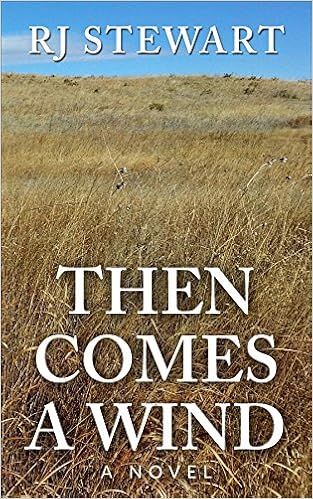
Review: Then Comes a Wind by R.J. Stewart

I recall being terrified while reading Laura Ingalls Wilder's account of a prairie blizzard in Little House on the Prairie. I was reluctant to go outside for a few days, until Mom pointed out that a blizzard, even in our own prairie town, was unlikely in the month of August. 

The people of Little House, however, never struck me as appreciably different than the modern folks around me. Not so the "entrymen" of Nebraska in R.J. Stewart's tale. The homesteaders who file their entries on the government land and then build their sod homes on the unbroken grassland have a different quality than I observe in modern life. 

Curiously, it is the "good" folks who have settled the town of Rackett and the grasslands around it who seem otherworldly in their stoicism and acceptance of fate. Their opponents, typified by a disgustingly perverse doctor, or the local rancher who has been accustomed to running cattle on the prairie unopposed by fences or homesteads, are all too familiar to my modern eye.
He lorded his stature over his hired hands, the stronger and more independent of them simply quiet and acquiescent because they needed the work, and the weaker a band of noisy yes-men.

Will Sutton, the entryman farmer who has brought his wife and their two daughters to Nebraska and settled them into a "soddie" on their new land, expects nothing more from life than hard work and chancy weather, yet he has time to muse on the life and death that surround him on the prairie. He makes choices that eventually entail great personal costs for himself, his wife and his daughters, but Will does not complain. In devastating loss both Will and his older daughter Almy perplex my modern expectations; they simply bear down and work harder.

The townspeople of Rackett seem slightly more modern than the entrymen homesteadersat least until they form a court to judge one of their citizens, not with a judge presiding, but with a council whose members are the very definition of "prejudice."

The blizzard that provides the tipping point of the story was a realistic event, a rare occurrence but one which the settlers had seen or heard of before.
Old timers recalled the blizzards that had come before. That one in '73 killed the schoolchildren, but it was in winter. Noyer thinkin' '88. Seventy-three was in spring! Hell, that was clear into April. And it came on like this one here so fast that the children were trapped on their way home from school. Yep, that's it.

If I had encountered Stewart's blizzard at the same age as I did Wilder's, I might not have been so fearful of one, principally because neither Will nor his women are frightened by the storm. Storms are just what happen on the prairie, and the Suttons' approach to life is to cope with what happens. There are darker turns to this story, though, that make it inappropriate for very young readers. 

By turns thrilling, engaging and revealing of the settler's life and somewhat alien mind, Then Comes a Wind is a marvelous debut novel. I look forward to more from Stewart's pen.


Saturday, July 11, 2015

Joy In the Midst of Trauma

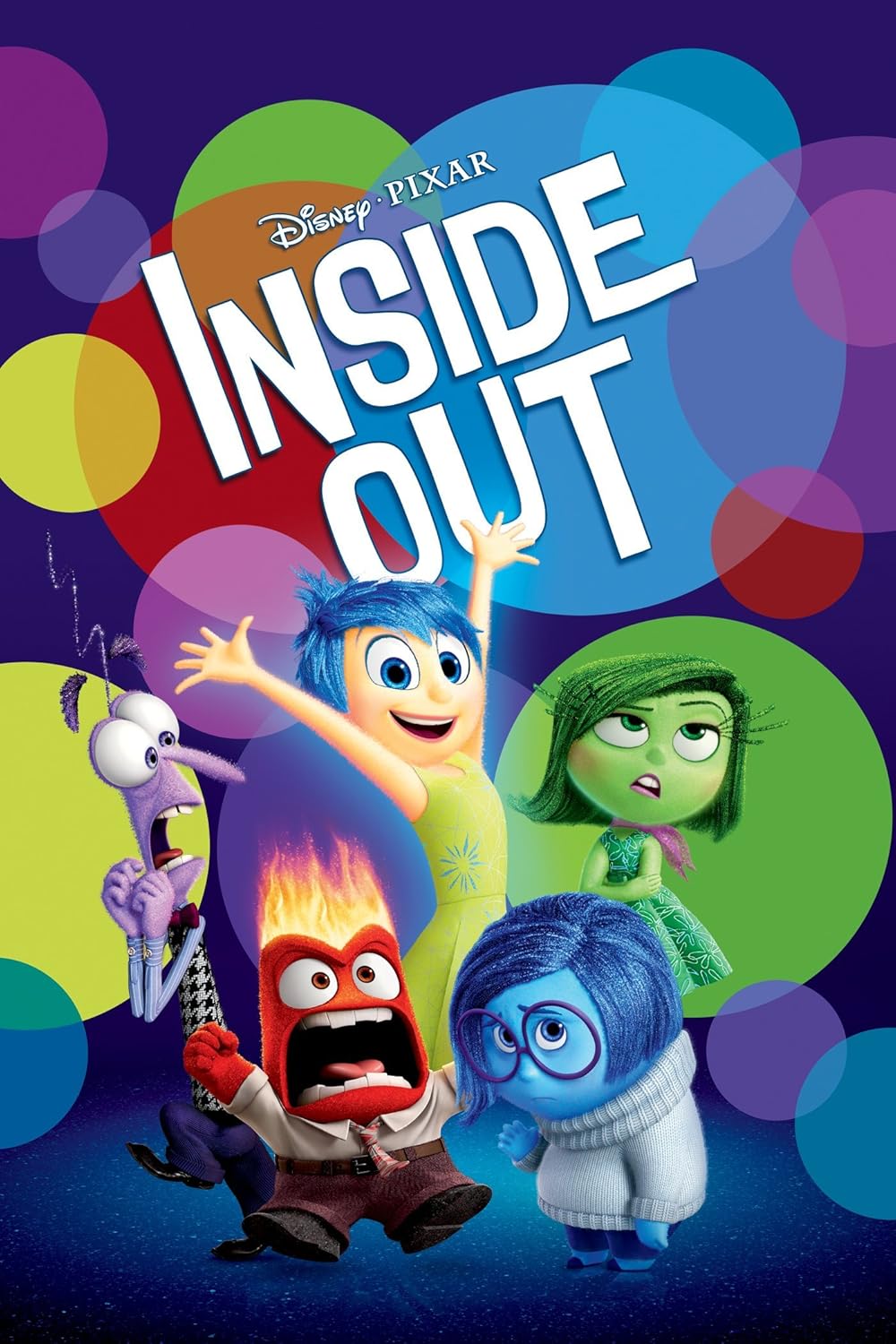
Review: Inside Out (Pixar)


If you are schmaltzphobic, you should avoid this movie at all costs! I say that right at the start, because the whole purpose, theme, and raison d'être of Inside Out is to put the audience in touch with their emotions, in the most direct, tear-jerking and belly-laugh provoking roller-coaster way they can. And, boy! can the Pixar writers wring emotions!

I had wanted to see this film ever since I saw it reviewed in the Wall Street Journal. When was the last time you saw a review of an animated movie in WSJ? I sensed there might be something different about this one, and I wanted to experience it directly. 

Oh, but not in a theater full of screaming kids or snarking teenagers, no way. I might have waited to catch it on Prime, or cable-on-demand, except for Hollie Fortkamp.

Hollie found me in my writing corner at Chick-fil-A, and literally twisted my arm to come along with a small group to a mid-week late-afternoon matinee. It helped that Hollie had been before at a similar time of day, and could reassure me the theater hadn't been chock-a-block with underage patrons when she went.

I'm glad she did persuade me! I knew this was a good decision as soon as the opening Pixar short, Lava, played. In three minutes, this short had me first awed at scenery and smiling at the conception of a singing volcano, then sniffing back tears, and finally, openly weeping. Good thing I had a full packet of Kleenex. And this was just the leader; the main attraction would help empty that packet!

Inside Out tells the story of an 11-year-old only child, Riley, whose family moves her from Minnesota to San Francisco. It centers around five of Riley's core emotions: Joy, Sadness, Fear, Disgust and Anger, with Joy as her premier emotion. At first, as the emotional range of a baby, toddler, or even pre-teen would be, all of these emotion characters are one-note simple, but then they mature, developing depth and range as Riley experiences this life-changing shift. 

When an adult character's controlling emotion committee is shown, the same five characters are present in "grown-up" form. We meet Riley's Mom's Sadness, Joy, Fear, Disgust, and Anger. For Mom, Sadness seems to be central emotion—yet, as we learn later in the film, this seems to be more akin to nostalgia and regret than anything else. Riley's Dad has a committee led by Anger and Fear, adult-muted into Assertiveness and Concern—still, the same five are present. 

The movie is visually lush, with layers of text and subtext even in the illustrated backgrounds of scenes. For example, the subconscious is drawn as a subterranean dungeon in which Riley's darkest fears are incarcerated. Riley's memories of Minnesota are full-color and full of sunshine, but in her current experience of San Francisco, grays and fog predominate.

The angst and regret are never allowed to take over. In the context of the film, Joy still holds sway, even when she is lost in the memory stacks. At the climax of the story, when Riley's personality is integrated and her emotions "operate like a team," we are given a perfect visual for it. 

At least I think I saw it. I was pretty teary by then.


Liner Notes:


  • The State Farm commercial on TV that shows Riley's Anger bumping Fear out of the way to make the hockey goal must be an extra scene from the cutting-room floor. I got a bigger kick out of the passing comment of Disgust in the similar scene from the movie: "Let's not get all smelly out there this time, okay?"
  • There is much going on at adult level that will pass right over the little viewers' heads. However, there is one sad scene that may leave small children weeping. We had kiddie-voices piping up all around us in the theater, "But Mom! What happened to Bing-Bong? He'll be okay, right?" 
  • Don't leave without watching the closing credits. Many of the other bit-characters have their emotional committees revealed in flash animations as the credits scroll by.
  • I don't know if anyone else was disturbed by the totally-brown eyes of both Riley's parents gazing into her bright blue ones. Interesting choice by the illustrators.
  • I got a chuckle at the swipe-right and swipe-left motions for the memory globes to run and reverse the display.

Wednesday, June 10, 2015

A Light Chinese Meal

Review: Balzac and the Little Chinese Seamstress by Dai Sijie


The princess of Phoenix mountain wore pale pink canvas shoes, which were both sturdy and supple and through which you could see her flexing her toes as she worked the treadle of her sewing machine. There was nothing ordinary about the cheap, homemade shoes, and yet, in a place where nearly everyone went barefoot, they caught the eye, seeming delicate and sophisticated…

Thus Dai Sijie introduces the pivot of the eternal triangle in Balzac and the Little Chinese Seamstress. Her sewing machine (which the narrator breathlessly informs us, was Made in Shanghai) is equal to her capable feet in their pink shoes in attracting Luo and the narrator, two young men who occupy the other points of the triangle.

References to shoes and feet are everywhere in the book. Luo convinces the little seamstress in their first meeting to remove a shoe, revealing that, like his, her second toe is longer than the first. At one point, the seamstress suddenly changes her footwear from pink canvas to tennis shoes, “white as chalk.” A suitcase which turns out to contain the treasure of banned books is described as “soft, supple, and smooth to the touch… [making] me think at once of a lady’s doeskin shoe.

Luo and his narrator friend have been exiled from the world of books and education which they have just begun to taste. Maoist reeducation sent thousands of high school graduates and university students to live in peasant villages, forbidding them books other than the little red book of Mao’s sayings. As they struggle to adapt to the bleak life of work, they yearn for the freer life of the imagination.

The young intellectuals are not the only Chinese with these yearnings. When the village headmaster discovers Luo’s ability to relate a story, he decides to send the two each month to the cinema, so that they can bring the stories back and perform them for the village. The narrator can play the violin, and even convinces revolutionary inspectors that Mozart was a fine revolutionary thinker, suitable for village ears.

But eventually, in their rivalry for the little seamstress, they woo her with stories gleaned from the pages of Balzac and Dumas. They believe they are seducing the seamstress to accept one of them. The poignant result of this effort is both delightful and unexpected.

At 184 pages, the book is a novella in length, entirely suitable for a long evening by the fire, or to while away time on a plane or train trip. I recommend it to anyone who is horrified at the idea of exile in a desert of no books.

Saturday, May 23, 2015

Art Gracing Science in 24 Essays

Review: Dance for Two by Alan Lightman


Essays are an esoteric art form, and as E. B. White remarked, the most egotistic. Partaking of poetry, prose and process, they often capture only the fringe audience for each. Alan Lightman is one of the art’s most graceful modern performers, bringing literary and scientific concepts into harmony. In Dance for Two, twenty-four of his best essays are collected.

"A Day in December" chronicles an otherwise ordinary day in 1979 when Alan Guth, a 32-year-old physicist, discovered mathematical proof of the Big Bang. "Time for the Stars" uses Halley’s Comet, Newton and Galileo, Darwin and the Cro-Magnon cave paintings to argue for the value of investment in pure science research. "Is the Earth Round or Flat?" challenges us in a direct, illuminating—and entertaining—way to verify for ourselves even the most basic premises.

"If Birds Can Fly, Why, Oh Why, Can’t I?" evokes man’s yearnings for flight to explain the mechanics involved in the flight of birds. 
In many ways, human beings circumvented the difficulties of aviation long ago, at Kitty Hawk… But in our dreams, when we soar into the air to escape danger, or to simply bask in our strength, we fly as birds, self-propelled. It may be awkward, to imagine ourselves installed with one hundred feet of wing, but that’s what Nature asks, to fly like a bird.

Readers may have encountered Lightman’s work in the “science fiction” novel Einstein’s Dreams. This book is less a story with a discernible plot than a series of essays centered on Einstein’s explorations of the nature of time. Lightman is uniquely equipped to illuminate Einstein’s musings—he is professor of both physics and writing at MIT.

My favorite essay in Dance for Two is the first in the book. "Pas de Deux" beautifully describes the delicate interaction of forces between gravity and the trained muscles of a ballet dancer:

In soft blue light, the ballerina glides across the stage and takes to the air, her toes touching Earth imperceptibly. Sauté, batterie, sauté. Legs cross and flutter, arms unfold into an open arch. The ballerina knows the easiest way to ruin a good performance is to think too much about what her body is doing…
  While she dances, Nature is playing its own part, flawlessly and with absolute reliability. On pointe, the ballerina’s weight is precisely balanced by the push of floor against shoe, the molecules in contact squeezed just the right amount to counter force with equal force. Gravity balanced with electricity…
 For an ending, the ballerina does a demi plié and jumps two feet into the air. The Earth, balancing her momentum, responds with its own sauté and changes orbit by one ten-trillionth of an atom’s width. No one notices, but it is exactly right.

Tuesday, May 19, 2015

What Book Today Is What Atlas Shrugged Was Then?

Retrospective: Atlas Shrugged by Ayn Rand

First published in 1957, Atlas Shrugged is fiction that still provokes reflexive love/hate responses. Like Dune, Ayn Rand’s magnum opus influenced a large segment of the populace. Like Catch 22, it hit some nerves. Like Stranger In a Strange Land, even its flaws resonated with readers of its day.

Rather than go on about the book’s length (the 1996 anniversary edition is still over 1000 pages) or its improperly-perceived “right-leaning philosophy”, why not try to think of an equally-seminal work that is currently hot and fresh?

What book will we be picking apart 25, 50, 75 years from now that is IT today?

Atlas Shrugged followed Ayn Rand’s first novel by 20 years, and came on the heels of two decades of seeing her newly-adopted country, the US, become more like the Soviet Russia she had fled. Remember, this was the late 1950s, and McCarthyism was the political correctness of the day.

I swear by my life and my love of it that I will never live for the sake of another man, nor ask another man to live for mine. –John Galt, from Atlas Shrugged

That’s the philosophy Rand takes 1000+ pages to embody. I defy anyone to place that in either a right or a left corner.

John Galt and the others who “shrug” are creators, thinkers, swimmers against the collectivist, censoring, small-minded stream. It does not take too narrow a squint to see them recast as the bloggers of their day.

Do I feel that Atlas Shrugged is perfect, or even the best book I ever read? No, far from it. The novel is deeply flawed as a narrative, chiefly by Rand’s urge to pontificate and preach. Her characters are sometimes wooden, and she has little sympathy for the good but peripheral actors in the tale. And Rand seemed constitutionally unable to concede a scrap of goodness to any character she had assigned to the “evil” side of the ledger.

But like Stranger In a Strange Land, Dune and Catch 22, this book transcends its shortcomings by the sheer power of its message. That’s why in 1991, 35 years after its first release, Atlas Shrugged could be cited as the “second most influential book for Americans today” after the Bible (according to a joint survey conducted by the Library of Congress and the Book of the Month Club).

What book are we discussing today that will fill this role in 2050?