Monday, June 29, 2015

This Is Your Brain on Beer

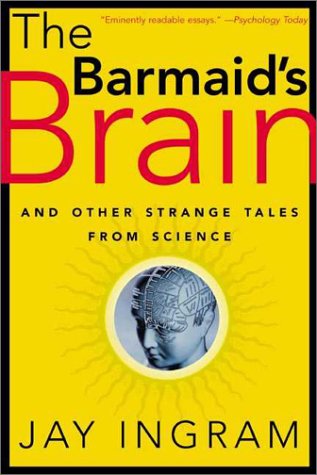
Review: The Barmaid’s Brain, And Other Strange Tales from Science by Jay Ingram


Jay Ingram has collected in The Barmaid’s Brain 21 essays concerning human behavior, curiosities of life, science and history, natural battles and how things work. Each of them approaches a topic with the same left-field perspective. 

For example, the barmaid of the title is able to remember 95% to 100% of a 15-drink order given to her out of sequence in the noisy environment of a busy bar. The essay The Barmaid’s Brain explores not only that we evidence these feats of memory, but why and how.

The Invention of Thievery looks at the way a learned behaviorin this case, birds removing foil caps from milk bottles to get at the cream—can spread through a population. The Vinland Map examines how we decide that a contended datum has been proved, especially when there is a strong belief structure in place to dispute it. An Uneasy Bargain probes the relationship between gene mapping (knowledge gathering) and genetic engineering, and asks the potent question, “Once we know that a mutant gene is the cause of a disease or condition, do we have a responsibility to eliminate it?"

The essays are written in an easy, approachable style, with a minimum of jargon, statistics or abstruse footnotes. If they lack some of the weight they might otherwise bring to some very weighty subjects, at least they may lead you to do the research on the questions you find intriguing. This is a great bathroom or coffee-table book—pick it up, read a few pages, put it down.

Even if one day scientists completely understand the wiring and chemistry of the human brain, it will still be difficult not to be amazed by an organ that can memorize the lyrics to all the Spice Girls’ songs after one hearing or conjure up the equations describing the origin of the universe. Even more amazing is that the same brain can do both…

If you enjoy reading The Barmaid’s Brain, you’ll want the second book in Ingram’s series, The Velocity of Honey. Sadly, neither is available for Kindle.


Friday, June 26, 2015

Clay (Carrot Ranch Flash Fiction Challenge)

John Everett Millais: The Widow's Mite (1870)
I read the Carrot Ranch Flash Fiction Challenge yesterday, and began to set up the blog post for a lighthearted piece about the minerals in a pinch of dirt:

June 24, 2015 prompt: In 99 words (no more, no less) write a story about dirt. You can go with the idea of digging into the dirt as an analogy, or you can be realistic. Maybe a character has “the dirt” on someone or another has “dirty laundry” to hide. Dirt can be rich soil or barren. Get dirty, but not shockingly dirty!

Suddenly, the power goes off. Hottest day of the summer so far, I think, so of course we get brownouts from the surge of air-conditioning. I pick up my Kindle (fortunately, fully-charged) and go off into the sunny living room to read until the power comes back on.

3 PM: I get a call from the power company informing me that a crew is "in my area" addressing the problem, and they expect to restore service by 6 PM.

6:15 PM: Still no power. I call PG&E, and discover that an update from 20 minutes before has moved the restoration of power out to 8 PM. Annoyingly, they tell me I can go online to get updates from their Web site. Dude! If I could go online, I wouldn't be calling about a power outage!

8:15 PM: I feed the cats early so I can move to the still-sunlit bedroom and keep reading. Call PG&E and find that again I've missed the update; restoration is now predicted for 10 PM.

9:25 PM: Just about ready to put down the Kindle for sleep when the lights come on. I pull out of bed and trudge around shutting off what had been switched on when the power went out. With gratitude I turn on the bedroom fan and lie back down.

3:25 AM: Wake sweating from a nightmare about watching a grieving spouse at graveside. As I order my thoughts to calm my pulse so I can get back to sleep, I realize my "dirt" flash will not be lighthearted at all. No, indeed.

_______________________________


Clay

Fingernails dig into my palm around the handful of dirt. All except the grave is hazed with tears, but the box below me is sharp-focused despite them.

Sam! Even so many years is too few! I knew I would lose you. Each stroke brought a clearer recognition of the coming loss, but even so, I never really believed I would remain, bereft, and you would perish.

I still see you, immobile beneath the closed lid. A calm voice says, "That is not Sam, it is only clay, Mamaw." A gentle hand unclasps my fingers to let the dirt fall.

Thursday, June 18, 2015

Spaghetti Toast (Carrot Ranch Flash Fiction Challenge)

Growing up in a house full of younger siblings gave me a useful perspective on the value of family routines. Sometimes called "family jokes" or more formally, "in-group rituals", these are the touchstones of behavior that collectively signal "we belong together." 

On a larger scale, such routines pin communities together, and help to bar outsiders from the full life of the group. Think of the complex gestures and genuflections that dot the Catholic Mass. Watch a couple of homies greet each other on the street: no narc can hope to imitate the precise body and verbal language to achieve that street cred. Observe the stylized way in which a formal dinner is served and eaten. In-group and out-group are both identified by these behaviors.

Many children's rhymes may have started as this same kind of validating routine: I belong here. Kids pick them up so easily, remember them all their lives. My ten younger brothers and sisters and I had one that was singular to our family. Every summer, my Dad would pump up the enormous inner-tube he stored in the garage, and drop it in the front yard for bouncing games. The eleven of us had a Macarena-like complex series of knee-drops and sits, belly-flops and hand-claps that I could probably repeat today, fifty-plus years later.

All the while we chanted: Ah-SOO-dumm bahk-ah-wah-dee-onn, KEH-d'm kehdee. Ahh! Ahh! Ahh! Ahh! AH-soo-dumm bahk-ah-WAH-dee-onn, kehd'm kehdee. It was an African round we older kids had learned years before at summer camp, or possibly at the nuns' Summer Catechism School. As other non-family kids came by and wanted to join in, we would drop the ritual song and bounce pattern, welcoming them to the game without quite letting them in on the secret.

Thinking of this, and prompted by the Carrot Ranch Flash Fiction Challenge this week,

June 17, 2015 prompt: In 99 words (no more, no less) write a story that involves a children’s game or rhyme. You can create something new or go with something traditional. You can write with a twist, humor, menace or glee. Hop, skip or jump wherever the prompt leads you.

I remembered another ritual that occurred whenever my Dad made Spaghetti sauce. Dad's sauce was a complex brew containing meat, tomatoes, green olives with pimiento, and a generous dollop of Chianti. My parents had their serving of spaghetti—sauce liberally topped with Parmesan cheese—with a side of Chianti as well. For us kids, it was grape juice in place of wine.

______________________________________


Spaghetti Toast


The once-full platter of spaghetti, glistening strands coated and over-topped with Dad's wonderful sauce, lay abandoned in the middle of the table as we said grace. 

The bottle of juice passed, and each of us had a full plate and glass in front of us. The Parmesan cheese shaker went around the table, and we sprinkled our spaghetti with that pungent dust.

Mom and Dad began eating, but we youngsters waited to begin. First, we must toast. We raised our baby-wine together three times.

To the King!
To the Queen!
To the stinky-feet Cheese!

Only then would we eat.

Wednesday, June 17, 2015

B-Girls and South Beach Lawyers

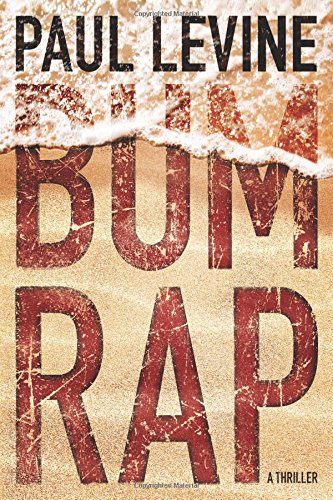
Review: Bum Rap by Paul Levine


Even at the height of its popularity, I never got into Miami Vice. Crockett's and Tubbs' fashion for men, so popular at the time, left me cold. No, my sense of life in southern Florida came largely from the wonderful Richard Powell novel, Pioneer, Go Home! 

As I read Bum Rap, I kept hearing echoes of that earlier story. These were faint echoes, though; Levine's characters are fully realized as themselves. Perhaps it was the combination of folksy humor, gangsters, and legal battles that woke the memories!

Jake Lassiter is an ex-football lineman turned lawyer who features in a series of Levine's legal thrillers based in Miami. He gets called in to help rescue Steve Solomon from the bum rap of the title; Solomon has been arrested and jailed without bail for shooting a Russian Mafioso named Nikolai Gorev. Lassiter will need to work closely with Victoria Lord, Solomon's "law and life-partner", to get him freed.

If you're a fan of Paul Levine's work, you've also met Solomon and Lord already. They feature as adversaries in the courtroom and partners everywhere else, in the Solomon vs. Lord legal thrillers. Having Solomon behind barred doors, and Lord partnered with Lassiter, is a neat way to sweep their different legal techniques under the same blanket to see what transpires. Predictably, Lassiter falls for Lord, who is drawn but not lost to his charms. 

Add in a luscious Russian B-girl (the only other person who knows what truly happened in the locked room with Gorev and Solomon), and you have all the elements of a totally South Beach crime. Despite blackened eyes, bullet-creased sleeves, and a couple of dead Russians, the level of physical violence is surprisingly low. It's mostly mental violence that drives this story: no exploding cars, lots of exploding theories.


Unanimous. All nine justices. Cops need a warrant to search your cell phone.
“Surprising outcome, don’t you think?”
 
“Not at all. The justices don’t have bags of cocaine in the trunks of their cars, so the drug seizure cases usually go the government’s way. But every justice has a cell phone.”

A neat twist at the end and a couple of true-love stories to sweeten the deal make this novel a delight. The B-girls' seduction scenes don't hurt either!

I enjoyed the Lassiter, Solomon & Lord combo very muchso much, that I have now assigned myself the pleasant task of reading the previous novels in both series. And I love finding a new author to follow!


Liner Notes:

  • The Elvis Presley movie made in 1962 from Richard Powell's 1959 Pioneer, Go Home! was called Follow That Dream.
  • The 1963 Herman Raucher play Pioneer, Go Home! was written from Raucher's notes for his rejected screenplay for Follow That Dream. The studio rejected the screenplay because Raucher's dialog gave the Southern-gypsy Kimper family's conversations a Brooklyn Jewish flavor. He tells the story of writing the screenplay, and its rejection, in There Should Have Been Castles.
  • The paperback cover on Amazon for Herman Raucher's play Pioneer, Go Home! clearly illustrates the Richard Powell novel. It is the only one of the four books cited in this review that is not available for Kindle.


Monday, June 15, 2015

Dragon and (Very) Dark Woods

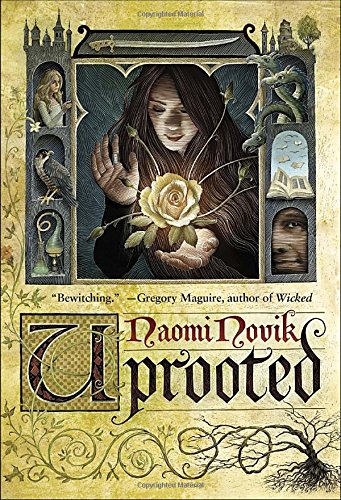
Review: Uprooted by Naomi Novik


I know Naomi Novik from the Temeraire dragon novels, so I had no hesitation in diving into Uprooted. No British Imperial Navy dragon flights here; this is more of a swords-and-sorcery story. Novik is totally up-front; the novel opens with it:

Our Dragon doesn't eat the girls he takes, no matter what stories they tell outside our valley. We hear them sometimes, from travelers passing through. They talk as though we were doing human sacrifice, and he were a real dragon. Of course that's not true: he may be a wizard and immortal, but he's still a man...

The Dragon of this tale makes his ten-year selection and carries her off to his tower to serve him for a decade. The girls he takes might as well be eaten, however, they may be released from the tower in ten years, but they don't return home. They go off to live in the city instead, dowered by the Dragon into marriage or business as they choose. 

Agnieszka isn't like the girls he usually selects, though. She had been the village gleaner, expert at foraging through the forest (never the Woods!) for whatever she could find that might be edible or useful. She's used to always having her hair straggling, her face smutched and her clothing torn ragged by twigs. 

Not expecting to be chosen, she has never really thought about how she should react to a wizard master. She's fearful and cocky by turns, and totally unprepared for the almost-OCD reaction of the Dragon to her stubborn untidiness. 

The Dragon is different, worse, than she had feared. He is aloof and commanding, of course, that was expected. Agnieszka hadn't dreamed of the horrible lessons he drags her through each day. 

Her new home is unexpected, as well. For a start, there's the magical painting on her wall, a simplistic map of the Valley overseen by the Dragon, with a really-flowing river running through it, and stars to mark the villages between the mountains and the Woods. There are the immense front doors that Agnieszka cannot open, and the walls and piles of books in the Dragon's library.

She can only console herself that hundreds of other ten-year girls had survived their decade serving the Dragon, and so she can as well.

Novik dives unerringly to the heart of the tale, introducing magicians as adept as any in the Harry Potter tales, fighters for right as brave as Hobbits, and an enemy as dark and old as the iron mortar that Baba Yaga rides. There is a Grimm quality to this novel that comes straight from a racial memory of Woods that hold dark mysteries and certain death. 

Excellent and unexpected, just like Agnieszka and the Dragon!

Saturday, June 13, 2015

This Too-Mortal Clay, and This, Too

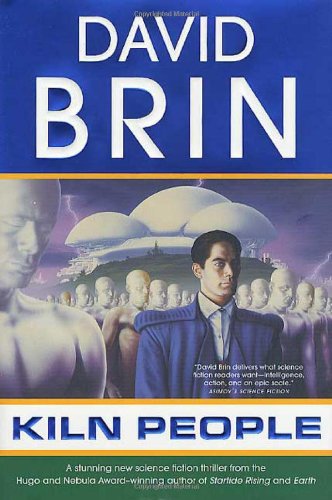
Review: Kiln People by David Brin


After a decade spent exploring his Uplift Saga (with detours for The Postman and his contribution to the Second Foundation prequel trilogy, Foundation's Triumph), David Brin has written another stellar entry in original, thought-provoking science fiction.
"More than any writer I know, David Brin can take scary, important problems and turn them sideways, revealing wonderful opportunities. This talent shows strongly in Kiln People..."  ——Vernor Vinge
In Brin's novel Kiln People, the home computer and home FAX machine have been joined by another widely-distributed technology: the home copier. It's not for copying documents onto paper, though, it's to copy your soul's "Standing Wave" onto a clay "ditto." People have become used to living multiple lives, sending their duplicates out into the world to clean their toilets, mow their lawns, work at their boring jobs——and also dance (and brawl) in their night-clubs, walk their streets and star in their porn movies, kill their enemies (in duplicate only, of course); even go home to a boring wife and bratty kids.

In the best sense of hard science fiction, Brin has explored all the implications of this technology. To start, if your soul is what is impressed on the blank clay ditto, what does that imply about people who are unable to duplicate themselves? In this society, they are shunned as "soulless." And what happens when the original, "real" person dies before his duplicate expires? His "ghost" is still embodied in the duplicate, able to revenge his murder or mourn his natural death, but unable to be copied into another ditto blank or load its memories into another person.

The soul is seen as separate from the personality, as well; people routinely create "ebony" duplicates capable of great focus and dedication to a single intellectual task, then "inload" the memories (and information) gleaned from that ditto's efforts. It is also separate from sensuality; the "ivory" ditto carries a full sensorium to allow sexual contact at one remove—you can't catch an STD if the only thing you take from an encounter is the memory! One character is so capable at imbuing her ivories with her own "smoldering sensuality" that her ivory dittos are routinely "ditnapped" by the criminal Beta.

Ditto tech has implications for warfare, too—armies are composed of thousands of duplicates of a few highly-trained and capable warriors, who set their souls into the quiescent clay, which can then be frozen and stored ready to fight when required. In a bizarre mirror of Robot Wars, would-be warriors create fighting ditto shapes and contend in an arena to "try out" for the ranks of soldiery.

For many people, ditto technology means they have no place in the working world. Instead, vast numbers are paid a "purple wage," and left to rely on their dittos for entertainment. So large parts of the city are given over to the recreation of re-creation, in which the copies of ordinary citizens can pretend to be Montagues and Capulets, or Ozzie and Harriet.

Albert Morris is lucky. His dittos rarely go "frankie," running off to live their own short-lived lives as they please. They all come supplied with his overwhelming curiosity and desire to get to the bottom of things, so he has a thriving business as a private eye. And while not all of his gray dittos get home in one piece, they manage to get back often enough that he is one of the best in the business. It's why Geneen Wannamaker, the porn ditto queen, and Aeneas Kaolin, the owner of Universal Kilns (monopoly maker of ditto blanks) have both hired copies of Morris to help them solve their problems.

Brin tells the story from the multiple first-person perspective required by this technology, weaving the disparate tales of the two gray dittos Morris has assigned to work for Wannamaker and Kaolin; plus his very first frankie, a green ditMorris that did not want to clean toilets that day, as well as realMorris. A witty line at the beginning of each chapter tells us which of the Morris avatars is speaking, and Brin has warped the language in believable ways to incorporate personal duplication.

I loved this story, and especially liked the clever way Brin named his characters. Two (Kaolin and Montmorillin) are named for types of clay. Two more (to tell would be a spoiler) share names with people in the golem myths. Several others bear the names of dolls or puppets. Brin has also borrowed behaviors observed in the explosions of social media, Internet-surfing and blogging, and then applied them to his fictional technology in ways that make sense.

This is a mystery story wrapped in a roller-coaster of punning energy and technology gone right in unexpected ways. I recommend it highly.

Friday, June 12, 2015

Deeply Mystical, And Obviously Not Science

Review: Crossroads to Cure by Nicola Henriques


I don’t have any argument with one basic premise of homeopathy. Complementary Medicine, the treatment of a whole system of patient and body rather than treating a symptom in isolation, makes sense to me. But as Nicola Henriques makes clear in Crossroads to Cure, homeopathy goes far beyond this foundation, drifting into areas that cannot be supported by the science.

Henriques is a former journalist from Britain, with other nominally health-related books (Menopause, The Woman’s View and Hysterectomy, The Woman’s View) to her credit. She has been a teaching professor of homeopathy, and a practitioner in California. 

This book is the first of a proposed series of three books aimed at consumers and practitioners of homeopathy. (Two and Three are still not available even 17 years after the first was published.) One would expect her to be a valid source of information about the practice of homeopathy and its underlying philosophy.

When she explains that homeopathy rejects the germ theory of disease, and instead ascribes illness to “miasms,” an individualized reaction to the environment described by homeopathy’s founding guru, Samuel Hahnemann, I begin to cringe. The practice of naming these miasms after recognized diseases (typhus, cancer, syphilis, leprosy) is even more disturbing—a cancer miasm, for example, might be cited, and treated, as the cause of Obsessive-Compulsive Disorder, or even of “ambition,” as much as for a malignant tumor.

It should be noted that not every homeopathic practitioner subscribes to the miasm theory. Henriques does, however. She also re-words Hahnemann’s highly-controversial process of compounding homeopathic remedies—the materia medica—from Succussion and Dilution to “Dynamicization and Attenuation.” Apparently Henriques feels (like many practitioners today) that the central controversy between homeopathic treatment and conventional pharmaceuticals can be dismissed by this sleight-of-word.

Naturally, her text does not discuss the attenuation of homeopathic materia medica beyond the point where any material ingredient might still exist in the materia. The whole concept of “potentisation” relies on something non-material being released to “dynamicize” the materia.

Once I got past this background in Chapter 1, her presentation appeared less deeply mystical. Couched in the most-clinical phraseology, Henriques gives advice to the practitioner on such topics as “The Second Prescription” (the correct response to the patient’s altered condition after the initial remedy), “What to Look for at the Follow-Up,” and “The Golden Rules.” The meat of the book, though is “Crossroads to Cure,” a text flowchart to guide the practitioner to the correct response.

Unfortunately, Henriques had lost me at the beginning. By failing to step away from “preaching to the choir,” she lost an opportunity to present a reasoned argument for the fundamentals of homeopathy. I had hoped for a discussion of the basics. Instead, the assumptions go unchallenged and largely unstated, as the author launches into a guidebook for the converted.

Unless you are already a member of this particular congregation, I cannot recommend the book.

Liner Notes:
  • “DrPat” is just a nickname. I am neither a medical doctor nor associated in any way with the pharmaceutical industry.
  • The linked reference page for Homeopathy in Wikipedia contains disputed information.
  • I am still looking for a reasoned argument for the basic premises of homeopathy. Recommendations are welcome.