Saturday, May 7, 2016

Seeking Glorious Death

Review: The Dark Lady by Michael Resnick


Michael Resnick’s “romance of the far future,” The Dark Lady, is an exploration of man’s attraction to the myth of glorious death. Told from the point of view of the alien “Leonardo,” the story examines heroism, self-sacrifice and the submission of artists to their art.

Leonardo himself is a 
a non-human male Bjornn, a kind of remittance-man from a species whose males are always sent away from the nest. His assignment to the service of art gallery owner Tai Chong (whom he refers to as “Great Lady”) is perfect for this creature who takes his species' obedience to females to the point of adulation. 

While researching art for his Great Lady's gallery, Leonardo uncovers the recurring likeness of a single sad-eyed, dark-haired woman whose portrait has been rendered by artists across seven thousand years of human history. He is gradually drawn into obsession over her.

The Dark Lady of the title has been painted by dozens of relatively unknown artists. For many of them, it is the only such painting they have ever produced, often shortly after they have faced death. What do they all have in common, Leonardo wonders. Could this be some mythic war goddess? But not all the artists have been warriors. What draws men (always human, always male) to paint the portrait of this woman who never smiles?

Leonardo is not the only one obsessed with her. Malcolm Abercrombie, the “man who had it all,” is a bitter, self-absorbed collector who hates humans and non-humans with equal passion. His obsession is to complete his collection of portraits of the Dark Lady. On learning that Leonardo has a verifiable ability to find paintings not yet in his collection, Abercrombie hires the alien, and inadvertently feeds Leonardo’s growing interest.

Valentine Heath, the “man who stole it all,” contacts Leonardo to sell him a purloined portrait of the Lady. Between them, they decide to locate the actual woman who is the model. Although her first appearance in human art is certainly over 7,000 years old, she has been photographed and documented as a living woman, right up to the current day. They actually have her on their ship, when she vanishes in the midst of space!

Leonardo’s growing obsession with the woman is only increased when he begins to dream about her, and tries to sketch her image. Reuben Venzia, the “man who wanted it all,” also dreams of the Dark Lady, and the three males conspire to determine to whom the Dark Lady will appear next.

The poignant ending of the tale with the “man who got it all” is purely Resnick, and absolutely wonderful. Leonardo is just alien enough to carry the detachment his character needs to make the other men’s obsession plain—yet he is also male in a very basic way, and that, too, is why he comes to obsess over the Dark Lady.

Although some standard Resnick characters (the gunfighter, the remittance man, the high-rolling gambler, the elegant thief) make appearances in the story, they are not central. The Dark Lady’s attraction is no stronger for Resnick than for Leonardo, for she also stands for that obsession that lets artists (and writers) endure great privation, alienate friends and family, and cast all other efforts aside, in pursuit of their art.

And that, perhaps, is why Mona Lisa smiles.


Liner Notes:

  • The French translation of this novel, la Belle ténébreuse, was the 2000 Prix Tour Eiffel Winner. 
  • William Shakespeare referred to a “Dark Lady” in a number of sonnets, and dedicated sonnets 127 to 154 to her.

Monday, May 2, 2016

Dining With the Devil

Review: The Editor and Del Webster by Vincent B. Moneymaker


Some things are inevitable. Death and taxes complete the usual list, but I submit another: when one sups with the Devil, a long spoon is required. Even then, some sort of short end on the deal that is finally dished up is to be expected.

Demon dinner-guests have sat down with attorneys and politicians, surgeons and money-lenders, and in one notable instance (Robert Sheckley's The Accountant), with a fellow in a green eye-shade. Moneymaker here offers a tale of a different supper with a red-eyed chap wearing a green eye-shade, this time in an editorial role.

At 9 pages, this is a short story with the cleverness and twist appropriate for dealing with a devil. Writers have their reasons to attribute demonic tendencies to editors, and I doubt Moneymaker is different. His tale might well be autobiographical.

The story is well written, and has a satisfying open end that Faust would approve. Several typos brought down the rating a bit, but the writing chops are there. I'll be looking for more from Mr. Moneymaker.

If he lives that long...


Liner Notes:


Monday, April 25, 2016

Beating My Own Drum in the Band

Well, I finished my April 2016 Camp NaNoWriMo project today, and validated it at 91,972 words. I will continue editing Meant To Be Here well into next month, with an eye to publishing sometime in the fall. I know the main author, Ken Cummings, will be happy to see this conclusion!

I have to call out my awesome cabin-mates, via the clip of the Cabin Mates panel from today. (Mind you, the insanely twitchy GIF avatar for @InsanelyWitchyMarauderette really needs to be seen in motion for full appreciation.)

Please note that I am not the only camper here to finish early; I'm not even the first! No, that would be @alias093001 with 50K words past her 125K-word goal, and @Sylvela from Germany with a short day's writing (for her) past her 100K-word finish line, not to mention @Azombieatemyshoelace, who has already started a second novel in her April NaNo sprint past her 100K-word goal.

When you are surrounded by productive people, it is easy to be carried along by the tide. Also, we see only the production, not the quality, and that helps to quiet our Persistent Inner Editors. See, I can too write 3000 words a day, maybe 5000. Ooh, maybe 7500! Shut up, PIE!

Even the silent cabin mates are inspirational, if only in a speculative way. I know I've been hoping that @lauramaria3 is one of those folks who does Camp NaNo because she's writing long-hand. I have visions of a hasty OCR upload on Day 30 to validate her goal. 

Camp NaNo progress report:
Word Count: Day 25 Total: 91,972 words

Saturday, April 23, 2016

Fear of the Rule of 33

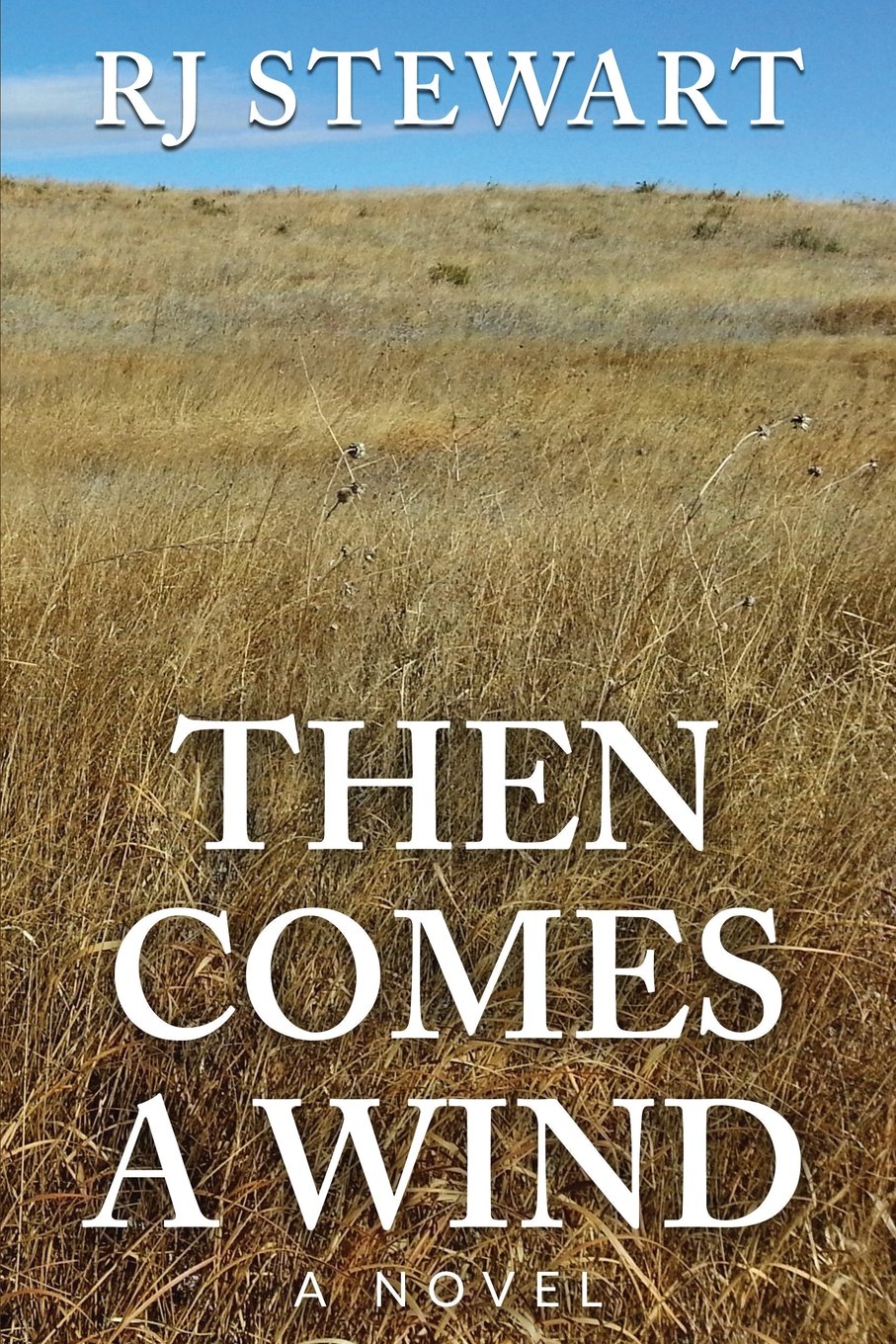
I was pleased to learn that R.J. Stewart (Ron), whose book I reviewed in August 2015, was one of eight contenders for best new novel in Colorado for Then Comes A Wind. The award was to be given at The Tattered Cover, a bookstore in Denver, and each author was invited to stand and tell a little about the publishing process—finding a publisher or finding an editor, or maybe how one connects with a beta reader—before going on to a brief reading.

Ron was up first, offering a comment about finding a beta reader:
Well, I contacted "DrPat Reads," a book blogger, who reads about a book a day. DrPat has a neat way to decide what books to read. You just open to page 33 and read a little, see if you like it. (See my Rule of 33)

He heard a quick flutter of pages behind him, and turned to see all seven other authors on the stage, flipping to page 33 in their books to see what readers would find. One said: Oh, no, a sex scene! 

Fear not, writers whose books I review. What I am looking for on page 33 is past the opening scenes (which should be tight to draw the reader in), to a point where the author's voice relaxes to the level it will likely retain to the end of the book. Of course, if I read those 20 or 40 sentences, and encounter eighteen typos, I will not buy the book. (This is important; if you can't afford to hire a proofreader, read your own manuscript at least 3 more times after you are certain it is clean. It almost never is.)

Another thing that sends a book back to the bin for me is clichés. I might read on page 33:
She wanted to fly again, but her wings were bruised so badly that even her own licks could not heal them.
or perhaps 
He had never dreamt that there would be a day to come when his relationship perched on the brink of a steep hill and could go sliding down into a dungeon of despair at any moment.
I would normally set this book down and go on. In the case of the book from which both these sentences actually came, it was written by a friend, so I won't publish a scathing review. If this rampant banality continues much further into the book, however, I won't finish it, which means I won't review it at all.

So let your scenes fall as they may on page 33. Sex, death of a pet, favorite cake recipe (yes that was on page 33 once, and it turned out to be a great book, too!)—whatever it may be, it helps in the decision process. 

Besides, who knows what will turn your eventual readers on?

Camp NaNo progress report:
Word Count: Day 23 Total: 84903 words

Friday, April 22, 2016

Hey Man, Where You Been?

We needed the rain, Lord knows, and I'm not really complaining. Except that one side effect of the chilling effect of rain is something I didn't need: pain in arthritic fingers.

And as I observed to my cabin-mates at Camp NaNo, You have NO idea how much work your fingers do until you have a bout of arthritis, and have to severely limit them to the essentials. On the other hand, cutting out browsing and surfing and social media does leave a lot more writing energy for the NaNo project...

I haven't been posting to my blog at all, and that includes writing flash fiction per Charli Mill's Carrot Ranch challenge. I haven't quit reading, either, just writing reviews in my head and waiting for the flare to subside.

I have continued writing for Ken Cummings' memoir, Meant To Be Here, and nearly met my revised goal for April Camp NaNo: 85,000 words. That takes the memoir almost to completion in raw draft form, and now comes the truly hard part: convincing Ken that editing is needed.

For one thing, we are missing Chapter 11. Chapter 10, Over the Hills and Through LAX, is way too long. It may get divided into two, Over the Hills... about Ken's adventures by bicycle, and ...and Through LAX, about his strange encounters and wild rides while driving a shuttle van.

Other edits may move stories from one chapter to another where they belong more naturally. I want to balance the chapters in size, but I will not be fanatic about it. From all I can observe, Cummings' life has been up and down and all over the place. It shouldn't be surprising if his memoir is as well!


The last sample: 
The [airport shuttle van] company had a contract to take flight crews from airport to airport, so I often had airline personnel aboard. One such shuttle trip was a charter from John Wayne airport in Orange County to LAX, with an entire flight crew aboard. The senior pilot automatically took the front right seat next to me. This was normal; I had noticed pilots preferred to sit in front, and co-pilots would defer to captains.
Driving north through Seal Beach on I-405, I left the carpool lane, merging right across the lanes so I could get to the new Interstate 105 freeway, a direct route to LAX. The flight captain challenged this move and ordered me to get back into the car-pool lane. I replied calmly that I knew what I was doing; this was a better way to go. 
He became upset, repeating that he knew how to get to LAX, complaining and insisting I stay on the 405.
Finally I told him—and the crew in back—somewhat forcefully that another driver and I had timed this new route against the 405 carpool lane. There was no time advantage either way, but I-105 offered a smoother ride, and that made it a better route to LAX. I handed him one of the company business cards, saying, "You can report any complaint about my driving to my office. The complaint line is on the back of the card."
A voice from the back said, "It sounds like The Captain has spoken." 
The pilot blinked and sat back. "You're right," he said.
No more fuss. At the end of the run, the flight captain waited until the others had moved away, then apologized for trying to "take command" from the shotgun seat.


Word Count: Day 22 Total: 84009 words

Monday, April 11, 2016

Breaking Stride, Breaking Rules

Cindi Staiger stokes tandem at the Furnace Creek 508 race.
I declared yesterday a day of rest—or rather, my body did. I couldn't make myself get out of my nice warm bed. I really didn't need to sleep, but I did require some word-consumption. So I opened my Kindle and devoured the conclusion of the J.E. Hopkins thriller, The Scarlet Crane, after which I segue'd into its sequel, The Saffron Falcon. 

Since I finished Ned Hayes' The Eagle Tree last Friday, perhaps I should to set up a new TBR category on my Kindle: To Be Reviewed!

Finding motivation in the midst of the doldrums can be a challenge. When your goals are self-set, and missing a deadline affects only your self-image, it can make it even harder to keep pushing. This is one of the ways Camp NaNo helps us achieve our dreams: a cabin full of people to be up when you are down, peppy when you are depleted, and willing to lend an ear while you complain or crow.

Even in "real life," though, these self-imposed rules can bite. The sample from Meant To Be Here today comes from Ken Cummings' story of supporting Cindi Staiger, the female cyclist who won the Race Across AMerica (RAAM) in 1988. 

By this point in the race, Cindi has been in the pink jersey (denoting the female race leader) since day one, and has been on her bicycle 20 hours out of each of eight or nine days: 

In Parkersburg, West Virginia, with the close-support van and the Mothership [the 20-foot RV with the kitchen and Cindi's little-used bunk in it] right behind her, Cindi missed a left turn and started to freak out. I was on the radio link in the close support van; I had to shout loudly to cut through her panic, telling her to turn left down an alley I could see would lead her to a street with access back onto the race route on US Highway 50. Cindi followed my instructions, leading her whole support procession bumping and scraping down the alley.
Later, explaining “off-mic” why she had gone off-course, she confided to me and the two other male cyclists in her close support crew that the crew-leader, a woman, and her nutritionist, another woman, wouldn’t let her have any coffee. They insisted that she drink something called glycine as a substitute, because caffeine was “bad for her.”
“No problem!” I told her. “This part of the route is straight-on for several miles. Ride on alone—we’ll get you something at a shop.” She rode off, and I reminded the other crew members sternly, “As far as anyone else is concerned, we’re only giving Cindi glycine.
A few minutes later, I leaned out of the support van to pass Cindi a tall cup. “Here is your steaming black cup of glycine,” I told her with a wink.


In any extreme event, you have to be willing to break the rules—your self-imposed rules—and indulge yourself occasionally. Otherwise, you risk burning out before you have a chance to reach your goal! 


Word Count: Day 10 (Rest Day): 414
Word Count Total: 40,085 words

Word Count: Day 11 Session 1: 2140; Session 2: none so far

Word Count Total: 42,635 words

Saturday, April 9, 2016

To and Fro in the Earth

Partial map of Concourse tunnels under downtown Oklahoma City
Doing what is expected is a good way to make others feel comfortable with you, but taking a step—or thirty—off the beaten path can provide unexpected challenges along with the benefits. 

I was reminded of this recently when it came time to file my taxes. 

For the first time this year, I had royalty income to include on my return. Although it didn't change the total due on the bottom line, this meager amount of royalties required a completely out-of-proportion effort to account for it to the IRS. Despite the work involved, it was satisfying in a perverse way. This is what authors who sell need to do. I may have only a little toe over that line, but I'm now in the category!

The things we do in life change us, in major ways and subtle ones. Ken Cummings talks about this in today's sample from Meant To Be Here: 


In 1978, I had a job interview with Kerr-McGee Corporation in Oklahoma City. Along with my key, the desk clerk at the hotel they booked me into gave me a flyer describing the city's pedestrian tunnel system. Tunnels linked many parts of the downtown area, letting people avoid surface traffic, and move between buildings in air-conditioned comfort despite the unpleasant heat and humidity of the Oklahoma summer. To my delight, the system included a connection from the hotel to the Kerr-McGee tower.
The next morning I went through the tunnels and presented my papers to the guard at the small tunnel entrance to the Kerr-McGee building. He was flabbergasted. Every other interviewee before me had gone to the big glass doors with their multiple guards, up at the street level. The guard-shack there had a clipboard list of people who were permitted to enter, but from the tunnels, this man had no access to that list.
I was issued a pass from the tunnel door only after the guard made several calls to verify that I was expected. During my interview on the 24th floor, they asked why I had chosen that entrance. "You knew you were interviewing a mining engineer," I answered, "and yet you didn't expect that given a tunnel connection, he would use it?"

After I was hired on, one day while I was at work in the Kerr-McGee Tower my wife came downtown to set up a bank account for me. She deliberately selected a bank that connected to the tunnels. Waiting for me to arrive on my lunch break, she sat way in the back of the bank, next to the door labeled "Concourse Access." One of the bank officers asked if she didn't want to sit out in front where she could see me coming and wave me into the bank.
"Oh no, I know he will come through this door." And moments later, I did.


Thoreau told us, "If a man loses pace with his companions, perhaps it is because he hears a different drummer. Let him step to the music which he hears, however measured, or far away." He is not wrong, but the man himself might be happier if he finds companions—whether a wife or cabin-mates—who share his vision of the world, and thus know what to expect from him even when he chooses a different road.

Word Count: Day 9 Session 1: 2163; Session 2: 1098
Word Count Total: 40,081 words