Thursday, March 31, 2016

Action and Reaction In Stone-Age Afghanistan

Review: A Long Time Until Now by Michael Z. Williamson


One of my favorite sub-genres of time-travel science fiction takes one or more people from the present and "drops" them into the past, revealing interesting things about both present-time and historical cultures, sciences, and philosophies. 

In this novel, Williamson's first of a planned Time Displacement series, ten US troops riding in two mobile units in a deployment in Afghanistan encounter what they first believe is an IED. The explosion sends them off the road into a grassy plain, cooler by twenty degrees than the sweltering heat they had been driving through.


[H]e saw where their tire marks started and went downhill. He didn’t see an origin for them. The tracks started in the middle of the rough area. There was nothing farther uphill except grass-covered slope...

The distant mountains are the same; everything else has changed. Somehow the ten soldiers have been displaced to Stone-Age Afghanistan. They will have only whatever supplies are in the two MRAPs (Mine-Resistant Armored Vehicles), and whatever they know (or have stored in reference files on their smart phones, laptops and tablets.)

Fortunately, this is a pretty erudite group. The LT1 (the only officer) is an engineer. The smart-aleck Oglesby turns out to be a fairly adept linguist (which helps when they need to communicate with the local tribes.) One of the two women in the group has a good knowledge of edible plants, the other is their IT resource.

The story is enhanced by the close attention Williamson pays to each individual's reactions to their predicament. It feels real; it seems like the way a small group would behave. The author has not made it easier on himself, either. These are not supermen or -women. He has given each of the ten their own issues and problems and biases to deal with—and some of them are problems for the group as a whole, like the creationist who insists on "witnessing" to them all (up-time and otherwise), or the feminist who worries so much about the men around her that she contemplates suicide as an escape.

In addition, the displacement that brought the Americans also moved several other groups: a Neolithic hunting band with domesticated dogs, a large group of Roman soldiers, several 16th-century Mughal musketeers. The challenge to our present-day group is to trade with these disparate peoples for what they need, and prevent them from taking over. 

The story is only slightly marred by excessive repetition. (I thought if I read one more comment from the Romans about English being "Latin mixed with Germanni," I would scream.) Otherwise, it is signature Williamson: you get an establishing scene, and action, some introspection, then more action. The action is rational, the rationality of each introspection depends on whose voice is sharing it at the time.

FInally, the story itself is enjoyable. You become intimately acquainted these people; you want them to succeed. And each time they do, you wonder how they will continue.

Because time, and their up-time supplies, are running out.

All Else Being Equal (It Never Is)

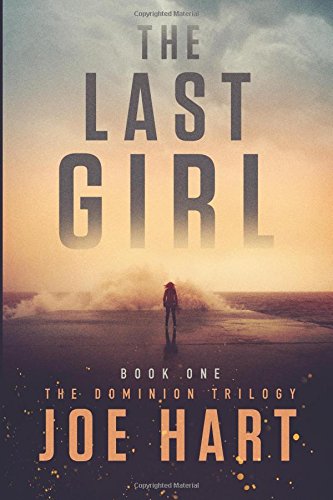
Review: The Last Girl by Joe Hart


The Amazon Prime program nets me goodies beyond free shipping; one of the best from my point of view is Kindle First. Once a month I can choose a free ebook from a small selection, most prior to full release. The selected authors get readers who will review (or at least rate) their books, which can give them a jump-start when the books are fully released.

Alas, my to-be-read (TBR) list routinely exceeds my available reading time. I selected Hart's novel as my Kindle First one month, tagged it into the "TBR" and "Review This" collections on my Kindle, and went back to the four or five books I was actively reading at the time.

I shouldn't have waited. The Last Girl is a stunning commentary on gender equality and the factors that make it difficult to achieve. The premise: a virus that has made it vanishingly difficult for girl-children to be carried to term. By the time Zoey and her friends are born, there are very few women left. The prepubescent girls live in a prison-like school, supported by women teachers, male mentors and their sons. The girls are all being groomed for the day they will "graduate." 

The problem is, no woman ever returns to the "school" to report what happens after graduation.

I kept being reminded of The Island, the movie with Ewan McGregor and Scarlett Johansson (which was supposedly based on the novel Spares by Michael Marshall Smith.) In the movie, clones are told that they are privileged to live on their idyllic island. Actually they are being held in reserve as spare parts for their donors. I wondered if, like Johansson and McGregor, Zoey would escape with her mentor's son, a sympathetic fellow who may have smuggled books (The Count of Monte Cristo, the ultimate escape fiction) and other contraband to her.

But the tale runs deeper than that; and even once she has won free of the sinister school and its graduation program, Zoey still is not liberated from the restrictions imposed by the scarcity of her gender. 

This novel is the first of a planned trilogy. The story stands well on its own, however, and the promise of additional novels is an added bonus. We'd like to find out if it's possible for Zoey to achieve an equality that doesn't deny the extra abilities of her gender.

If she can, there is hope for us all.

Wednesday, March 30, 2016

Six New Entries to the Invisible Library

Review: Heroics for Beginners by John Moore


The invisible library is "a collection of books that only appear in other books. Within the library's catalog you will find imaginary books, pseudobiblia, artifictions, fabled tomes, libris phantastica, and all manner of books unwritten, unread, unpublished, and unfound."

John Moore has given us not one, but six new entries with this novel, a romping spoof and a quick read. Robert Taylor's 
The Handbook of Practical Heroics, like his other work, is part of a medieval "...for Dummies" genre. (Other practical handbooks cover fly-fishing, gardening, antique refinishing, and—my favorite—dragon slaying, followed by burn and wound dressing.)

The heroics advice is brief, to-the-point and imminently practical, exactly the kind of invisible library fodder a medieval hero would want to check out!
When a wise old sage tells you not to let a magical talisman fall into the wrong hands, take him seriously. Do not laugh it off until the object is stolen and the Forces of Evil are unleashed. —HANDBOOK OF PRACTICAL HEROICS, Robert Taylor

Kevin Timberline, Prince of Rassendas, has a problem. Actually, he has several problems, including finding an acceptable nickname, so he doesn't wind up like his father, King Eric "Not Eric the Good, But the Other One." But he loves Princess Rebecca of Deserae, whose hand has been promised to Prince Logan, providing he retrieves the Ancient Artifact (model seven, and brand-new) stolen by Lord Voltmeter (He Who Must Be Named). 

Inspired by the handbook given to him by Princess Rebecca's father (who thought it was the fly-fishing guide), Kevin decides on a preemptive crusade to storm Lord Voltmeter's Fortress of Doom, and earn the princess' hand for himself.
...the sunshine fell upon a shelf stacked with circular black objects. Kevin moved in for a closer look, then picked one up. It was a coffee mug, cheap black ceramic with the words FORTRESS OF DOOM painted in large red letters. Underneath was the slogan ENSLAVE THE PLANET. And then he understood where he was... He was in the Fortress of Doom gift shop.

This book succeeds in spoofing a genre with light touches of laughter. There's an Evil Assistant whose costume is a running gag. There's a chain-mail bra that turns out to have been a Pretty Good Idea, even if the fur thong briefs were not. And there's an old seeress whose prophesy on Kevin's heroics is ominous—and too bad that he didn't get some tips on the stock market while he had the chance!

You'll like the way Moore has written a real sword-and-sorcery story within the parody, and how the humor actually makes sense in the context of the tale. It made me want to get another Moore novel, like maybe Slay and Rescue, which is a similar spoof of fairy tales. 

Alas, of all the Moore spoofs, only The Lightning Horse is currently available for Kindle.

Liner Notes:

  • Voltmeter's nickname is the only Harry Potter reference. 
  • The Handbook of Dragon Slaying was described as "co-written with Holly Lisle".
  • Arguably the most famous book in the invisible library is The Necronomicon. 

Tuesday, March 29, 2016

The Enchantment of Realpolitik

Review: A College of Magics by Caroline Stevermer


Here's a YA fantasy with an interesting premise: a European school teaches magic to those who attend. Before too many parallels to Harry Potter spring to mind, there are differences. Greenlaw College is more university than the preppy boarding school of Hogwarts. Rather than being hidden in the midst of present-day Muggles, Greenlaw College graduates live openly in pre-WWI Europe.

The most important contrast is the author's style. J.K. Rowling's Potter books are charming in their level of detail and focus on the practice of magic. 


Stevermer's characters, however, are immersed in the political and personal implications of practicing magic, ignoring the practice itself to concentrate on the results.

Faris Nallaneen will be Duchess of her small north-central European province, Galazon, when she reaches her majority in a few short years. Her uncle, meanwhile, as regent and head of her family, has decreed that she must go away to attend Greenlaw College.

Faris knows that her uncle's plans are not likely to be for her benefit, but she discovers that running away from school is not a solution. For one thing, there is the mysterious Tyrian, who shows up whenever he is needed to save Faris' life (or prevent her from running away). For another, there is Menary of Averill, a spiteful miss with powers she did not learn to use at Greenlaw College, who has an unexplained grudge against Faris. And finally, there is Faris' growing love of learning and Greenlaw itself, almost enough to balance her homesickness.

When Menary and Faris fight over Tyrian in the Dean's Garden at Greenlaw, both are expelled. Now Faris must return to her uncle in disgrace—paying a visit on the way to one of the wardens of the world in Paris. What she learns from the Warden of the West will completely overturn her view of the world and her place in it, and give a deadly new meaning to her school battles with Menary of Averill.

The pre-WWI world in which Faris lives is clearly not our own, but there are enough congruent points to free Stevermer from the need to create everything afresh. So Faris, Tyrian and her other companions travel on the Orient Express, for example, when she returns home to Galazon. She reads The Prince and The Prisoner of Zenda at school, and we can assume we know how each will inform her. And when her chaperone and friend, Dame Jane Brailsford*, insists that Faris buy clothes while in Paris, we know why.

Despite the uneven start, College rewards its reader with a pleasant time, plus just enough food for political thought to keep it real in the layers between the fantasy.

Note:

* The sequel, A Scholar of Magics, follows Dame Jane Brailsford home to England where she encounters an American sharpshooter.

Monday, March 28, 2016

Private [Starship] Enterprise

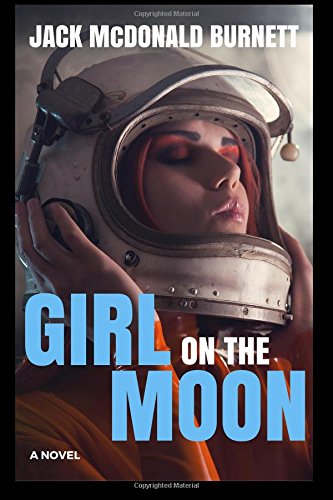
Review: Girl on the Moon by Jack McDonald Burnett


Comparison of Burnett's Girl on the Moon with Andy Weir's The Martian is inevitable, so I'll just get it out of the way at the start. Both novels open with a disaster that strands a single person on a distant globe. And both were first "independently" published, independently, that is, of any traditional publishing house.

That's it, full stop. In Girl Conn Garrow's world, the Mars trip ended in complete disaster, killing all the astronauts involved, and NASA hasn't been back. No man has set foot on the moon since Gene Cernan and Harrison Schmidt left in 1972. And no woman has ever been on the moon.

The last person who tried, Peo Haskell, CEO of Dyna-Tech, was turned back on the brink of landing her privately-owned lander. Conn's own dream of going to space, fueled by her admiration of Peo Haskell and by witnessing a night of mysterious lights on the moon that was visible from Earth when she was a child, was derailed when she was diagnosed with bipolar disorder. Disqualified by NASA because she is permanently on medication to treat her condition, she redirects her ambition to engineering. If she cannot be an astronaut, she can still make it possible for others to go to space in her stead.

At school, Conn connects with her idol Peo, and begins working for her to set up a private-enterprise trip to Saturn. An unusual video sent in secret to Peo holds a cryptic puzzle that Conn helps solve. They learn it is an invitation from the aliens who lit the moon that long-ago night, offering to meet near the Apollo 15 lander. The Chinese will be sending their own separate mission in response. Not to be out-done, NASA immediately sets up a rival moon-shot as a joint effort with the European Space Agency.
NASA wasn’t letting the moon get away from them again.

Dyna-Tech, stretched thin to support the four-year trip to Saturn, scrambles to set up its own mission to the Moon. Solving one problem after another, Conn is intimately connected with both space shots, telling herself that this is as close as she could possibly come to her dream. Because of the novel's opening scene, we know better; Conn will be the commander of the two-person moon-shot that will put her on the surface in time to meet the aliens. In their privately-funded launch, Peo Haskell and Dyna-Tech can override the restrictions NASA uses for astronaut selection.
"I wonder how many kids like you NASA misses out on because there are no Rite-Aids in space ... "Nope, sorry, you're lactose intolerant, we can't train you."

Once you get past the largest unreal plot-point, ETs with YouTube accounts, the story seems realistic. It is further given reality by countless details that make sense in an 18-year distant future. Yet what feels even more real than the slightly-advanced tech are the emotional interactions, the jealousy and envy and spite, the admiration and aspiration and generosity, the fear and delight, displayed by all these people, human and alien alike. New authors (and sometimes veteran writers as well) can make the mistake of painting characters as either black or white. Burnett dodges this bullet; even Conn is a frustratingly messy mix of emotional reactions.

Conn must battle her own shortcomings and biases, the petty and major problems of any large commercial effort, her own government and the rival governments of those who meet the aliens on the moon, and the aliens themselves. Are these visitors to the Solar System evil, bent on conquering humanity by tempting them with alien tech, as the anti-science evangelist Bowman insists? Are they simply guilty of preferring to work with the Chinese and the Russians, as the US government accuses?

Or are they interstellar con-artists, looking for the equivalent of a Manhattan bead exchange?

Conn and her friends have a lot of mysteries to solve—not least of which is what the aliens want from our moon. Their struggle to find those solutions is exciting, and the suspense makes this novel a quick read. That they accomplish it all in the context of capitalist free enterprise is delightful.

I'll be waiting with bated breath for the next Girl (on Mars?) from Burnett.


Liner Notes:


  • The publisher is Kindle Press, thanks to a successful Kindle Scout campaign. Because I was one of many who nominated this novel, I got a copy for free.
  • An excellent map of the Apollo 15 landing site is available online from the Smithsonian's National Air and Space Museum. 
  • Conn receives congratulations for being the first woman on the moon from a female US president named Clinton. The date is 2034. Chelsea?

Saturday, March 26, 2016

Real Warming vs. Hot Air

Review: Carbon Dreams by Susan Gaines

In the earliest stages of the global climate-change debate, Susan Gaines used the topic to fuel an intriguing tale of how science theory is used (and abused) by policy-makers. Whatever your personal stance on the issue of human-driven climate change, there is sufficient real information on human-driven policy change (let alone data change) to spice the arguments pro and con.


Carbon Dreams is fiction, with just enough real science, culled from Gaines' extensive background in chemistry and oceanography, stirred in to make it believable and exciting. The fictional nature of her story allows us to suspend disbelief and simply enjoy.
[In organic geochemistry]... we use organic molecules the way a geologist might use a rock, or a paleontologist a fossil—as clues to the age of a sediment, what kind of organisms existed, what the ecology was like, the climate... I found a group of lipids that contain the imprint of seawater temperature in their structures. They come from microscopic algae that no one even knew existed until last year.

Dr. Tina Arenas is a organic geochemist working on the leading edge of the science at Brayton Institute of Oceanography, BIO (a loosely-disguised Scripps Oceanographic Institute). What Tina wants is to try her proposed method for determining paleotemperatures from marine sediments on the second cruise of the "big drill" science ship Explorer. She agrees to let her friend Katherine, who is already invited, game her theory to the ship's director, Sylvia Orloff.

Before she can find out if Katherine has been successful, Tina's advisor, Garret Thomas, informs her that her grant application has been refused, and she will need to divert her work into a field that can get funding—perhaps oil exploration. Without this grant, she cannot participate on the exploration cruise even if she is invited. With Thomas' help, they massage her grant application to focus on a possible "petrochemical application" in her original thesis, and succeed in getting funding based on that adjustment. (Although Tina feels that this is slightly underhanded, and takes her research in a direction she hadn't intended to go.)
"I went to a seminar... in the geology department. The geologist presented a model that used the thermal history of a rock to tell if the conditions had been right for petroleum formation...¹ They got into this big argument in the middle of the guy's talk. Apparently there isn't any way of knowing the thermal history of these rocks..."

In the meantime, Tina has a life outside the lab, a very spicy love affair with the landscaper for the BIO grounds. As an agriculturist, Chip has a different take on Tina's "misuse" of the grant process—his is the ecological voice in the novel, and as Tina becomes more involved with him, her views coincide more and more with his.

Almost as fascinating as the human characters are the scientific theories Gaines peppers liberally throughout the story. Tina's advisor theorizes about the origin of life in structured clays, and the erudite debate between them occupies the first part of the tale. Theories about ancient climate changes fuel the current-day science, and the novel does a good job of presenting these theories in context (with their authors disguised) to underpin the search for causes.
Maitland's was provocative, as usual... He'd explained why CO2 wasn't lower during the interglacial, but not why it was higher by fifty percent... Maitland postulated that phytoplankton had played a major role; even though most of the organic matter produced was quickly oxidized back to CO2 by bacteria, this occurred after it sank out of the surface waters, effectively pumping CO2 into the deep sea and out of contact with the atmosphere.²

Gaines has avoided the B-movie cliché of presenting scientists as naive or focused solely on their science. Her scientists are human, with foibles and ambitions like people in any other endeavor. And while some readers may be uncomfortable with the conclusion of the story, it's best to keep in mind that this is fiction. Informed fiction, but still fiction.
But the majority of scientists are saying that global warming is inevitable. Oh, sure, they'd use words like 'probably' and 'maybe,' but a few are starting to concede that we should do something. This Cox is a dissenting opinion. ... Sometimes the dissenting opinions are the important ones.

And sometimes truth is found in fiction.

Liner Notes:

  1. Deriving biofuel (essentially, distilling petroleum fractions) from algae was already theoretically possible when Gaines' novel was being written. Today, there are multiple companies profitably producing fuels of various types, including jet and rocket fuels.
  2. Reading about Maitland's theory in this novel, I was reminded about the vast amounts of methane trapped in marine clathrates that played a major role in John Barnes' Mother of Storms.

Friday, March 25, 2016

Resting On Her Laurels (Carrot Ranch Flash Fiction Challenge)

DC-Powered Mine Locomotive (Photo courtesy Ken C.)
British mountaineer George Mallory, who famously said the reason for anyone to want to climb Mount Everest was "Because it's there," was once cornered by a gushing fan, who asked him how he came to have so many adventures. 

"I do not have adventures," was his icy reply. "I plan too well."

Mallory may have planned well, but his third and final attempt on Everest ended in misadventure. He and his partner Andrew Irvine were last seen in 1924 while they were still on their way to the summit. 

Mallory's remains were finally discovered in 1999, after multiple expeditions who climbed Everest to search for his body, "because it's there."

Certainly the most exciting things that have happened in my life came from a deep well of ignorance and a failure to plan ahead. Often the excitement was in retrospect, as we realized what might have happened, had we been just a tiny bit less lucky. Yet in talking about our experiences, it is the white-knuckle stuff that captures the audience's imagination.

I'm not alone, as many of the stories from Ken Cummings' memoir, Meant To Be Here, attest. Here is one from time he spent as a student working in a CONSOL coal mine in the thick "Pennsylvania" coal seam under West Virginia:


The locomotives in the 
Blacksville #1 mine were electric-powered, from a DC circuit of 600 volts and several hundred amps. The positive line was a thumb-thickness copper bar fastened to the roof four to five feet overhead. Return current moved through the steel tracks under the locomotive. The locomotive's pick-up, a spring-loaded arm,  touched the copper bar to complete the electrical connection. Its springs pressed it against the exposed copper powerline overhead, letting it slide along the contact surface as we moved. 

Unfortunately, whenever there was a joint or bump in the copper bar, the pickup mechanism would bounce away from it, and break contact with the copper. The pickup was still close enough to the powerline for the high-amp current to jump the resulting gap. The arc of DC electricity vaporized some of the copper with a vivid green flash whenever it occurred, and it happened frequently enough to make me very nervous. 


I was lucky, though; the sparks never caused a fire while I was there.

Back at school in the year after I was at the mine, I needed to contact CONSOL for some reason. They were very slow responding, and at last I learned the reason for the delay. The east end of the Blacksville #1 mine had exploded and burned, killing a work crew I'd spent a few days with while I worked there. The day of the explosion, the crew had been trying to get a continuous miner onto a sled to be dragged elsewhere by the attached locomotive, when there had been a ground fault from the power supply to the rails. BLAM!

When the recovery crews finally reached the site of the explosion, many weeks later, all they found was a high-alloy belt buckle that had been worn by one of the men. The rest was ash.

To this day, what makes my skin crawl is the memory of the time I had worked with this now-deceased crew, when they were trying to move the 
continuous miner in the same way—unsuccessfully because the power kept tripping out. 

I was at the rear of the continuous miner as they tried to shift the massive machine one last time before they gave up. I saw a fat arc jump between the machine and a rail, tripping the circuit. I was witnessing the exact same thing that would kill nine men a year later. 

The only difference was, the day I was there, there wasn’t enough coal dust in the mine to make the BLAM happen.


This week's prompt for the Carrot Ranch Flash Fiction Challenge reminded me of the trade-off between excitement and danger, between the chance of having a great story to tell afterward, and having no afterward in which to tell it:

March 23, 2016 prompt: In 99 words (no more, no less) write an adventure, experienced or witnessed. Explore your own ideas about what makes an adventurous spirit. Is it in the doing? Does standing witness count, and if so, how? Be adventurous!

The Chinese made it a curse: May you live in interesting times. Me, I'll settle for a little less adrenaline in my current life. It can stay in the anecdotes. It seems Granny Marta agrees.

___________________________________________


Resting On Her Laurels

"Tell us about flying the plane, Granny!" Marta sighed, gathered the youngest into her lap.

She began, "I was a passenger on a little airplane, nineteen, flying off to college. I thought that was the real adventure, you know..., Anyway, something happened to the pilot. They called from the cockpit, can anyone fly a plane? I had flown Pa's crop-duster. No one else volunteered, so I did."

"Were you scared, Granny?"

Almost to death, she thought. "A little," she admitted, "I just did whatever they said."

The memory still made her queasy. Any crash would have been my fault.