Thursday, March 19, 2015

Bad Weed (Carrot Ranch Flash Fiction Challenge)

When I was working for Homestake Gold company and the Strategic Metals Division of Phillips Petroleum in the 80s, I was part of a ground-breaking search for gold deposits of a newly-identified type. Distributed hydrothermal metal deposits were formed in a permeable soil or rock by geothermal water carrying dissolved metals in solution, and depositing them in the pores of the permeated material.

The particles of metal (usually it was gold everyone was searching for) were too tiny to be seen by the naked eye, and too distributed (read "low grade") to assay with field methods. This was the primary reason these enormous deposits still existed, unexploited—legions of gold prospectors had passed them by on their way to more-obvious nugget and vein gold deposits.   

Teams of field techs went out looking for clues that had nothing to do with outcrops of shining golden metal: They collected water samples that might show elevated copper, mercury or arsenic, other metals than gold that went into solution in the geothermal waters, and were then leached from the deposit by groundwater. They mapped permeable formations, and collected samples of sand and soil. 

But the strangest thing they collected was plants. Imagine hunting for gold by snipping the growth tips from sage, jimson, and timothy grass, carefully mapping the collection sites, and returning them to the lab to be reduced to ash so the ash could be assayed. Other plants (such as Astragalus or "loco weed") are themselves bio-indicators of metal in the soil, and could be logged without sampling.

The resulting data from field logs and water, soil, and plant assays, collected by dozens of field techs, was sent to a central office to be mapped by the single mapping geologist. Me.

One of those field tech reports prompted my entry for the Carrot Ranch Flash Fiction Challenge this week.

March 18, 2015 prompt: In 99 words (no more, no less) write a story to reveal a character's symptoms. It can be something the character is oblivious to, or terrified about. It can be a character concerned for a pet or a motorcycle. The symptoms can be what ails society. Go where the prompt leads. Or sleep on it, and see what a dream brings to you!

I'm happy to share the slightly-fictionalized account with you. __________________________________


Bad Weed


Bob dumped his field pack by the campfire, gently so the water vials in it wouldn't break, and rotated his paper log away from any sparks.

"George," he observed, "I don't know what's got into you! You been dragging and jerking around all day!" George rolled an eye at his partner, and stood mute.

"Better believe I'm logging your antics. We'll see what the home office thinks about your gold-bricking!"

Bob's notes about his horse George's symptoms would provide vital clues to the location of loco weed plants. Loco weeds fix arsenic, an indicator element for distributed gold deposits. 

Crossing the Divide

I've noticed a number of movies recently share a strong themeat least a sub-textof the divide between cultures, often presented as an explicit culture gap. Perhaps because Bollywood generates actors able to cross the divide, many such movies are set in India, or involve Indians coming to America. But not always.

For your consideration, I present a half-dozen movies I have recently watched for the first time or enjoyed in reprise. All share a sense of humor at the idiocies of one culture as perceived by another, a sense of wonder when the other culture finally connects with ones own, and a solid sense of the worth of each culture, however different. Each in its own way is a gem.


Million Dollar Arm


This is first, because it is based on a true story. Faced with a lack of six-figure sports talent for his nascent agency, the sublimely self-centered JB (portrayed by Jon Hamm) is watching Susan Boyle win Britain's Got Talent, flipping between that and cricket finals (a favorite of his partner Aash, played by Aasif Mandvi) when the solution comes to him. He will stage a sports competition in India to find fast cricket bowlers, then bring the best two to the US and teach them to be league-level baseball pitchers. 

He will literally find and then train his own Million Dollar Arm.

Both winners come from the same small village in India and speak little English, so JB must also bring an interpreter, Amit (Pitobash), who yearns to coach baseball. 

The story is rich in clashes of culture: JB is solitary, a workaholic and serial womanizer who focuses on models, while the Indians are deeply drawn to family and community. Staying in his pristine house, they immediately set up a small shrine for worship. We can tell from JB's reaction that he has never needed religion. The boys are from a rural Third World society (although Amit is less so, because he is from Mumbai), so they have never encountered the appliances and gadgets JB takes for granted. 

Even the differences between cricket and baseball are mined in support of the theme: Tom House, a well-known baseball pitching coach (Bill Paxton), is recruited to help the boys shift their bowling arms to pitching moves.

With the help of Brenda (Lake Bell), an intern doctor who rents an apartment on JB's property, all three Indians, and seasoned scout Ray (brilliantly presented by Alan Arkin), who scouts with one or both eyes shut, but still sees more than JB, JB gradually finds his way to cross the divide. 


We might have to tweak that a little.  —Tom House (Paxton), on seeing Dinesh's "flamingo" pitching stance.

The Internship

I have an up-and-down history with movies starring Vince Vaughn. Sometimes his character is so wishy-washy, he is unlikable or unrelatable. This is decidedly not true of The Internship.

One of the movies reviewed in this post that does not explicitly mention India as a source of culture conflict, this story nevertheless stars Aasif Mandvi as Mr. Chetty, the manager of the internship program at Google. Down-sized salesmen Billy McMahon (Vaughn) and Nick Campbell (Owen Wilson) are competing with a hundred recent tech graduates for a single Google internship.

The two older men are outclassed from the start by the crop of bright, focused, tech-savvy individuals who all desire to work at Google—provided they can prove they have sufficient "Googliness" to qualify.

This sets up multiple levels of cultural divide: sales-focus vs. tech-focus, network- and social-media-savvy vs. the total cluelessness of Billy and Nick, and even the workplace ethics of Mr. Chetty vs. the more free-wheeling sales bonhomie that had served Billy and Nick in their previous jobs.

The team competitions become cutthroat as the group "saddled" with Billy and Nick first isolate them, then come to value their experience and knowledge. In the end, not only do Billy and Nick manage to cross the divide, but they bring their teammates with them to a better stance than any of them had known was possible.

Billy McMahon: That being said, if you want something cold to drink, we'll hook you up.
Stuart (Dylan O'Brien): I'm OK, thank you. Just please, stop talking to me.
Billy McMahon: I'm your Bill Holden in Stalag 17.
Stuart: I don't even... I really don't get that reference.
Billy McMahon: Google it.


The Best Exotic Marigold Hotel

This is easily the most beautiful of the six movies, and certainly the one with the most stellar cast. Judi Dench, Maggie Smith, Celia Imrie, and Penelope Wilton, Tom Wilkinson, Bill Nighy, and Ronald Pickup are all seasoned British actors, which gives them an additional gravitas in the portrayal of older British citizens who come to India to live in a newly renovated luxury hotel.

Each has a distinct reason to relocate to The Best Exotic Marigold Hotel: the Ainsleys (Nighy and Wilton) hope to parlay their greatly reduced retirement cushion into a more luxurious place than they could afford back home; Norman Cousins and Madge Hardcastle (Pickup and Imrie) want to find romantic partners in an exotic setting where they can inflate their social status; Graham Dashwood (Wilkinson) hopes to reconnect with the India of his youth. 

Evelyn Greenslade (Dench) is not so much coming to India as escaping from a life where she feels disconnected. And Muriel Donnelly (Smith), a "discarded" nanny, is in India under protest, because it is the only place she can afford to have the surgery and recuperative therapy she needs.

The clash of cultures begins before the troupe even leave England. Muriel is deeply fearful of ethnic differences; she insults her English doctor and therapist with her complaints about Indians. The divide between the easy-going Douglas Ainsley with his acceptance of new experiences and his bitter, social-climbing wife Jean is revealed through their interactions with all about them. Norman and Madge each deny their advancing age, yet have developed different ways of dealing with that denial.

Their individual reactions and the way they each cope with disappointment is shown by their reactions when they come to the hotel, and find that its luxury and renovation was somewhat exaggerated by the young entrepreneur, Sonny Kapoor (Dev Patel).

Another cultural chasm is shown as Dashwood tries to connect with his childhood love. And finally, we add the clash of English vs. Indian culture, along with the explicit clash between young and old in any culture. Across these separate divides, it will require all the wisdom and love they can each gather, before they can experience the charm of the life they have chosen.


The only real failure is the failure to try. And the measure of success is how we cope with disappointment. As we always must. We came here, and we tried. All of us, in our different ways. Can we be blamed for feeling we're too old to change? Too scared of disappointment to start it all again? We get up every morning, we do our best. Nothing else matters. Evelyn (Judy Dench)

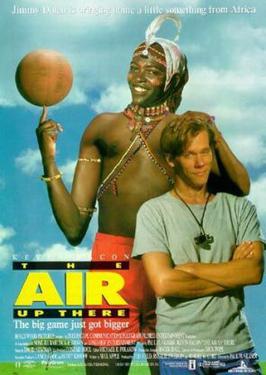
The Air Up There

Jimmy Dolan (played by Kevin Bacon) would be a better basketball coach if he could rein in his competitive nature. But he just can't resist the urge to show up his prospects, and this behavior is putting his chances of promotion at risk.

He needs a star to replace the last recruit he chased away. So Dolan takes off half-way around the world to recruit a high-flying basketball player glimpsed in the background of a missionary video.

The Air Up There is more rarified than Dolan realizes when he leaves for Africa, though. Prospective star Saleh (engagingly portrayed by Charles Gitonga Maina) is head-and-shoulders taller than Dolan, is accustomed to playing the game at the missionary school in his heavy leather shoes—and he is the chief's son in a tribe with big problems.  

Dolan finds it hard at first to believe that Saleh is not willing to return to the States to play professionally. He sets out to teach this rural boy about the game, and in the process he learns how to inspire a team that includes a short, rotund line-backer-style player, a non-sterotypical nun ("Sister! You can say bullsh*t!?" "Only if I really mean it."), and Saleh's sister. He applies his African experiences to the game ("This is a play I call 'Warthog in the Weeds'"), and finds a solution to the local problems that benefits the whole tribe.

Above all, he learns that what he himself wants is less important in coaching than discovering what his players want, and finding a way to deliver it.

The cultural clashes are presented here with a heavier hand, and the humor is a bit more earthy, than the similar tale in Million Dollar Armwhich was, after all, a Disney movie. 


Saleh: You came halfway around the world to watch me play this basketball?
Jimmy Dolan: That's what I said.
Saleh: (pointing to his head) Are you healthy up here?
Jimmy Dolan: Never said that.


Bagdad Cafe (also titled: Out of Rosenheim)

Tightly coiffed and buttoned in her wool suit, a plump German lady is abandoned in the middle of the desert by her husband. Despite the boiling heat and her distraction by unearthly sun-dogs cast into the sky from the nearby solar array, she wheels her suitcase from the roadside stop to the remote gas-stop motel and Bagdad Cafe

Jasmin, Mrs. Münchgstettler (played with earthy beauty by Marianne Sägebrecht), meets cafe manager Brenda (CCH Pounder), and immediately imagines savages dancing to pounding drums. Still, she gathers her courage and checks into the motel. But when she goes to unpack, she finds her husband has left her with his suitcase, and she has only the wool suit she walked out of the desert in, his lederhosen and wadenstrümpfe, and his magic kit.

Jasmin's initial fear of the unknown (anything not out of Rosenheim like her Bavarian coffee thermos) is equally matched by Brenda's suspicions about her German guest whose room is filled with men's clothing. The story is told in a series of vignettes, by turns humorous and sensuously beautiful. Much of the beauty comes as Jasmin unfolds from her fearful tight stance, gradually becoming part of this desert community that revolves around the family at the cafe.

She encourages the young pianist, Brenda's son Salomo (Darren Flagg, whose constant practice of Bach's C-Major Prelude is the only music in the movie not written by Bob Telson), and her daughter Phyllis (Monica Calhoun) to hang out in her hotel room while she plays with the baby. She agrees to pose for resident artist Rudi Cox (Jack Palance) once she learns he painted the picture of the sundogs in her room.

As Jasmin overcomes her own fears, she gradually wins over Brenda's suspicions and becomes a true member of the culture she has joined. By accident and diligent effort they all manage to cross the divide between them.

Jasmin: (Seeing at Rudi's painting showing sundogs behind her face) That's my vision!
Rudi: I like that word.
Jasmin: Oh?
Rudi: Vision.


Outsourced


The final movie in my culture-gap review list comes full circle to India. 

When the entire boiler-room operation of a catalog sales company is Outsourced to India, hard-driving manager Todd Anderson (Josh Hamilton) is sent to bring the Indian staff up to speed. 

As is true for any instructor, he who teaches, learns. "Mr. Toad" (the way his assistant manager Puro, played by Asif Basra, persists in naming him) strives to teach his Indian call-center employees to masquerade as Americans on the phone, with varying results. What he accomplishes is achieved by allowing his star phone-salesperson, Asha (Ayesha Dharker), to be wholly Indian, yet still make sales of thoroughly American gimcracks and nicknacks on the phone.

The beauty of the film lies in the way it highlights the differences between the two cultures, yet gives each their own dignity and strength. Todd and Asha connect, but so does Todd connect with India. In the end, the romance between man and culture is the most enduring.
Todd Anderson: I've noticed that almost everyone signed up for the incentive program, except you. Don't you want anything?
Asha: (looking at the My Hot Dog toaster product) What would I do with this? I'm a vegetarian.
Todd Anderson: Maybe it works with carrots...

Tuesday, March 17, 2015

Waitin' On the Levee

When Hurricane Katrina was still just a Weather Channel threat predicted to strike the historic city of New Orleans, and orders for evacuating the city were still days in the future, my thoughts turned to an already-stressed structure located several hundred miles upstream of New Orleans at the distributary channel of the Atchafalaya with the Mississippi River.

The Old River Control structure was built over fifty years ago (forty-plus years before Katrina) by the U.S. Army Corps of Engineers to prevent Mississippi drainage from switching to the steeper Atchafalaya channel.

Geologically, the Mississippi River has switched channels many times to build the Mississippi delta. Today, a channel change would mean stranding the port economy of New Orleans, leaving farmers and industries along the lower reaches of the Mississippi without the water they need. The expensive levee system erected along the Mississippi (extensively rebuilt following Katrina) would no longer be needed, while a new levee system would have to be built on the Atchafalaya.

In addition, the Atchafalaya River could not accept the Mississippi flow without massive flooding of the basin's bayous, necessitating extensive relocations, and causing upheaval of the social and economic patterns of the area. Since the completion of Old River Control in 1963, therefore, the Corps of Engineers has striven to prevent the river from jumping channels.
The Mississippi Flood of 1993 may have been a 100-year event.

But the water will not be denied forever.

Since 1963, the coastal salt marshes, an important buffer for New Orleans against Gulf hurricanes, have diminished as the basin subsided. The Mississippi River continues to raise its bed in a natural process of stream-bed deposition, even as the surrounding ground sinks lower. The result is a city not only mostly below sea level, but also well below river level. Only the levees (whose bases have also been sinking) prevent the Mississippi from overrunning its banks and flooding the streets, even in the driest season.

Also since 1963, the Mississippi has experienced several devastating floods. During the high waters of the Flood of 1973, water undercut the Old River Control structure and nearly swept away an entire sidewall. Rather than lose the control structure, the Corps let the water run through into the Atchafalaya basin, restoring the 70% flow to the lower Mississippi River only after the flood waters subsided. The record-breaking flood of 1993, even though its effects were mostly felt along the upper reaches of the river, also required the control to be let run, which further undercut the structure. 

Breaches of the levee structure in New Orleans during Katrina in 2005 did extensive damage to property, but this very flooding may have saved the city—for the time being—from the disaster of the river switching channels.

In John McPhee's marvelous essay, "Atchafalaya," published in his book The Control of Nature, McPhee relates the first-hand account of the damage taken by the control structure in 1973.


When Dugie himself went to look at the guide wall, he looked at it for the last time. "It was dipping into the river, into the inflow channel." Slowly it dipped, sank, broke. The foundations were gone. There was nothing below it but water. Professor Kazmann likes to say that this was when the Corps became "scared green." Whatever the engineers may have felt, as soon as the water began to recede, they set about learning the extent of the damage. The structure was obviously undermined, but how much so, and where? What was solid, what was not? What was directly below the gates and the roadway? With a diamond drill, in a central position, they bored the first of many holes in the structure. When they had penetrated to basal levels, they lowered a television camera into the hole.

They saw fish. —John McPhee, "Atchafalaya"

The flood of 1973 was a "40-year event," meaning that one might be expected, statistically and on average, every forty years. That the next flood came only thirty-two years later takes nothing away from this assessment: the river's overbank flow during and following Katrina had contributions from the release of impounded water from behind upstream levees, and energy from these successive releases owes much to the continued attempts by the Army Corps of Engineers to deny the river’s natural inclination to jump to the Atchafalaya drainage.

So inundation of the city from Katrina, a Category 5 storm, caused primarily by over fifty levee breaches, might have produced overbank flooding on the upper reaches of the river sufficient to allow the Atchafalaya to finally capture the Mississippi, had stress not been relieved farther down the river.

Besides, "[n]othing says capture has to happen at Old River," McPhee was told by a local. "It could happen anywhere the two channels are close enough. It probably will someday." The city of New Orleans may have survived the storm surge of Hurricane Katrina—devastating though it was—only to be hit sometime down the road with a second economic disaster. 

It could happen anytime an up-river rainstorm causes the Corps of Engineers to lose their 52-year battle for control of the Mississippi River.

Monday, March 16, 2015

Rooting for the Future

Dora Henry has problems in her personal life; her nominal marriage to the cold, unemotional Jared Gerber is at an end, but she fears the consequences of leaving him. 

She has problems in her professional life; investigating the murder of a single local scientist, the policewoman has discovered what may be a string of related homicides. 

And she has a problem in her garden. A persistent weed puts her husband in the hospital, and launches Dora into a brand new life.

Sheri Tepper’s The Family Tree starts like a gritty novel of a woman-on-the-edge or a murder-mystery, then twines off in unexpected directions, like rootlets seeking moisture, or vines exploring a wall. When Dora Henry encounters the strangely-responsive weed, she leaves the well-trodden path of her life and enters a dark forest. Just as we are accepting this single weird element, Tepper vaults us to a new story, the tale of Nassifeh, a sweet Ponjic teenager called “Opalears” by the other girls in the Sultan’s harem. She masquerades as a boy named Nassif to accompany the Scuinic son of the Sultan, Prince Sahir, on his quest to visit the sages of St. Weel and save “all posterity.”

Along the way, they encounter Sitidic, Pheledic, Armakfatidi and Onchiki people, and we learn that this is a future Earth. Some people (like the Dire Duke Fahsahd) have descended to cannibalism, but others are identifiable by their enduring “national” qualities. The Ponjic people, like Nassif herself and Prince Izakar of Palmia, who has access to one of the few remaining libraries, may be “Joosh” or perhaps “Mericans”at least Izakar thinks so, based on his reading. Armakfatidi may once have been “Frynch”; they are touchy, but very good cooks, and their language is described as “grummeling.” The Scuinic people like Prince Sahir are probably “Ahraban,” the Pheleds like Sahir’s gracefully powerful bodyguard Soaz may be “Zhapanees.”

Tree alternates between the quest to St. Weel in the future Earth, and Dora Henry’s search for balance in her life. Gradually Dora’s world becomes more like Nassif’s; her weed amplifies itself into instant forests, and the trees exhibit more and more intelligence. Dora discovers that trees will consume garbage and guard her bicycle. Nassif and her fellow questers find “firewood trees” that grow dry, loose limbs below arms-reach to make building a fire simple. Dora learns that the trees are absorbing empty rooms and houses and destroying used-car lots. Nassif and company encounter walking trees that attack anyone who tries to chop them down.

Eventually the future and present stories combine, as Nassif and her people travel to the past, and Dora discovers that both the disaster faced by the people of the future and the dilemmas posed by her husband and job are rooted in the same 30-year-old crime. Dora, Nassif, and their friends must work together to solve the puzzle before their time runs out.

Tepper’s talent for creating likeable characters is given full rein in this delightful fantasy. As with all Tepper’s novels, a strong thematic message underscores (but never overwhelms) the enjoyable tale. Her multiple story lines work together like instruments in a symphony, each playing a slightly different score, building to a crescendo that will take you by surprise. We all need more music like this in our lives.

When you finish reading, you’ll want to start again from the first page, just to catch where the twists came in, knowing now what you didn’t know the first time. The true beauty of Sheri Tepper’s work is that the second reading is no less enjoyable than the first.

Sheri S. Tepper is the science-fiction pseudonym of B.J. Oliphant, who writes mysteries under her own name and also as A.J. Orde.

Revival Tour

Shadow is having a bad day. Just out of prison, he learns that his wife Laura, and his source for a job he’d counted on (his friend Rob) are both dead. A nasty storm keeps diverting or delaying planes as he tries to get home for the funeral. And a strange fellow named “Wednesday” persists in offering him employment.

Neil Gaiman’s American Gods has a fascinating premise; gods require worship the way people require air and water. Without the attention and adulation of the believer, gods will simply fade awayand the old-world gods who originally came to the New World in the hearts of immigrants from Europe, Asia, and Africa are in a bad way. Their former worshippers are dying out, and they’re being supplanted with young Americans by newer American gods.

The literal storm that diverts Shadow’s plane is matched by the metaphysical storm that’s coming. Shadow is swept up in the tricky maneuvers of Grimnir One-Eye, who cons and cheats everyone he encounters. When Shadow’s dead wife Laura shows up, her cold animated corpse confronts him with his own unfeeling nature.

Shadow might as well be sleep-walking, for all the involvement he has in his own life. He seems to follow Wednesday passively, allowing the older god to direct his actions as a way of avoiding choice. Yet in the coming battle of gods, Shadow will be required to make the most difficult of choices.

The new gods are easy to identify: Media wears the faces of Lucy Ricardo and Katie Couric; Technology Boy is a pimply, circuitry-for-brains geek; a literally-unnoticeable entity embodies Gambling. For the once-powerful gods transplanted from the Old World, it helps to have read The Golden Bough, Frazier’s great comparative-religion compilationalthough Ibis and Jackal, Horus and Easter, “Mama-Ji” Kali, Medusa, and various Norns and Fates are recognizable. 

Gaiman does not short us on the lesser-known boggarts and heroes, either. Sooner or later, every mythological creature you’ve ever heard of (and more than one that you haven’t) comes into the story.

Gaiman weaves the tangled stories of all these gods and their histories into a complex braid, then whips it around into a hangman’s noose. And if important characters die in the telling of the tale; well, resurrection is expected of a god.

American Gods is a dark romp, surprising in the way a good mystery ought to be (but often is not), with plenty of unexpected twists to keep the reader guessing. Wonderful!

Friday, March 13, 2015

Consider the Source (Carrot Ranch Flash Fiction Challenge)

I was thinking earlier this week about courage. The bravery it takes to stand up to a bully is a character-building exercise that we all face at some point in our lives, however much we are protected as children. 

Bullies are not always physically threatening, either. Sometimes, it is just as difficult to hold to a point of principle in a conversation with co-workers as it is to not back down to an threat of force.

For five years (a decade ago), my spouse and I were part of a unique community that met each week on Sunday afternoon at the Carnation Plaza in Disneyland. This is an open-walled, roofed dance floor where, until the late 90s, the Disneyland band played ballroom dance and swing music for four hours every Sunday that the park was open to the public. 

The coterie of regular dancers would begin to gather, staking out several tables at the pavilion, buying something to eat to claim a spot, about 30 minutes before the band began playing. The braver among us would get out on the floor to do warm-ups to the Muzak. By the time the band assembled, there would be ten to thirty couples ready to dance.

Many of the passers-by in the crowds of park-goers doubtless believed the dancers were park employees. (We weren't, but we did have name-tags made by one of the members of the group that looked something like park employee name-tags.) There were standouts among the dancers: Dub and Rose had been dancing at the park since the plaza opened. They had danced vaudeville before retiring, and now danced for the joy of it. Other couples were standouts for their skill, costumes or beauty, but Dub and Rose communicated the sheer pleasure of dancing with each other as no one else on the floor did.

As the band heated up, and the dance-floor filled, the passing crowds would pause, lean against the railing at the edge, and watch. They saw dancers with skill-levels that ranged from professional to "just dancing". As was the case with Disneyland then, the visitors were mostly genial, happy, and friendly. Occasionally we could draw someone onto the floor to take part.

But once when we were still new to the group of regulars, there was a cluster of observers who had been partying a little too hard, who had left their inhibitions (or manners) at the gate. Not content to move on and find something more to their liking, they parked at the railing near the entrance to the Plaza from Main Street, and voiced their general dissatisfaction with the music and the dancing. Loudly. 

It is only in retrospect that I have identified them as bullies, taking pleasure in forcing others to put up with their opinionsspoiling for a fight, perhaps, to add to their thrill of throwing their weight around in Disneyland.

And thus we come to the Carrot Ranch Flash Fiction Challenge for this week:

March 11, 2015 prompt: In 99 words (no more, no less) write a story that shows the bully mentality countered with a different, unexpected or kind action. Bullies can be known or incognito; Goliaths or small-minded; in-person or online. Think of ways to unplug a bully’s power. Show characters with strength and dignity and even humor.

Unplugging the power of these loud-mouths to ruin our dancing was exactly what Dub did in the true flash that follows:
____________________________________

Consider the Source

Each time around the park's dance-floor, passing the crowd of snickering guys standing outside the railed edge, my neck got redder. Whenever my partner and I passed one particularly loud heckler, he would holler, "You can't dance, fatty! Get off the floor!"

Dub and Rose, the eighty-something stars of the Disneyland dance floor, made a point of sitting with us when we finally left the floor, shoulders drooping. I have never forgotten his words:

"Keep one thing in mind when you hear criticism like that. YOU are dancing in public, enjoying yourself with a wonderful partner. THEY don't dare."

Wednesday, March 11, 2015

Looking for Love with Lustrada and Lapiz

Marina Palmer has the kind of courage that is hard to imagine. I can scarcely conceive of the bravery required to abandon a well-paid Manhattan marketing job, an apartment walking distance from New York City’s high-end shops and restaurants, for a student’s life dancing tango in Buenos Aires.

At 31, Marina Palmer did just that. She became enganchado (hooked) on Argentine Tango during a vacation trip to Buenos Aires. On her return to Manhattan, she found her life had changed forever. Productivity and attention at her job were sacrificed to late nights of dancing at New York City venues. Her usually-lively conversations became focused on the dance, and friends began to edge away from inviting her to dine. Her criteria for dating came to include “must dance Argentine Tango,” then further changed to “must dance Argentine Tango well.”

After several increasingly frustrating years, a chance comment by her therapist (What would you do if money weren’t a concern?) led Palmer to a breakthrough. Life would be much simpler if she could concentrate on tango. From there, it wasn’t a long step to convincing her father (The way I see it, the next couple of years are an MBA equivalent…) and her mother (You wait and see: I am going to make you the most beautiful grandchildren…) to provide a stipend for her studies.

And she was off to Buenos Aires.

Kiss & Tango is Palmer’s excellent journal of her self-creation as a professional tango dancer. The book is structured like a tango dance, beginning with the Abrazo (embrace), and continuing into the Sacada (a displacement figure, also a “woman out of her mind”), the Gancho (a hooking movement of the leg, root of enganchado), and the Colgada (something like a dip, also “a girl who has been ‘stood up’ by her partner”).

The book’s title is a clear indication of Palmer’s main theme: She went to Buenos Aires seeking not only a career dancing tango, but the “perfect partner” to dance it with.

As we stood there, waiting for the music to start, I planned the next five years of our life together. Guillermo and I would become partner-lovers immediately, thus fulfilling my dream of reconciling tango with romance once and for all. He would move in with me and within a year or two… we would travel the world, teaching sold-out workshops during the day and performing in Una Noche de Tango by night. None of this, however, would interfere with our starting a family… It would be just perfect.

The combined strains of violin and bandoneón cast their spell on me and I was falling fast… when I was forced to realize there was a glitch in the plan: Guillermo could barely dance. Kiss & Tango by Marina Palmer

Palmer’s years in Argentina were some of the most troubled since the age of Juan and Evita Peron, yet her journal gives such matters short shrift. What is important to Palmer is the tango: who she danced with, who she can no longer dance with, and who she wants to dance with. Her revelation (over and over) that men dance tango to sleep with women, while women tease men so they will invite them to tango, gets far more attention than the devaluation of Argentina's currency. Palmer is pillowed in a parental stipend (in dollars); her complaints about the drop in her earnings have more to do with competition than penury.

As it happens, the author’s life in the tango has more parallels with the Argentine dance than the titles of her chapters. Tango songs have a common theme of loss: lost love, nostalgia for the lost past, lost innocence. This poignant yearning for what one can never have again echoes throughout Palmer’s journal. Her nostalgia for partners she has lost begins sweetly when she learns, months after her initial encounter with tango, that her first tango partner has died, and rises to a crescendo in the final pages of the book. “I remember every face and every name of every man I have ever danced with.”

In the end, Palmer’s account transcends the appeal of the dance to give a unique view of the desperate search for self that can take anyonebut particularly a womaninto many dead ends and dangerous situations. In that dance with self-recognition and fame that each of us enters, Palmer has found a way to keep to the rhythm and pay the piper at the same time.

Kiss & Tango is delightful in the same way as watching an expert tango couple dance, but has the lingering aftertaste of sadness that a tango song must create in the listener. Marina Palmer invites us all to the floor.

Come dance with her.

Notes: Lustrada is a Tango embellishment in which the follower slowly strokes her foot against the leader's leg as if polishing her shoe. Lapiz is an embellishment by either partner, a quick tapping of the toe of the foot several times on the floor behind the dancer, like tapping the point of a pencil.