Showing posts with label NaNoWriMo. Show all posts

Wednesday, June 7, 2017

When I Find Myself In Time of Trouble

Review: Tumblr Site WTFBadRomanceCovers


I have an editor's eye for printed language, but can be blind-sided by making a poor image choice for a book cover like any other graphic-design amateur. With so many novices self-publishing, it seems there are plenty of bad examples of cover designs to choose from.

Certainly the editors of this Tumblr site find them in abundance. They've been doing this for over five years, without encountering a shortage yet.

They don't just catch the bad covers, they skewer them neatly with an appropriate WTF?! line or two, and thereby make the gaffes obvious to the meanest intelligence. By which I mean, they even become obvious to me.

Ed: This one holds a butt!
Serving the editors in this endeavor are a slew of tags, characters who appear in too many covers (with nicknames like "Sleepy Hollow guy", "creepy Poser" and "Chuck Tingle"1), and regular callouts for the too-frequent (though not necessarily bad) cover themes: Objectified Scotsmen, objectified Vikings, even objectified Santas!

Throw in photobombing dogs, butt-sky vistas, and headless torsos, as well as the bad Photoshopping of clip art and Sims Posers, that abound on romance novel covers, and the site has a never-ending target source for snarky observations.

It can also provide solid examples to the NaNoWriMo participant of what not to put on the cover of your book.

The choice of a cover image for your NaNovel can help to guide visualization and support your writing, but once the book is ready to be published, the cover should serve as a sales tool. It should invite the reader to dive into your story, not provoke giggles or guffaws. The site's moderator notadocmartin (formerly pronouncedlab-eth, but still the same person) has a solid grasp on this concept, and isn't afraid to point out the not-so-rare examples of images that fail in hilarious ways.

On the other hand, if all you need is a Monday morning belly laugh, you're guaranteed to find one here!


Notes:

  1. Chuck Tingle is an author who specializes in bad covers and worse book titles. I just couldn't resist the shot.
  2. Site is not politically correct, and is frequently NSFW. Take care where you read it. 

Monday, June 5, 2017

Hooking Readers, or Why 50SOG Beats My NaNovel

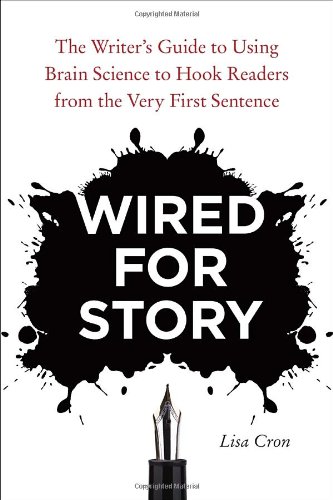
Review: Wired for Story and Story Genius by Lisa Cron


Like many amateur writers, I thought knowing how to write beautiful language (English, in my case), following the rules of grammar and including the occasional poetic passage, was the key to producing a winning novel. NaNoWriMo showed me I could produce the volume of words needed to successfully do that.

I have spent months of concentrated effort, writing and plotting and editing and rewriting, but my NaNovel is still a flat thing. So uninviting, my spouse wouldn't read it. Worse, if I hadn't written it, I wouldn't read it.

Meanwhile, so many poorly-written novels full of one-dimensional characters and grammatical errors galore—Fifty Shades of Grey is the iconic example—top the charts and capture the reader's dollar. Yes, even mine.

Fortunately for me, I latched onto these two works by Lisa Cron, They not only tell me why my fiction books are not absorbing, but provide a step-by-step plan to help me correct the issue.

Wired for Story

Why does the engaging story pull us in, over the bumps of typos and plot errors, kludgy scene development and character description? In short, why does Fifty Shades of Grey with its oft-reviewed flaws and derivative nature top the charts and launch a successful movie series on top of its publishing success? Cron argues that our brains are prepared to listen and heed stories of a particular kind. More, that our own brains reward us when we spend time absorbed in such a tale.

But it isn't just any story. The tale that rewards us is one that promises a lesson—and then delivers. The protagonist must confront a choice that matters to his or her life. Whatever choice is made, the consequences that follow are the lesson our brains reward us for learning. Such learning, even through the mythical lessons of others' success or failure, is a survival mechanism.

So: Should Joe have bacon or kippers for breakfast? Not a world-shaking or life-changing choice.

Except... what if choosing bacon meant that Joe would soon be in a battle for his life, because of a mutated pestilence that had infected the swine from which the bacon was made? To catch the reader's attention, the story must show right from the beginning the serious nature of Joe's breakfast choice, and then incorporate the consequences in a way that rewards the expectant reader.

According to Cron, it isn't the obviousness of the dilemma, but the way it is presented—the way it is written—that absorbs that survival skill in the brain, and rewards the ardent listener to a well-told story.


Story Genius
If story is the critical element of a successful, engaging novel (using the brain science presented in Wired for Story), how do we write to reveal the heart of the story? That's the thrust of Cron's second book on story creation, presented as a series of steps for us writers, with a chapter-by-chapter example of story development from real life that follows these guidelines.

Think of that old joke, "What's the book about?" "Oh, it's about 350 pages.." If you cannot summarize the key thought, the chief dilemma, in your novel before you write it, chances are good it will not be there to inveigle the reader after it is written, either.


I was so taken by these concepts that I have planned my Camp NoNo project around it for this coming July. If Cron's instructions can resuscitate the story structure for my ailing NaNovels, I'll be ahead of the game for November.

Wednesday, November 30, 2016

Double WriMo!

Final Validated Word Count: 102,421


Late last week, I looked at my per-day stats, and realized I was within shouting distance of a WriMo Double: not 50,000 words written in November, but 100,000. The story was coming easily, and even though a good chunk of it may vanish in editing, that is a concern for December, or next year.

Now the story is finished, and only the editing is left. 

And I'm not the only one. My region, California, Sonoma County, has a large group of WriMos who've obviously been cranking out words as well.

Collectively we're closing in on 5 million words written in November.

We're writers. The great thing about NaNoWriMo is that it shows everyone willing to try that writing is a simple task. It doesn't require talent, skill, or genius, only perseverance.  

Publishing? Well, that's a different kettle of fish entirely. To be an "author," you must publish. To be a writer, on the other hand... typing, handscript, or Dragon dictation is all you need.

In order to write, you just do it.

Monday, November 7, 2016

NaNoWriMo Cooking: Time to Write and Still Eat Well

Review: Campbell's Sauces: Thai Curry, Toasted Sesame, Creamy Garlic Butter


I make dinner at our house. Actually, I make breakfast as well, but that is only picking from a menu at Chick-fil-A or one of our Sunday morning favorites. Dinner, though, is made at home, ranging in complexity from icebox potpourri (leftovers) to a full Thanksgiving-level roast. With occasional exceptions, on retirement we quit going out to dinner.

Except in November. In the past, my focus on plot, character development, and world-building made problems with finding time and energy to cook.

I'd find myself saying, "I'll get up in a minute and make dinner." Two hours later, still deep in the keyboard, I'd hear my spouse in the kitchen putting together a cheese sandwich to stave off starvation. Then I'd finally knock off for the day and binge on popcorn to still my own hunger pangs.


Creamy Garlic Butter Oven Sauce

This year, I tried something new. In October, I noticed a new product in the supermarket: Campbell's Oven Sauce. With a minimum of prep time (a few minutes to peel and dice potatoes and brown chicken breasts), I could put together something very like a roast chicken dinner. My favorite of several, the Oven Sauce Creamy Garlic Butter Chicken took less than 5 minutes to get ready for the oven, and rendered up three dinners: the initial feast on Sunday night, a toast-and-chicken sandwich Monday night, with a side of green beans from the original meal, and finally, a sauce over green beans meal with a side of scrambled eggs for the protein. 

We may have been a test market, because the next thing I knew, that single shelf section in the market had become a whole aisle section offering oven sauces, slow-cooker sauces, and my new favorite, skillet sauces.

Like the oven sauces, Campbell's Skillet Sauce is usually designed for pouring over cooked chicken, but the beauty is that they can be bent in unexpected ways to make tasty entrees "with legs." That's our phrase for a meal that has leftovers that can be recombined the next night in a non-boring way.


Thai Curry Chicken

Subtly sweet and slightly spicy, thai curry sauce seems designed to go over chicken. A $5 supermarket-brand pack of chicken tenders, a 16-ouce bag of frozen peas, broccoli florets, or cauliflower, and 10 minutes of kitchen work makes a super-tasty meal with at least one leftover-supper in it.

I snip the tenders into bite-size chunks of raw chicken, brown them in the skillet, then dump the entire packet of sauce, and the frozen vegetables, into the skillet, stirring them together to get everything coated with sauce. Then I lid the pan, reduce the heat to low-medium, set the timer for 20 minutes, and go back to the keyboard.

The resulting sauce can be:

  • added like gravy to scrambled eggs
  • poured over toast
  • spooned into baked potato
  • served over rice, mashed potatoes, or pasta

The surprise comes with using the thai curry skillet sauce to finish fish sticks. Yep, those homely kid-meal favorites can be cooked according to the directions on the packet, then finished in the skillet with the "chicken" sauce packet for a savory meal that works nicely over toasted English muffin. 

Toasted Sesame with Garlic and Ginger Ground Beef

Yes, I know the packet says "chicken." I add this sauce to a pound of browned ground beef, stir in a 10-ounce packet of frozen green peas I cooked in the microwave while the beef was browning, and lid the pan, letting it simmer for 10 minutes or so.

This is more like a meaty stew or a sloppy-joe filling than a sauce. We ate it the first night in hamburger rolls with leftover slow-cooker beans. It works over mashed potatoes, but might be too thick to do well on rice or pasta.  Its tangy sweetness reminded me of South American picadillo empanada filling. Next time I make it, I plan to make biscuit empanadas with the leftovers, using ready-to-bake biscuits to cut time in the preparation.


Bottom line? You don't have to dine on sandwiches and potato chips just because it's November. Write a new plot using these amazingly tasty shortcuts, and return to your novel with a sated appetite and a satisfied family.

Tuesday, November 1, 2016

No Midnight NaNo Launch

2016 NaNovel: Patience of Snakes


Last night as I prepared for bed, I considered setting an alarm for 11:30 PM, to get up, ready myself to write, and be poised, fingers over keyboard, when 12:01 AM and NaNoWriMo arrived. In previous years, I have done that, then been unable to go to sleep for even the short hours between bedtime and nearly midnight. Novel churning in my seriously-deprived-of-sleep brain, I advanced into the NaNo fray.

This year I decided not to start at midnight, even if it does take me extra hours to fall asleep. I will keep my normal writing schedule, simply extending the hours as needed. And I will add Sundays, because November.

A midnight launch shouldn't be needed. Patience's protagonist, Carole Marling, is headed to a territory I've already visited in previous NaNovels. Her hometown, as yet unnamed, lies somewhere in the western prairies near Indigo, the site of three previous Pat Cummings novels begun in November. Her nemesis, though, is a new terror, different from the Fateful Weather of my Indigo novels.

And no, it is not snakes. 


Buddies Wanted

You can join me in writing a novel this November. Head over to the NaNoWriMo website, create your writer profile, and make a commitment to put however many words on paper. Because the truth is, you can write. The only question is, will you?

If you do join in, please go to the Buddy function and consider adding me as a writing buddy. My writing buddy philosophy is simple: if you write to me, I will reply. I will occasionally (maybe once a week) write to my whole buddy list. And I will send you encouraging words or congratulations based on your productivity.

That's all. My assumption is that buddies want to be writing their NaNovels, not messages.

Monday, April 25, 2016

Beating My Own Drum in the Band

Well, I finished my April 2016 Camp NaNoWriMo project today, and validated it at 91,972 words. I will continue editing Meant To Be Here well into next month, with an eye to publishing sometime in the fall. I know the main author, Ken Cummings, will be happy to see this conclusion!

I have to call out my awesome cabin-mates, via the clip of the Cabin Mates panel from today. (Mind you, the insanely twitchy GIF avatar for @InsanelyWitchyMarauderette really needs to be seen in motion for full appreciation.)

Please note that I am not the only camper here to finish early; I'm not even the first! No, that would be @alias093001 with 50K words past her 125K-word goal, and @Sylvela from Germany with a short day's writing (for her) past her 100K-word finish line, not to mention @Azombieatemyshoelace, who has already started a second novel in her April NaNo sprint past her 100K-word goal.

When you are surrounded by productive people, it is easy to be carried along by the tide. Also, we see only the production, not the quality, and that helps to quiet our Persistent Inner Editors. See, I can too write 3000 words a day, maybe 5000. Ooh, maybe 7500! Shut up, PIE!

Even the silent cabin mates are inspirational, if only in a speculative way. I know I've been hoping that @lauramaria3 is one of those folks who does Camp NaNo because she's writing long-hand. I have visions of a hasty OCR upload on Day 30 to validate her goal. 

Camp NaNo progress report:
Word Count: Day 25 Total: 91,972 words

Saturday, April 23, 2016

Fear of the Rule of 33

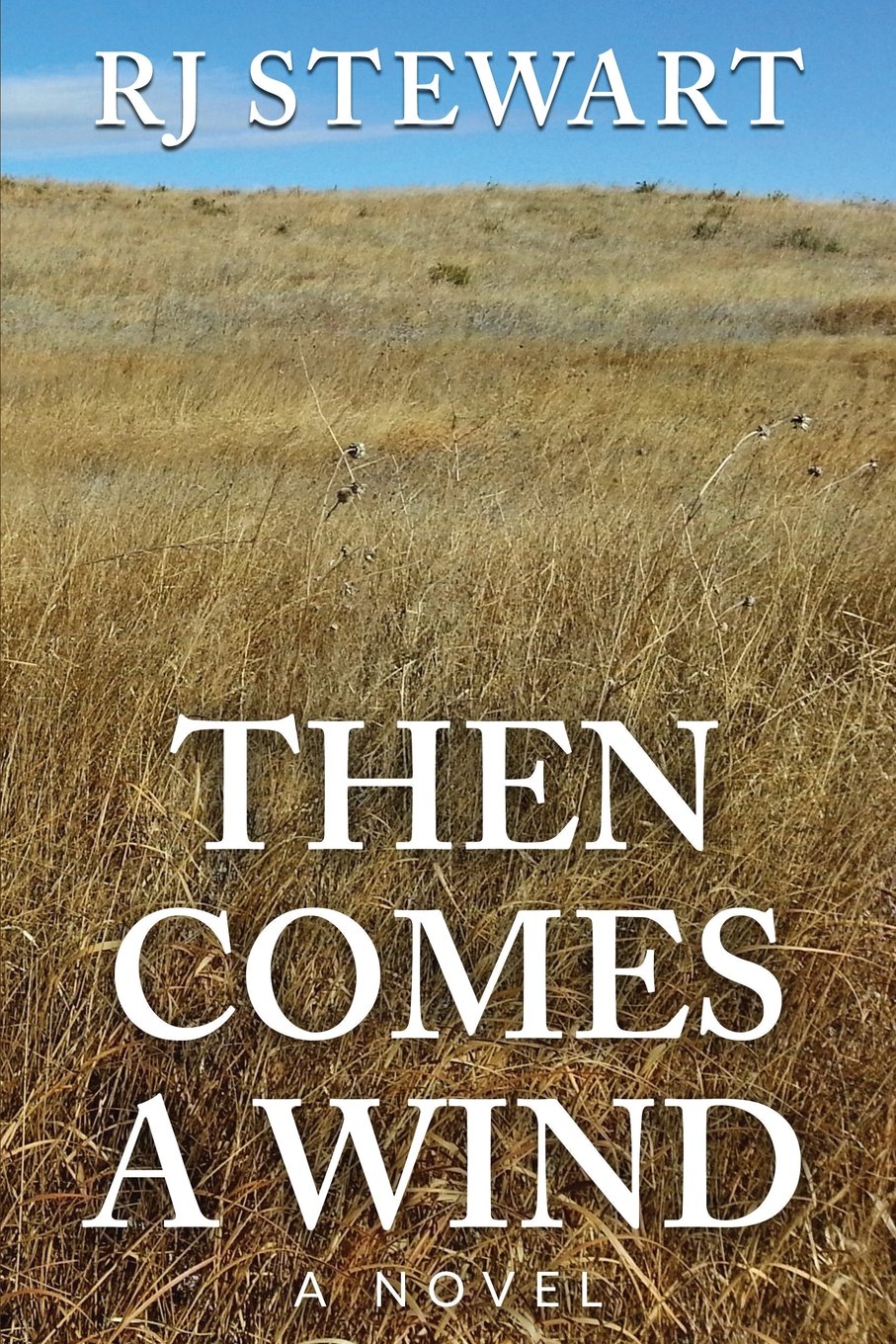
I was pleased to learn that R.J. Stewart (Ron), whose book I reviewed in August 2015, was one of eight contenders for best new novel in Colorado for Then Comes A Wind. The award was to be given at The Tattered Cover, a bookstore in Denver, and each author was invited to stand and tell a little about the publishing process—finding a publisher or finding an editor, or maybe how one connects with a beta reader—before going on to a brief reading.

Ron was up first, offering a comment about finding a beta reader:
Well, I contacted "DrPat Reads," a book blogger, who reads about a book a day. DrPat has a neat way to decide what books to read. You just open to page 33 and read a little, see if you like it. (See my Rule of 33)

He heard a quick flutter of pages behind him, and turned to see all seven other authors on the stage, flipping to page 33 in their books to see what readers would find. One said: Oh, no, a sex scene! 

Fear not, writers whose books I review. What I am looking for on page 33 is past the opening scenes (which should be tight to draw the reader in), to a point where the author's voice relaxes to the level it will likely retain to the end of the book. Of course, if I read those 20 or 40 sentences, and encounter eighteen typos, I will not buy the book. (This is important; if you can't afford to hire a proofreader, read your own manuscript at least 3 more times after you are certain it is clean. It almost never is.)

Another thing that sends a book back to the bin for me is clichés. I might read on page 33:
She wanted to fly again, but her wings were bruised so badly that even her own licks could not heal them.
or perhaps 
He had never dreamt that there would be a day to come when his relationship perched on the brink of a steep hill and could go sliding down into a dungeon of despair at any moment.
I would normally set this book down and go on. In the case of the book from which both these sentences actually came, it was written by a friend, so I won't publish a scathing review. If this rampant banality continues much further into the book, however, I won't finish it, which means I won't review it at all.

So let your scenes fall as they may on page 33. Sex, death of a pet, favorite cake recipe (yes that was on page 33 once, and it turned out to be a great book, too!)—whatever it may be, it helps in the decision process. 

Besides, who knows what will turn your eventual readers on?

Camp NaNo progress report:
Word Count: Day 23 Total: 84903 words

Friday, April 22, 2016

Hey Man, Where You Been?

We needed the rain, Lord knows, and I'm not really complaining. Except that one side effect of the chilling effect of rain is something I didn't need: pain in arthritic fingers.

And as I observed to my cabin-mates at Camp NaNo, You have NO idea how much work your fingers do until you have a bout of arthritis, and have to severely limit them to the essentials. On the other hand, cutting out browsing and surfing and social media does leave a lot more writing energy for the NaNo project...

I haven't been posting to my blog at all, and that includes writing flash fiction per Charli Mill's Carrot Ranch challenge. I haven't quit reading, either, just writing reviews in my head and waiting for the flare to subside.

I have continued writing for Ken Cummings' memoir, Meant To Be Here, and nearly met my revised goal for April Camp NaNo: 85,000 words. That takes the memoir almost to completion in raw draft form, and now comes the truly hard part: convincing Ken that editing is needed.

For one thing, we are missing Chapter 11. Chapter 10, Over the Hills and Through LAX, is way too long. It may get divided into two, Over the Hills... about Ken's adventures by bicycle, and ...and Through LAX, about his strange encounters and wild rides while driving a shuttle van.

Other edits may move stories from one chapter to another where they belong more naturally. I want to balance the chapters in size, but I will not be fanatic about it. From all I can observe, Cummings' life has been up and down and all over the place. It shouldn't be surprising if his memoir is as well!


The last sample: 
The [airport shuttle van] company had a contract to take flight crews from airport to airport, so I often had airline personnel aboard. One such shuttle trip was a charter from John Wayne airport in Orange County to LAX, with an entire flight crew aboard. The senior pilot automatically took the front right seat next to me. This was normal; I had noticed pilots preferred to sit in front, and co-pilots would defer to captains.
Driving north through Seal Beach on I-405, I left the carpool lane, merging right across the lanes so I could get to the new Interstate 105 freeway, a direct route to LAX. The flight captain challenged this move and ordered me to get back into the car-pool lane. I replied calmly that I knew what I was doing; this was a better way to go. 
He became upset, repeating that he knew how to get to LAX, complaining and insisting I stay on the 405.
Finally I told him—and the crew in back—somewhat forcefully that another driver and I had timed this new route against the 405 carpool lane. There was no time advantage either way, but I-105 offered a smoother ride, and that made it a better route to LAX. I handed him one of the company business cards, saying, "You can report any complaint about my driving to my office. The complaint line is on the back of the card."
A voice from the back said, "It sounds like The Captain has spoken." 
The pilot blinked and sat back. "You're right," he said.
No more fuss. At the end of the run, the flight captain waited until the others had moved away, then apologized for trying to "take command" from the shotgun seat.


Word Count: Day 22 Total: 84009 words

Monday, April 11, 2016

Breaking Stride, Breaking Rules

Cindi Staiger stokes tandem at the Furnace Creek 508 race.
I declared yesterday a day of rest—or rather, my body did. I couldn't make myself get out of my nice warm bed. I really didn't need to sleep, but I did require some word-consumption. So I opened my Kindle and devoured the conclusion of the J.E. Hopkins thriller, The Scarlet Crane, after which I segue'd into its sequel, The Saffron Falcon. 

Since I finished Ned Hayes' The Eagle Tree last Friday, perhaps I should to set up a new TBR category on my Kindle: To Be Reviewed!

Finding motivation in the midst of the doldrums can be a challenge. When your goals are self-set, and missing a deadline affects only your self-image, it can make it even harder to keep pushing. This is one of the ways Camp NaNo helps us achieve our dreams: a cabin full of people to be up when you are down, peppy when you are depleted, and willing to lend an ear while you complain or crow.

Even in "real life," though, these self-imposed rules can bite. The sample from Meant To Be Here today comes from Ken Cummings' story of supporting Cindi Staiger, the female cyclist who won the Race Across AMerica (RAAM) in 1988. 

By this point in the race, Cindi has been in the pink jersey (denoting the female race leader) since day one, and has been on her bicycle 20 hours out of each of eight or nine days: 

In Parkersburg, West Virginia, with the close-support van and the Mothership [the 20-foot RV with the kitchen and Cindi's little-used bunk in it] right behind her, Cindi missed a left turn and started to freak out. I was on the radio link in the close support van; I had to shout loudly to cut through her panic, telling her to turn left down an alley I could see would lead her to a street with access back onto the race route on US Highway 50. Cindi followed my instructions, leading her whole support procession bumping and scraping down the alley.
Later, explaining “off-mic” why she had gone off-course, she confided to me and the two other male cyclists in her close support crew that the crew-leader, a woman, and her nutritionist, another woman, wouldn’t let her have any coffee. They insisted that she drink something called glycine as a substitute, because caffeine was “bad for her.”
“No problem!” I told her. “This part of the route is straight-on for several miles. Ride on alone—we’ll get you something at a shop.” She rode off, and I reminded the other crew members sternly, “As far as anyone else is concerned, we’re only giving Cindi glycine.
A few minutes later, I leaned out of the support van to pass Cindi a tall cup. “Here is your steaming black cup of glycine,” I told her with a wink.


In any extreme event, you have to be willing to break the rules—your self-imposed rules—and indulge yourself occasionally. Otherwise, you risk burning out before you have a chance to reach your goal! 


Word Count: Day 10 (Rest Day): 414
Word Count Total: 40,085 words

Word Count: Day 11 Session 1: 2140; Session 2: none so far

Word Count Total: 42,635 words

Saturday, April 9, 2016

To and Fro in the Earth

Partial map of Concourse tunnels under downtown Oklahoma City
Doing what is expected is a good way to make others feel comfortable with you, but taking a step—or thirty—off the beaten path can provide unexpected challenges along with the benefits. 

I was reminded of this recently when it came time to file my taxes. 

For the first time this year, I had royalty income to include on my return. Although it didn't change the total due on the bottom line, this meager amount of royalties required a completely out-of-proportion effort to account for it to the IRS. Despite the work involved, it was satisfying in a perverse way. This is what authors who sell need to do. I may have only a little toe over that line, but I'm now in the category!

The things we do in life change us, in major ways and subtle ones. Ken Cummings talks about this in today's sample from Meant To Be Here: 


In 1978, I had a job interview with Kerr-McGee Corporation in Oklahoma City. Along with my key, the desk clerk at the hotel they booked me into gave me a flyer describing the city's pedestrian tunnel system. Tunnels linked many parts of the downtown area, letting people avoid surface traffic, and move between buildings in air-conditioned comfort despite the unpleasant heat and humidity of the Oklahoma summer. To my delight, the system included a connection from the hotel to the Kerr-McGee tower.
The next morning I went through the tunnels and presented my papers to the guard at the small tunnel entrance to the Kerr-McGee building. He was flabbergasted. Every other interviewee before me had gone to the big glass doors with their multiple guards, up at the street level. The guard-shack there had a clipboard list of people who were permitted to enter, but from the tunnels, this man had no access to that list.
I was issued a pass from the tunnel door only after the guard made several calls to verify that I was expected. During my interview on the 24th floor, they asked why I had chosen that entrance. "You knew you were interviewing a mining engineer," I answered, "and yet you didn't expect that given a tunnel connection, he would use it?"

After I was hired on, one day while I was at work in the Kerr-McGee Tower my wife came downtown to set up a bank account for me. She deliberately selected a bank that connected to the tunnels. Waiting for me to arrive on my lunch break, she sat way in the back of the bank, next to the door labeled "Concourse Access." One of the bank officers asked if she didn't want to sit out in front where she could see me coming and wave me into the bank.
"Oh no, I know he will come through this door." And moments later, I did.


Thoreau told us, "If a man loses pace with his companions, perhaps it is because he hears a different drummer. Let him step to the music which he hears, however measured, or far away." He is not wrong, but the man himself might be happier if he finds companions—whether a wife or cabin-mates—who share his vision of the world, and thus know what to expect from him even when he chooses a different road.

Word Count: Day 9 Session 1: 2163; Session 2: 1098
Word Count Total: 40,081 words

Friday, April 8, 2016

Raising the Bar

Maybe it's the active cabin and my very productive cabin-mates at Camp NaNo this April. Maybe it's the wonderful tales from Kenneth Cummings that I am organizing into Meant To Be Here this month.

Or maybe I just underestimated the way the word count climbs when you write diligently every day for at least three hours, but last night, I realized I was already half-way to my 60,000-word goal.

Time to raise the bar. I changed my goal to 85K, the same goal I set for myself last April for the first half of the memoir. I may have to raise it yet again, since after just one session today, I'm 40% of the way to the new goal!

Here's the daily sample from the Work In Progress: 

I served as a U.S. Cycling Federation (USCF) official at the Colorado time trials one year. These state championships are feeders for the national trials; race winners here are eligible to compete in the U.S. 
Time Trial Championships.

This event was to be held on the rolling plains near Strasburg, Colorado, a small town east of Denver. I wanted to collect the mileage stipend, so I decided to pack light camping gear and ride my bike there the day before the time trials. The weather was predicted to be fine; I thought bike and bedroll would be all I needed.

Out in Strasburg on the barren plains of eastern Colorado, I could find no cluster of trees dense enough to hide my bike and camp in. I went back into town, and asked the manager of the local historical museum where I might be able to camp. He told me there really wasn't a camp-ground per se, but said if I came back after dark, I could sleep there between a couple of old rail cars on the museum grounds.

After dinner, I picked my way between the cars, and bundled into my sleeping bag on the ground in the dark space that separated them. The sky was clear, so any heat in the ground radiated rapidly away. Near midnight, it got really windy, and the cold breeze sucked away any remaining warmth. Unable to sleep, I went hunting for better shelter. I found one of the passenger cars was unlocked and moved in. 

I was out and away again before sunrise the next morning, off to the races.

Honesty prompts me to point out that, even with the new 85K goal, I am still one of the "slackers" in my cabin. Four of my cabin-mates have goals of 100K or more. I got lucky this year! 

Word Count: Day 8 Session 1: 2324; Session 2: 2758
Word Count Total: 36,820 words

Thursday, April 7, 2016

Coasting to Glory

San Gorgonio Pass Wind Farm, near Palm Springs, CA
Some days, trying to write seems like pedaling uphill into a headwind. I've had a couple of those days this week, time wasted battling computer apps instead of getting words on the paper.

Then comes a great day when all the apps just work, the words come easily, and you seem to have a tailwind pushing energy into your tired fingers.

The following story from Kenneth Cummings' Meant To Be Here might have been custom-written to illustrate this kind of day: 

The finest downhill run I've ever ridden on the bike was from Beaumont, California to just west of Palm Springs. My 26-mile descent took in a couple of miles on the Interstate 10 shoulder, a couple of miles of highway frontage with a bit right on CA Route 111, and a whole lot of a semi-abandoned frontage road used only by cyclists.

The route dropped half a mile from San Gorgonio Pass to nearly sea level in that 26 miles. With a 40-plus-MPH tailwind powering me (the same way it does the turbines on the area's extensive wind farm), I covered the entire distance from summit to the edge of Palm Springs in one hour exactly.

I kept my feet propped up on the bottom bracket of the bike to maintain the purity of the run. A couple of bicyclists, their bikes on a car-top rack, spotted me from their car on the highway, and slowed down on the Interstate shoulder to give me a rousing cheer.

On the other hand, the return trip pedaling a fully-loaded touring bike uphill into the teeth of that wind would be next to impossible. I happily accepted a ride back up to the summit of the pass from a young pick-up driver. 

Who says you can’t have your cake and eat it too? I got to ride downhill both ways!

When you get your mind into the right place, it can be easy to write, speeding along to the cheers of others, relaxed and happy, and full of momentum. The secret, as Ken pointed out, is to accept help over the tough spots, so you can coast downhill, both ways.  

Word Count: Day 7 Session 1: 1550; Session 2: none so far
Word Count Total: 30,866 words

Paid To Ride

Very little in life is more satisfying than being paid to do something you would do for fun anyway. I remember the thrill I got when the royalties from my first legitimately-published book began to come in.

It was especially satisfying because the book in question started as a test piece, designed to explore e-book formatting and HTML5 code-writing. Because I had already been rewarded by the experience I gained writing it, it seemed excessive to receive payment for it as well.

I suspect it's very similar to way Kenneth Cummings felt upon learning that he could get paid to ride his bike for a popular group event in Orange County, California: 

One year Bill Sellin, head of the Bicycle Club of Irvine, proposed a club ride to an overnight party at a shore-side campground in northern San Diego County. Riders would not have to carry camping gear; Bill would transport it for a dollar if you were a BCI member. 
He charged two dollars for family members if they were not BCI members. three dollars to tote gear for other people. The same transport took wood for a beach campfire and food for the picnic dinner.

He had done this ride before, and it was very popular. There were often a hundred riders or more for these overnight trips, so it was a good fund-raiser for the club. I wasn't interested in the overnight camp. I asked if I could ride the 40 miles down there with them, and then just ride back the same day. With no overnight stay, I had no gear to tote. 

"Sure,” Bill told me. “I will not charge you for that." Then some people said their families just wanted to drive down there for the evening campfire and then drive home. "OK, I'll make that the zero-dollar option," Bill told them.

"Wait just a minute!" I was joking, but responded as if I was annoyed. "I thought I was the zero-dollar option for riding down there and back the same day." Bill acknowledged my point; he declared that mine was now the negative-dollar option. 

He actually paid me a dollar for doing the ride.

Confucius is reported to have said, "Find a job you love, and you'll never work a day in your life." For me in retirement, writing is that job. Any income I make from it is pure gravy.

Word Count: Day 6 Session 1: 1891; Session 2: 1815
Word Count Total: 28,944 words

The Locust

Example of a faired tricycle via kmxtornado.blogspot
Hunger comes in many sizes. At Camp NaNo, we know this. That yearning to hit your daily word goal is akin to being "a mite peckish," as Monty Python's Cheese Shop Sketch had it. Next, the aching gulf waiting to be filled by the exact right word: poets know this hunger, acute and burning, like a street urchin peering through the bakery window.

Then there is the diet-buster. This hunger is not sated by thousands of words "down on the paper." Not even 10K words makes a dent in it. It's like grazing at an unsatisfactory buffet, searching through bite after bite for the exact flavor that will please your palate. In writing, this hunger can only be appeased by sharing: publishing what you have written.

Today's snippet from Meant To Be Here comes from the tale of Kenneth Cummings' 1983 trip by fully-faired tricycle from Denver to California. It seems Ken's wife had packed too many salty snacks for him, and he didn't have enough water, so he just didn't eat much for several days of hard pedaling through the Nevada and California desert. 

At last he reached Orange County, where he was scheduled to crash with a friend:

Tustin was followed by a few miles of twists and turns in Irvine, and then a last half-mile of pushing the tricycle up the hill from the beach in Laguna Beach to David’s house. Once there, I could finally rest. 

David welcomed me with, “Make yourself at home, help yourself to whatever you want,” then he left for work. After two days of heavy exercise with very little to eat, I was happy to take him at his word. Before he got back that afternoon, I had emptied his refrigerator and pantry cupboard. 

For years afterward, he would introduce me as “Ken, the locust” who had descended on his kitchen with a clicking whir and ate everything edible before moving on.


So far, I've managed my "mite peckish" hunger, and been content to leave my urchin-staring for my Inner Editor to appease. (Later, dear, later!) I hope my incremental sharing satisfies my hunger to publish, at the same time it whets your appetite to read more of Kenneth's memoirs once they are published! 

Word Count: Day 5 Session 1: 1554; Session 2: 1279
Word Count Total: 25,238 words

Monday, April 4, 2016

Camp NaNo First Monday

By the first Monday of Camp NaNoWriMo, folks in my cabin are struggling with the demands of everyday life, along with the issues that can be expected to dog any writer. We all have different techniques to get past our Monday blues, writing doldrums, and plain, ordinary infections of jes' dowanna doit.

One of my favorite techniques is to begin writing about something I struggled with in the past, and managed to survive. I can think of any number of problems that seemed insoluble while I was in the middle of them, but in looking back, I see the clearly-marked exit that was there all along.

And now, I have plenty of blockage-breaking solutions to write about, to get that writing momentum going. Sometimes, being lucky is hard to see, except in retrospect.

An example from Kenneth Cummings' memoirs probably doesn't seem lucky to him, even with 37 year's worth of hindsight: 

In 1979, my wife was back in school at Mines, and I had returned from South Africa to join her. I had a job at a local mine, and started looking for a touring bike. 

Portia Masterson, the owner of the bike shop in Golden, had a Miyata touring bike of the kind I wanted, that she had ridden for several years. When she bought herself a new bicycle, she sold me the Miyata, and I rode it with great pleasure for a couple of years.

One afternoon in 1981, I was riding downhill on the frontage road below Lookout Mountain into Golden, when I hit a rock. I managed not to flip the bike, but both calipers [brakes] were broken off. The bike never was as sweet a ride after that, even though I continued to peddle around on it. 


Not long after that, I was pedaling along a Denver residential street alongside Roger Owens, another Denver Bicycle Touring Club member. I was chatting with Roger and enjoying the morning air when a Volkswagen passed us and turned left from the street ahead of us into a driveway. We saw the driver reversing out of the driveway, then to our disbelief, she backed completely across the street into the opposite driveway. Even worse, she then pulled right back into the street, smack into our path!

There was no time for emergency braking, although we both tried. Roger was to my left; with just enough room, he managed to whip around the car ahead of her front bumper. I was not so lucky. I could not stop in time, and was flipped across her hood and down to the street. The driver climbed out of her car to scold me. She was annoyed that I had broken off her wing mirror on my trip across the hood!

I was in shock, and simply wanted to escape. My bike was technically rideable, and we were close to the house. I was able to get home on it, riding slowly, not braking or even steering very much. The next time I rode the Miyata, however, the real damage was revealed as soon as I hit the brakes in a normal fashion. The front forks flexed at the damage point enough to allow the front wheel to touch the down-tube. The bike came to an abrupt halt; I was pitched over the handlebars, landing on my helmet. The impact gave me a concussion.

Alas, my Miyata was no longer even remotely rideable.


For me, rendering this story into readable prose from Cummings' verbal account helped to lubricate my stalled Monday writing engine.

Word Count: Day 4 Session 1: 4815; Session 2: 665
Word Count Total: 22,405 words

Sunday, April 3, 2016

Trying Not to Break the Rhythm

Necking with cup-and-cone failure of a metal rod
 under tension. Via nsw.edu.au.
Now that I'm retired, Sunday is not a day of rest, just a day without Chick-fil-A. It takes extra effort to begin without the routine of sitting in the restaurant, popping open the laptop to get some free WiFi. 

I sit at my home desk to get into the rhythm; my fingers on the keyboard pull me along, and the stories I'm recording keep me going. Today I was surprised to learn there were some missed opportunities, things Ken Cummings regrets not doing.

Here is a quick example from Meant To Be Here of one of those regrets: 

The mining community we lived in near the end of our stay in the Republic of South Africa was strictly a bedroom community, inhabited almost entirely by mine employees, plus a few retired mine workers who had bought their property from the company as a sort of pension. A nearby industrial city (town, really) named Springs was our source of "big city" pleasures: a night-club where they had a little dance floor, a Kentucky Fried Chicken place, a public library, an Arthur Murray's where we took ballroom dancing lessons, a creditable little zoo.
My wife was working in Springs on a day when I had a holiday, and I had dropped her off at work. I parked in town, and set out for a stroll above-ground for a change. I was walking along the street when I heard a clear sound, one that is very familiar to those who have taken the Strength of Materials lab course sometimes known as "Rod-Breaking 101." The sharp TUNNGG! vibrating through the air marked something metal breaking: a rod, a bolt, or maybe a string of rebar.
To this day, I regret I did not snatch out the disposable camera I was carrying in my pocket, but this was long before the reflexive picture-taking that is a common response now that we all carry cameras in our phones. Instead, I turned towards the sound just in time to see a tower crane slowly topple over.
At the pivot of the falling tower, just out of view behind a four- to five-story building that was under construction, one or more of the anchor bolts had failed. The ringing report of that bolt failure was the sound I had heard.
The crane tower, seeming to move in slow motion, fell toward the incomplete structure. It hit the top of the building's near wall about a quarter of the tower's length below its cab.
As it hit, the tower boom flattened out on the top of the building. Ponderously, the balancing arm with the crane's massive concrete counter-weight began to pivot around the point where it connected to the tower. It swung over the top of the building near a corner of the structure's wall, and smashed into the side facing me.
Rather than the vivid memory of the bright metal-failure and the slow-motion failure of the crane, I could have had a series of shots illustrating the whole sequence, worth hundreds of Rand to the local paper.
I tell myself that the camera would simply have been confiscated by the police who showed up at the scene almost immediately, if they knew I had it. But that's just sour grapes, my regret for an opportunity missed.


I will not regret a day wasted. The best way to avoid regrets is to seize opportunities as they are presented. Of course, even when I miss the chance to write on Sunday, I can always sit down on Monday, take a bite of my chicken biscuit, and write about missed opportunity...


Word Count: Day 3 Session 1: 4523; Session 2: 3563
Word Count Total: 16,924 words