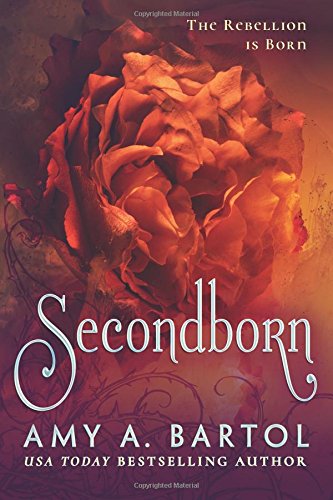
Review: Secondborn by Amy Bartol
Forget Hunger Games. Despite the superficial thematic resemblance, Secondborn is a clever new take on a dystopian society of elites with slaves who fight for their entertainment. Instead of districts with second-class citizens who live and toil for the rulers, this novel brings it home.
Firstborn children rule. Secondborn fight, toil, die for the firstborn elites—and will never be allowed to marry or reproduce. Third and laterborn? They are aborted, killed by their parents shortly after their birth, or hunted down and tortured to death for the amusement of the sadistic agents of the Census.
Roselle is Gabriel St. Sismode's younger sister. This means that she will Transition from pampered child of The Sword Othalla St. Sismode. She will become a low-ranked cog in the Sword war machine, with a life expectancy measured in days, simply because she was born second.
Roselle's face is well-known, because her childhood has been broadcast to the world. That won't help her in her new life, where every firstborn fears her supposed influence with her worshipful fans, and secondborns resent the apparant life of luxury she has led. They see only that she was allowed to live "at home" until 18, unlike most Sword secondborns who are Transitioned into the army at age 10. They cannot see that even as a child, she was kept isolated from other children (especially her older brother), and lived a regimented life of training for battle, in a cold atmosphere of adult contempt for her secondborn status.
She will need to call on every lesson she has ever learned to thread the perilous path between the rebel secondborn army The Gates of Dawn, the sinister Census agent Crow with his license to kill laterborns and his desire to torture the famous Roselle, and the Gardeners of the Rose, a secret firstborn group who see Roselle as the ideal pawn in their bid to seize power.
The land-mines in her way will include not only these formal enemies, but also her estranged family, and many other secondborn Swords, both troops and officers.
Bartol has built a deliciously detailed, vicious world to rival any dystopian conflict, and her heroine is a suitably complex, strong combatant in it. I can't wait to see where the author will take Roselle Sword next.
Liner Note
I received this book free as a Kindle First selection for the month of July.
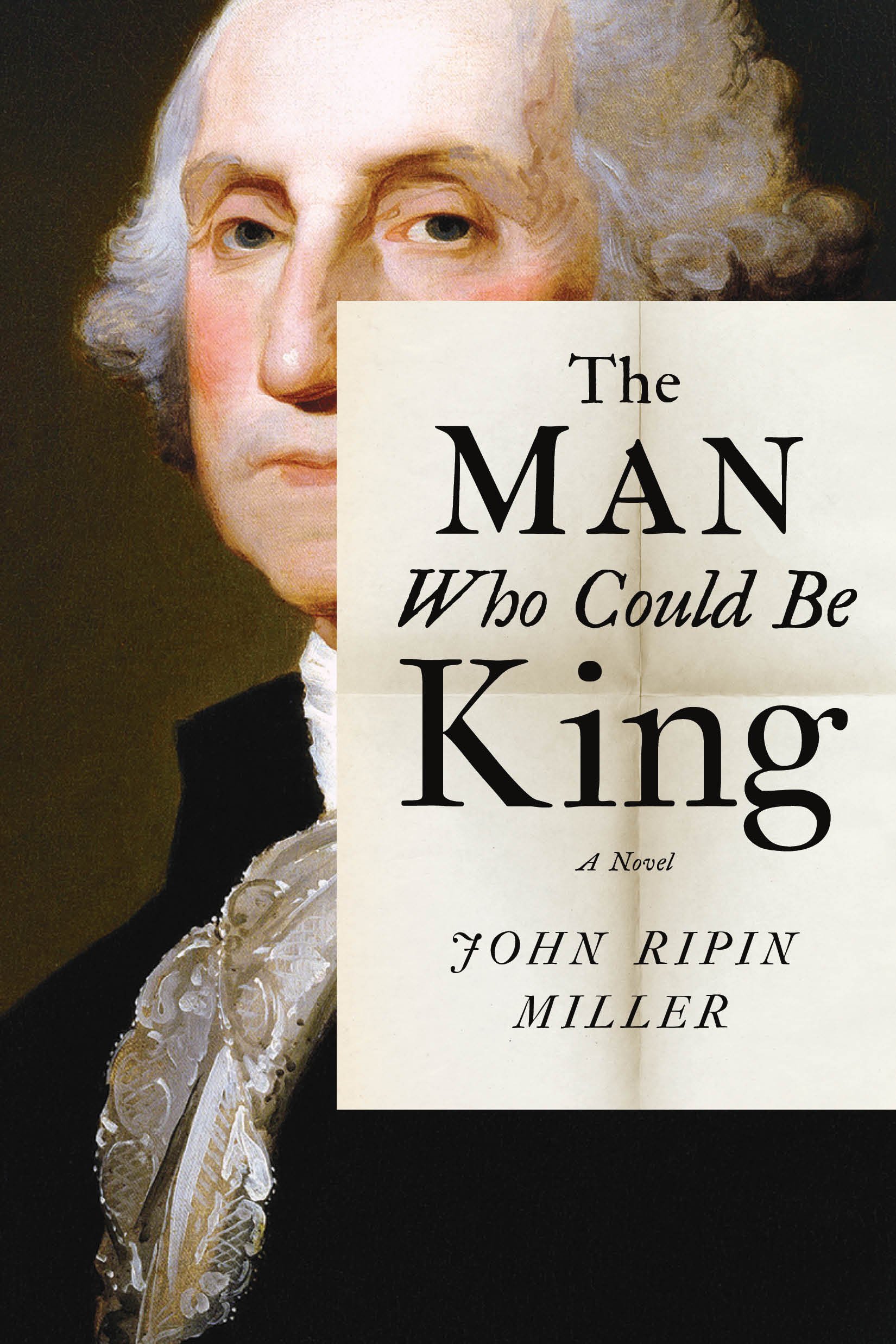
George Washington, Victor of the Battle of Trenton, the Battle of Yorktown, Revolutionary War. George Washington, crossing the Delaware. George Washington, "Father of Our Country."
But also: George Washington, life-long slave owner, less educated than Jefferson and other "elite" Revolutionary leaders, who as President still owned and rented out his real estate holdings, even petitioning a government agency he had created for help finding foreigners as tenants. By the time of President "Tippecanoe" Tyler, his virtue was already being examined for flaws.
In Miller's novel, Josiah Stockbridge, one-time aide to General George Washington, writes his recollection of the great man to inform his own great-grandchildren of the truth. By way of arriving at that truth, his memoir spans a good part of the War for Independence, and focuses specifically on an event after Cornwallis had surrendered, but before Ben Franklin and Thomas Jefferson had completed the treaty that gave us our independence.
Benjamin Franklin pointed out in a letter to a British friend, a copy of which he sent to the General, “An American planter was chosen by us to command our troops and continued during the whole war. This man sent home to you, one after another, five of your best generals, baffled, their heads bare of laurels, disgraced even in the opinion of their employers.” He could have added that those five generals commanded troops that were more numerous and better trained, armed, and clothed than the General’s.
Diverging often to set the stage and give us glimpses of Washington's virtuous behavior throughout the war, Stockbridge's account deals primarily with a mutiny in the army that threatened the new nation's elected Congress with a coup over Army pay and pensions, and details how "The General" dealt with it. Wide-spread grumbling by ordinary soldiers was encouraged by an officer corps looking to oust General Washington—or perhaps to recruit him to lead the coup!
Miller lets Stockbridge show us the reasons behind Washington's options, in the proposed mutiny as well as during the rest of the war, illuminated throughout with quotes from Joseph Addison's 1713 play Cato. This play (known to be a favorite of Franklin, Jefferson, and Washington), which opposes Cato the Younger's republican virtue vs. the soon-to-be dictator perpetuo, Julius Caesar, makes a fitting encapsulation of the choice before the General.
We already know the final decision he made. It is his internal debate, to the extent Stockbridge could discern it, and the sublime way the General maneuvers the army to concur with it, that reveals the depth of Washington's virtue.
It is often written that, during his presidency, the General was not a politician. Of course, he was a great politician in large part because he was not perceived as a politician.
Liner Notes
I almost decided to skip my Kindle First choice this month. I'm very glad I did not; I chose this novel as my free book, and enjoyed it immensely.
I had only mediocre hopes for this novel, which I selected at no charge as a Kindle First offering from a very poor field of novels. This was simply the least unenticing of the six books, by my tastes, anyway, that we were offered for May.
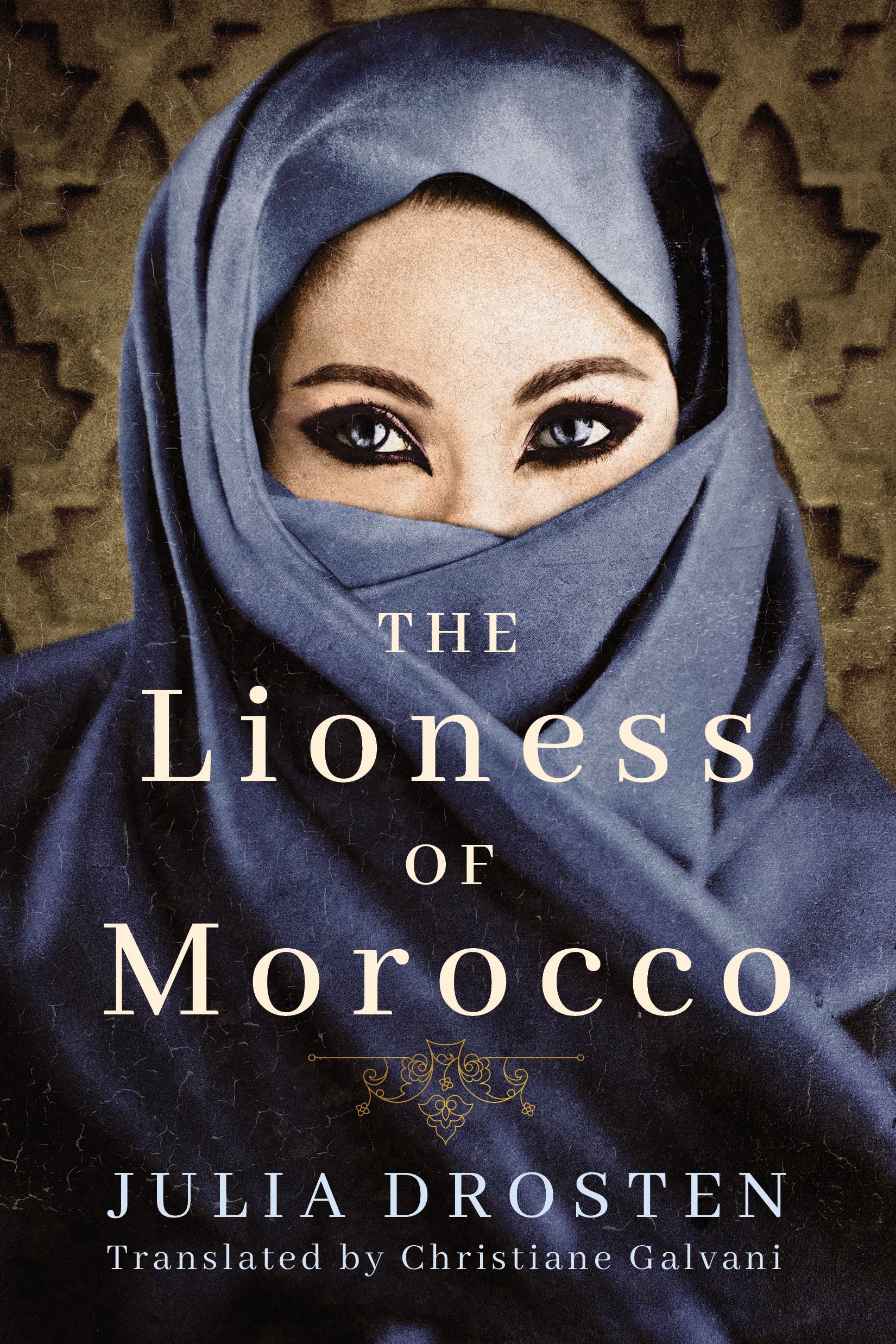
Once I began reading it, however, I was taken by the story. Its setting on the Atlantic Coast of Africa instead of the usual Mediterranean port or Marrakech made for a promising start. The author had obviously done a lot of research on the history of the area and culture of the period. She then folded it (almost) seamlessly into her tale of a daring Victorian woman.
From her first bold escape from stodgy, propriety-laden London to 'frontier' life in Morocco, however, Sibylla Hopkins's expressions of rebellion devolve into wardrobe and footwear choices. The repetition of situations and descriptions begins to grate after the first section of the story, while a hypocritically sympathetic treatment of harems and their isolation of women (echoing the Victorian purdah Sibylla escaped in London) grows from merely irritating to disturbing.
Over and over, Sibylla retreats from her initial daring vision and (outwardly) chooses the course of propriety, keeping her "improper" behavior in the shadows. While realistic for women of the time, this is not what is implied by the book's title, and so I was disapointed—the more so because, after reading the first section, I had already revised expectations upward from an original lack of enthusiasm.
At the end, I was wincing over the wimpy behavior of the "lioness" whose moniker, it became clear, was a reference to her blond hair, and had nothing to do with courage, command, or boldness.
Review: Black Rain by Matthew B.J. Delaney
This novel was my Kindle First choice for August, after a "dry month" in which none of the six choices were worth the memory space on my Kindle. (This is my opinion only, of course, as with all my reviews.)
For Jack Saxton, life is good; his step-father is head of Genico, the largest provider of "samps" (gen-engineered medicines to cure diseases and genetic disorders), and the gen-engineered artificial-human Synthates who perform all the distasteful or tedious tasks that keep his world running smoothly. Like his step-brother Phillip, Jack's only job is to enjoy life.
For Phillip Saxton, the world would be better without his step-brother Jack. He lives a hard-partying life reminiscent of Gordon Gecko's Wall Street. What Phillip buys and sells is not stocks and businesses, but manufactured people—Synthates—and modified biological samples. His immediate goal is to score enough cocaine to make it through the night; long-term, he wants to supplant Jack as the favored son in his father's eyes.
Phillip's envy seems to have poisoned him, to the point where he reports Jack as a Synthate "passing as human," condemning his brother to die in the Games. Jack's life is about to spin out of control, his wife murdered, his status changed in an instant from presumptive heir of Genico to slave.
Then there's the Black Rain of the title, a hideous plague that killed or disabled "naturals," but to which the Synthates were immune. The Games that slay so many Synthates seem justified by the need to punish the slaves for their release of Black Rain.
For humans to exist, we must live within a society. And a society cannot function with the presence of extreme violence. “In my opinion our human moral code has less to do with a fear of punishment and more to do with our inherent need to maintain a stable society..."
Delaney has done an excellent job of presenting a future society based on genetically-modified humans and medicine, with a hard look at the social problems that holding humans as slaves always entails. There are twists galore—this is not a formulaic tale of injustice, with blackly evil villains and morally-pure heroes. It is much more interesting—more human—than that.
I guarantee you will not be able to predict the ending from the first chapters. Jack must stay alive through the experience to uncover to truth. You, at least, can simply follow and enjoy the eventual unveiling.
I recently watched again the Kevin Costner depiction of the young Wyatt Earp, backed up by Randy Quaid as the alcoholic Doc Holliday.
There's Kurt Russell's offering of the remorselessly-ethical lawman in Tombstone—although I thought he and Val Kilmer as Doc Holliday were miscast in each other's roles.
I also think of Burt Lancaster's seminal portrayal of Earp and Kirk Douglas' nuanced Doc Holliday in Gunfight at the OK Corral. (For the younger viewers, that's the version with Star Trek's "Bones," DeForrest Kelly, as Wyatt's brother Morgan.)
But all those popular outings of the Earp-versus-Clanton shoot-out that famously left Wyatt Earp "the last man standing" are focused on the men. Josephine Marcus, the mail-order bride of Sheriff John Behan who wound up as the mistress, and then the wife, of Wyatt Earp instead, barely appears in Tombstone, the single film of the three that includes her.
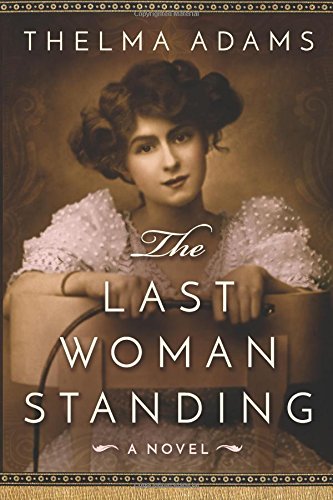
Thelma Adams sets the record to rights with this wonderful novelization of the famous gunfight from the point of view of Wyatt Earp's second wife.
She begins with Josephine Sarah Marcus as the wild-child daughter of a Jewish baker in San Francisco, waiting impatiently for the summons to join her fiance John Behan in Arizona. She had met the handsome fellow while touring with the Florodora-like Pinafore dance troupe the previous year. The teenage runaway fell in love with the face and charm of Behan, hired to escort the ladies and protect them from their unruly audiences.
Behan persuaded her to return home until he sent for her, promising her that he would do so as soon as he secured the position of Sheriff in Tombstone. Josephine was thrilled by her fantasy Western lawman, and eager to escape from the fate of a good Jewish daughter, to marry as her parents direct. Her mother was, if not resigned to the match, at least reassured by the bride-groom's prestigious position in a Western city.
Little did Josephine or her mother know; Tombstone at the time she met Behan was little more than tents and wild miners, a camp still divided between Blue and Grey five years after the close of Civil War hostilities in the civilized East. Josephine does not know for certain, but comes to suspect during the three-day trip from the city to Tombstone, that her chaperone from San Francisco, Kitty, may have once been her fiance's mistress. Further, her erstwhile groom is having second thoughts about marriage, and sees his Sheriff's position as a golden ticket to bribes and kickbacks.
And as Josephine steps out of the stage in Tombstone just twelve months before the shoot-out, she will encounter the real deal: an upright straight-shooting fellow (in both senses of the phrase) who will capture her heart.
Adams' novel gives us a real sense of the West, and a concept of the hard lives of its women. Marcus herself is shown as a courageous and inventive person, willing to risk everything—twice—for the desire of her heart. She is also shown to be a worthy partner to the legendary Earp. In this, Wyatt Earp's own words might well serve for his wife of fifty years:
"We know the truth, but we believe in the legend." —Wyatt Earp, My Fight at O.K. Corral
It would be easy to think of this as a crime novel; after all, the initial scenes are set in the interview room of an FBI building. The language at first is of crime and criminals. Identity. Victims. Perpetrator. Evidence. We are given few clues about the interviewee's status in the "case" that is gradually being revealed through her testimony.
The young woman on the other side of the table is coy and sullen by turns with the lead interviewer, Victor Hannoverian, and outspokenly hostile to his partner, Brandon Eddison. She has no formal ID, and the men only know her name as "Maya" because that's all she will tell them.
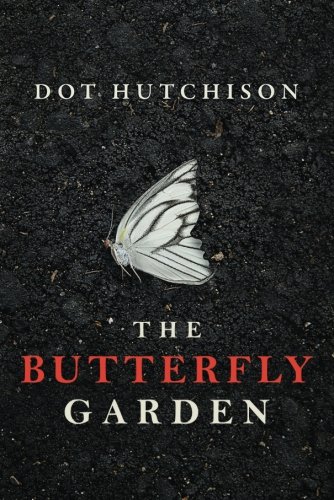
Further frustrating both FBI agents, and infuriating the mercurial Eddison, she will not answer any questions with a direct answer. Instead, she shares stories of her life in the Butterfly Garden.
What unfolds from these tales, as delicately as the wings of a butterfly, is a picture of community, of a family of women in a garden. We learn of Maya's strength, and the virtues and flaws of the other women in the garden through her narrative. Victor needs all his patience (developed from dealing with teenage daughters) to cope with Maya and his partner alike, as he struggles to get a clear picture of all that happened in the garden.
Maya herself seems unable to break free from her experience in that garden, unless she can drag her story from its cocoon and reveal it in her own way. As she does, we see that hero, victim, rescuer and perpetrator can be fluid categories. Crime is merely the bare skin this novel wears. Like tattoo ink underneath that skin is love both profane and sacred: the gluttonous acquisition of beauty for its own sake, and the open love of one's family in spite of faults and abilities.
I can share no more without spoilers. I only share this much to convince you that it is worth reading past the pain and horror: there is a victory (of sorts) before the end.
Liner Note
For a slightly different take on the "stealing beauty" concept of The Butterly Garden, check out the 1981 movie with Bruce Dern and Maud Adams, Tattoo.
In the emotional life of the autistic child, there is no ambivalence. If young March Wong's mother is baffled, and child-services agents appalled by his insistence on tree-climbing, he himself has no doubts. A climb in each of his home's trees every morning is as essential to March's preparation for school as putting on his shoes or washing his face. Perhaps more essential.
March certainly feels more kinship with the trees he climbs and studies than with the people in his life. He can read the bark and see a climbing path more easily than he can figure out motivations and desires of his mother, teachers, and fellow students.
Or, as March himself confides,
Trees do not require you to make certain sounds to be understood. They are simply present and ready for you to climb at any time. Trees are easier.
March Wang's depth of knowledge about the trees he loves is impressive. His dream is to climb a true Ponderosa Pine, a tree which is disappearing from the forests of the Northwest. So when he climbs a neighbor's Red Cedar and spies an even loftier tree in the distance, he breaks his mother's rule about spending too much time in any one tree. He spends over two hours in the cedar, dreaming about climbing that distant tree.
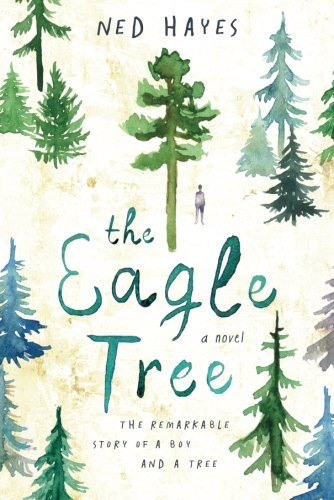
The story is told entirely in March Wong's voice; he tells us the neighbor with the Red Cedar, Mr. Clayton, has informed him that the tree he spotted is called "The Eagle Tree" because it had a pair of eagles nesting in it in a previous season. He explains, March-fashion, how his "Uncle Mike" takes him to see the Eagle Tree close up, and chokes up at the sight of old-growth forests surrounding it:
“The people protesting to save these woods are right—these trees are almost untouched.” His voice was different somehow. It was exactly the sound in his voice that I heard at the funeral of my great-uncle.
When March finds out that the Eagle Tree is not only an out-of-range Ponderosa Pine, but also may be sold to a development company, he is stirred to extraordinary measures to save it. He must connect emotionally with his mother and Uncle Mike, Mr. Clayton, his school-mates, and the whole community, to share with them his knowledge of and emotional response to trees.
This is a fascinating novel with many levels to enjoy: an autistic boy's world-view; the bafflement of adults trying to deal with autism in their children; the science of trees and forests and their ecology. At its center and root is the courage of March Wong, who relies on knowledge and ignores pain to find the one sure comfort in his life: climbing trees. He is marvelous, and his story is no less so. March tells it:
The majority of who I really am is buried underneath the surface, and no one sees it.
But thanks to Ned Hayes, we do, March. We truly do.
The Amazon Prime program nets me goodies beyond free shipping; one of the best from my point of view is Kindle First. Once a month I can choose a free ebook from a small selection, most prior to full release. The selected authors get readers who will review (or at least rate) their books, which can give them a jump-start when the books are fully released.
Alas, my to-be-read (TBR) list routinely exceeds my available reading time. I selected Hart's novel as my Kindle First one month, tagged it into the "TBR" and "Review This" collections on my Kindle, and went back to the four or five books I was actively reading at the time.
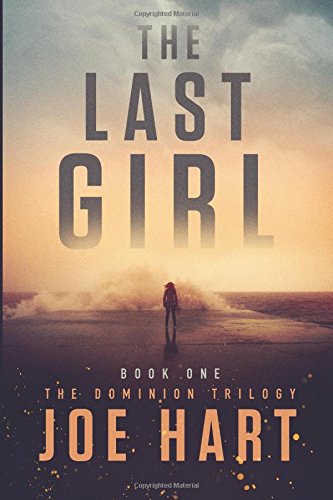
I shouldn't have waited. The Last Girl is a stunning commentary on gender equality and the factors that make it difficult to achieve. The premise: a virus that has made it vanishingly difficult for girl-children to be carried to term. By the time Zoey and her friends are born, there are very few women left. The prepubescent girls live in a prison-like school, supported by women teachers, male mentors and their sons. The girls are all being groomed for the day they will "graduate."
The problem is, no woman ever returns to the "school" to report what happens after graduation.
I kept being reminded of The Island, the movie with Ewan McGregor and Scarlett Johansson (which was supposedly based on the novel Spares by Michael Marshall Smith.) In the movie, clones are told that they are privileged to live on their idyllic island. Actually they are being held in reserve as spare parts for their donors. I wondered if, like Johansson and McGregor, Zoey would escape with her mentor's son, a sympathetic fellow who may have smuggled books (The Count of Monte Cristo, the ultimate escape fiction) and other contraband to her.
But the tale runs deeper than that; and even once she has won free of the sinister school and its graduation program, Zoey still is not liberated from the restrictions imposed by the scarcity of her gender.
This novel is the first of a planned trilogy. The story stands well on its own, however, and the promise of additional novels is an added bonus. We'd like to find out if it's possible for Zoey to achieve an equality that doesn't deny the extra abilities of her gender.
If she can, there is hope for us all.