Somewhere around 2:25 pm PST, I wrote the last word of the first draft of Roger and the Meteor Mass. My 2015 NaNovel came in at 93K+ words, but something didn't seem right.
You see, I assembled the draft from several working copies, including scenes I had written as working notes from my Kindle, flash-fiction pieces for Charli Mill's Carrot Ranch Flash Fiction Challenge, and chapter-by-chapter texts composed in WrittenKitten.
My novel was plotted and outlined before November 1st this year, and I calculated it would be complete at around 90K words, plus-or-minus 500. Definitely not plus 3000!
I took my validation text online to half-a-dozen different duplicate-text finders. Each found one or more duplicates where I had assembled parts into the mix more than once. After about a half-hour of editing, I resubmitted for validation, and the final total matched my expectation: 90,493 words.
Before I put my "manuscript" away on the thumb drive, here's a final excerpt from the initial scene-setting for the town of Meteor, featuring Roger's initial encounter with yet another Mass member:
The window of the bookstore in downtown Meteor was Roger's first stop. He was surprised to see one of his favorite techno-thrillers featured in a stack of books labeled, "Great Summer Reading Selections." Maybe the stock inside wouldn't be as lame as he feared.
He decided not to go in, though. He hadn't brought a bike lock, and despite the casual way they had left the car open earlier, he still wasn't sure it was safe to leave things unlocked in the new town. Instead, he walked along the shops, peering into the drugstore, and passing a sinister-looking metal door with a barred window at eye-level.
He craned his head back to read the sign overhead: "Flater Beer & Eats" was wrapped around the picture of a foaming mug. A smaller sign on the door had been amended with an extra "t" in the name: "Flatter Beer & Eats." The door seemed to be locked tight, and the windows on either side of it were opaque black squares mirroring the street behind him.
The next shop seemed to be a real estate office, based on the sun-bleached prints of property photos that covered the single window. An angled wall made a nook to shade the shop's glass door. Roger scanned the offerings on the inside of the glass. Here was a barn conversion touted as a "quaint family dwelling on large lot." In the corner was a tiny building, listed as "two bedroom, one bath, starter home."
Just above it, Roger saw a picture of the house they had just moved into. He read the description, curious to see how it was described. "Three bedrm, two and a half bath, full grg." Half-bath? Roger supposed that might be the guest bathroom next to his bedroom, even though it had a shower stall in it. Maybe they meant the second bathroom upstairs.
The description continued: "Two story and cellar. Asking negot., see agent." So there was a cellar. Roger wondered where the entrance was. Maybe outside? The house they'd lived in when the Pierces were in Missouri had a storm-cellar with a door outside, but it had also had stairs that led down from inside the house. He resolved to check when he got home.
He rolled on, ignoring shops offering infant clothing and picture frames, until he reached the end of the block. Past this point Meteor became residential again until the high school. Roger crossed carefully over the highway main street, and turned back toward the new house.
On this side of the road, a small movie theater anchored the block. On the far side was the cafe where they had eaten dinner the night before, but on the near corner was an intriguing shop called "Marv's Marvels." The windows were filled with video-game boxes. Roger recognized some of the games. Along the brick wall on the other side of the door was a bike rack of the kind Roger's Dad always called a "toaster rack." Peter Pierce had taught his son not to lock his bicycle to such flimsy structures, but to look for pipes, metal railings, and other substantial, solid substitutes.
Marv's Marvels was apparently a popular place for the locals; three nice bikes were racked loose in the slots of the toaster, and one "beater" bike was locked to the curve of pipe at the end.
As Roger tried to see inside the shop, a raucous crowd burst out through the door, pushing past him on the sidewalk to unrack their bikes. "Way to beat that high score, Darrell!" said one boy, slapping the largest kid on the back. "Yeah, Harb's the greatest!" shouted another.
The largest, Darrell Harb according to the praise-shouting crowd, lifted his bike out of the rack and whipped it around, knocking Roger's front wheel askew as he did so. "Watch it," he snarled at Roger. "Keep outta my way!"
Two of the others backed their own bikes out of the rack, and the whole crowd crossed the highway, some riding, some walking or wheeling bikes. Roger watched them head toward the high school.
He racked his own bike loosely, and opened the shop door to peek inside. He was unwilling to leave his ride untended, but hoped he could see enough from the doorway.
A double bank of arcade games led away from the door, beeping and buzzing an invitation to drop quarters. All the way at the back of the space, Roger could see a glass counter with boxed product displayed in it. At the last machine, a young kid worked intently at the controls.
The rail-thin clerk leaning across the counter was totally focused on this game, and said without looking away, "Come on in and close the door, kid! Yer lettin' in flies!" Roger closed the door, but stayed close, keeping his bike in the corner of his eye.
"Close! Oh, so close! Keep it up!" The clerk was encouraging the player. "You can beat that last score!"
Without shifting his focus in the least, the boy said, "'Course I can. Harb is good, but I'm way better." With the last word, he beat out a quick series of moves, and was rewarded by a tinkle of sound from the game screen.
"High Score: 380,274" the clerk read triumphantly. "Did it, Mikey! You didn't even have to break a sweat!"
"The day I can't do better than Darrell Harb, I'll eat my latest owl's nest." His tone was scornful. "But you better erase my score, or you'll never get any more of Harb's quarters."
Roger thought the arcade showed promise, and the kid Mikey might be worthwhile to get to know, but he was still nervous about his unlocked bike, so he scooted back outside. If the size of Meteor was anything to go by, he'd meet up with Mikey again in the small town.
On the other hand, Roger mused, that meant he'd be meeting the unpleasant Darrel Harb and his buddies again, too.
Word Count: 7538 Day 30 and 90493 Final Total
I managed to "win" NaNoWriMo by the third week this year, but there is still more of the NaNovel waiting to be revealed. To me, as much as to the world!
By dint of some really early mornings, a couple of midnight revels, and diligently following a plan to write Every. Single. Day. I have reached Day 29 having written not only 50,000 words and more, but also having met my daily goal of 2500 words or more. Just two more days, and then November is over.
According to the plot and outline, there are 10,000 words or so still to be written. By doubling my average output for the next two days, I may be able to actually finish the first draft of my NaNovel in November this year.
I plan to do two more midnight sessions, in addition to my regular writing hours, effectively doubling up for tonight and tomorrow, the final day of the month.
When the writing month is over, I will refocus on the Ken Cummings memoir, Meant to Be Here. Kenneth has been kind enough to wait while I produce my fourth NaNovel, but I know he's eager to get back to our collaboration.
Word Count: 2568 Day 29-First Session and 80955 Total
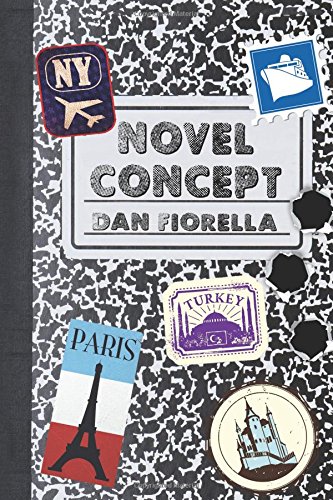
Like so many New Yorkers, Max Federman has a book in him. The problem is he wants to write a hit, but the book his publisher wants is a non-starter for the best-seller list.
Max reads those book lists; he knows what readers buy in droves. They want "rich-girl meets poor hunky guy and falls in love." They want "unknown beauty captures heart of royal heir." They want "daring spy assists voluptuous twins win revolutionary glory."
They want fantasy from a world Max has never dreamed of, let alone lived.
Rather than write the book he has thoroughly researched, the one his publisher desires, Max sets out to research the popular concept instead. Armed with the wit that Max Shulman used to give all his protagonists, Federman boards a cruise ship to Paris (persistently listed as "S.S. Gauche, bound for France" in the text), and proceeds to step into every social awkwardness a clueless stowaway can find.
Max lives in a section of NYC "inhabited by many aspiring creative types: writers, actors, musicians, performance artists, and, up until the tragic yet much appreciated Great Pantomime Massacre of ‘08, mimes."
He attracts the love of the "heiress to the French frogleg fortune," Candice LaPortune, who has chosen "an idyllic ocean cruise over the whirlwind body cavity search that was air travel." His shipboard romance novel is well underway until he is side-tracked by murder, and being tossed overboard into a crime novel.
Max barely gets into the drug syndicate mileau (in France, naturally, home of the "French Connection") before being pitch-forked into a psychic-prison-escape scenario in Turkey, from which he is railroaded into revolutionary intrigue in the near-kingdom of Lacertosa. You know, where Lucky Lindy landed before realizing it wasn't France.
My favorite comic novel of all time is Barefoot Boy with Cheek by Max Shulman. What Shulman did for college life, Fiorella has done for the popular concept novel.
Novel Concept lies for me in the field of second-place ties for comic best, after Shulman's classic, alongside any adult novel by Christopher Moore or Dave Barry. And Fiorella may be edging Moore and Barry slightly.
Liner Notes
- Fiorella has a habit of using the suffix "-esque"—complete with hyphen—which would be fine if only it were spelled correctly. (He consistently renders it "-sque." I gritted my teeth so hard, I popped out a filling!)
- On the other hand, he references Danny Thomas, Charles Lindbergh, and Charlie Callas, admonishing the reader to "Google them" if confused.
- A sneaky collection of linked footnotes includes its own joke.
- I loved the ending, but it only works if you come to it naturally. Don't spoil it for yourself! (I certainly won't.)
At this end of November, the NaNovel is looking less like a net and more like a solid fabric with a few runs and holes in it now.
Before the groaning-board was fully set for the feast yesterday, I brought out this bottle we bought at a combination gas station, convenience-and-liquor store, and camping-gear outlet on our way to the Clown Motel in Tonopah, Nevada last month.
In case you cannot read it, the label calls this a "pie-oneering whiskey" made by blending Canadian Whiskey and Pecan Pie Syrup. Ever poured whiskey over a slice of pecan pie? Me neither, but if you did, I expect it would taste like this.
Meanwhile, my nearly 74K words looks like this, where solid lines are written portions of the draft, and dots are plotted, but not yet written:
I expect the end of November will see the holes on either side of the "hinge" filled in, and filling the larger gap leading up to the climax will take a little bite out of December.
The experience of writing a plotted novel has been mixed, but mostly good. I will probably move to more plotting for future novels, rather than less.
For now, with a handful of days left to the experience of NaNoWriMo 2015, I will build a turkey sandwich, pour a glass of iced tea and dope it with Piehole whiskey, and get busy filling in the various holes.
Finally, I have to share the real reason I bought this bottle of weird potability. That slice of pie on the back label is the UPC (bar) code. How clever is that?
Word Count: 3923 Day 26 and 73832 Total
About one-quarter of the way through the plotted storyline for Roger and the Meteor Mass, I had jotted a note that I would need a new character to join the Meteor High School outsider-group, one who would not be a member of the extended Mass family.
I tiptoed around the beginning of his or her advent three times, each time abandoning it half-complete. It didn't stop me; I would simply go past it to write the later parts of the story. Plotting makes that possible, but my preference to write a story from the beginning through the middle to the end made it uncomfortable.
Meanwhile, the Carrot Ranch Flash Fiction Challenge prompt for this week had me dodging and twisting, trying to come up with a dance scene to add to my NaNovel (when I really hadn't planned to include one):
November 18, 2015 prompt: In 99 words (no more, no less) write dance into your story. Twirl your characters round and round or stomp your plot onto the page. Use dance in any way that comes to mind. Be specific or free, tango or disco.
In the back of my head, the genie who actually writes my stuff finally came through with a solution for both dilemmas. The paired solution could then be massaged to meet the challenge of Charli Mill's prompt.
Meet Kirby Dean, whose Meteor-alien nature comes by way of early schooling in Europe and a preference for the kind of football Americans call "soccer." He has a deep secret that could spell social doom when the Meteor bully, Darrell Harb, discovers it and decides to reveal it to the whole school.
His secret? He's been dancing ballet from the time he was seven years old. But Kirby has a secret weapon to go with this social stigma, and he's not afraid to unleash it.
_____________________________________________
Pas Jeté
From the stands, Roger and the girls could only watch as Harb's bully-buddies dragged Kirby onto the field. "C'mon, 'ballerina'!" Harb shouted, "show us how a soccer fairy kicks a REAL football."
They kept him off-balance until the group jerked to a halt behind the ball on its stand.
Kirby nodded sharply, committing himself. With an elegant sweep of his leg, he tripped Harb, calling "Rond de jambe!" Then, "Couru, Jeté!" with three quick-run steps, he loosed a powerful kick that lifted his foot above his head, sending the ball flying.
Giving a triumphant ref's sign, he screamed, "GO-O-O-AL!"
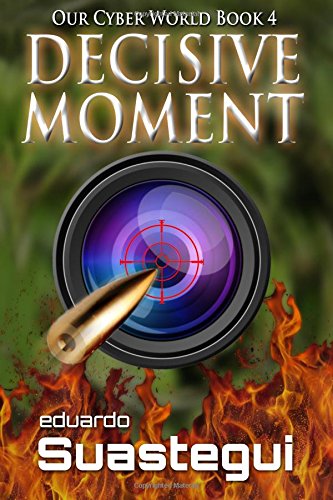
Thus far, Suastegui's Our Cyber World series seems to divide into two sub-series: hacker-photographers and sniper-photographers. I've been enjoying the heck out of both sub-series, in large part because the paradigm of photography, framing the shot and capturing the moment, is used to good effect in setting the scenes and telling the story.
This episode brings several sharpshooter-turned-snapshotters together in a single story, with solid links to the quick eye and snap judgement that both tasks require.
Suastegui's women are of a similarly consistent kind to his heroes (in this series, at least.) They are all slightly amoral, hot, and intelligent, and are willing to be deeply involved in whatever action the guys are getting into. I really appreciate that, especially when it is obvious that the men are strongly inclined to be protective, and find it hard to accept that the gals are just as happy to pull some triggers.
I liked the protagonist of Decisive Moment, Roger Morris, much better than his brother (who doesn't deserve the help Roger keeps giving him), but not as much as Andre Esperanza, the other sniper-photographer from two previous novels, Pink Ballerina and Active Shooter. A third sniper character, Jesse, doesn't appear to have any pretension to fine art photography—but there's always a sequel!
I was able to read and enjoy this novel out of sequence again, which is one of Suastegui's strengths. Each novel stands on its own, braced in a shooting position, and ready for the decisive moment. Whether film or bullet, he always scores, so far at any rate.
The "hinge" is one label for that moment on a story's arc represented by the hyphen in 'problem-solution'. Until the hinge is reached, the action is all building conflict, after it the action is discovering and applying the solution.
Sometimes the hinge and the "mirror moment" described by James Scott Bell in Write Your Novel from the Middle are the same.
Bell writes that the "mirror moment" is usually smack in the middle of the book, and sometimes involves an actual mirror. In this scene, the protagonist confronts his own nature, and solidifies his own sense of his identity. This perceptive insight frees the protagonist to pass the hinge.
Self-discovery may help the character decide to apply a solution he has discovered. It may lead him to search for a different answer to his problem. It might even provide a complete turn-around to the story, as he replaces the first problem identified with a completely different conflict.
This is why Bell recommends that writing the mirror/middle scene can make writing the rest of the novel easier.
For the past week, I have been reading for the first time the quintet of novels by Orson Scott Card that begins with Ender's Game. In that first novel, I was amazed to find an obvious mirror scene, in the exact middle of the novel. Eight-year-old Ender Wiggin has been training in an intently-focused way to command starships in the battle against the distant enemy alien Buggers, when they attack again.
In his free time, Ender and all the other boys he is competing against play the Fantasy Game, This video game is supposed to end with a scenario called the Giant's Drink, an unwinnable contest which measures the boys' willingness to keep trying. (In that, this is like Star Trek's Kobayashi Maru simulation, which James T. Kirk notoriously cheats his way through at Starfleet Academy.)
Ender surprises the designers of the Fantasy Game, who are observing, when he finds a way to win against the Giant, and the game immediately takes him to another hard-to-win scenario that involves a mirror. What he sees in the mirror is not himself, but his older brother Peter, and this informs not only the rest of Ender's Game, but also has repercussions through at least the next three novels as well.
In plotting Roger and the Meteor Mass, I have planned three different hinges. One is a mirror moment, in which the mirror is Roger's perception of himself through the eyes of his mother as they both watch his baby sister pretend to be a cat. While it is not written word-for-word, I have "watched" this scene in my mind's eye many rimes now, and have figured out what insight it gives Roger about his oddness.
The fact that I am past the "half-way" mark in word count, but still haven't reached this moment in my novel, tells me that this book (at least in its first draft) will be longer than 50,000 words.
(Written November 12, but not posted until November 16, 2015.)
Word Count: 2477 Day 11 and 26912 Total