Tuesday, November 22, 2016

Unsuspected Value: Chick-fil-A Calendar Cards

Review: Chick-fil-A 2017 Cow Calendar "No Pain, No Grain"


Yes, this really is a review of a calendar. If you haven't encountered the Chick-fil-A cows, they are a family of bovines with decidedly human lifestyles, and atrociously poor spelling. As I write this, I sit in my favorite writing corner of the local Chick-fil-A restaurant, savoring my breakfast of hot chicken tortilla soup underneath a poster of a cow who has just chewed the signature motto "Eat Mor Chiken" out of the leaves on a wall covered with foliage.

In the 2017 calendar, the cow family sweats their way to fitness in a variety of athletic endeavors: cycling, running, working out and otherwise exercising those muscles we rarely think about cows possessing. Probably the cutest image is "Mommy and Moo" with the mama cow exercising her calves in a sweet Pilates lift.
And while the humorous images make it a good calendar to hang on the wall, the real value in this $7 item is the card on the back. You register the card online, and once a month, it is good for a menu item from the Chick-fil-A list. Each month has its designated freebie. In January 2017 you can choose between the "Hearty Breast of Chicken Soup" or the "Chicken Tortilla Soup." Half of the year's worth of offers are a mystery, and half are listed items.

The key is that even the six listed items for 2017 will provide you with up to $20.56 in benefits, almost three times the cost of the calendar. To compare, from the 2016 Cow Calendar, the maximum total benefit for the $7 price turned out to be $43.85, over six times the initial cost.

Here's the way to parlay this into really major savings: buy calendars for Christmas gifts, but remove the cards and register them to yourself! I'm not too chicken to admit I do this, but only for friends and relatives who live nowhere near a Chick-fil-A.

The savings—like the chicken tortilla soup—are just too good to pass up!

Saturday, November 19, 2016

Fault vs. Responsibility: Dangerous Ideas for Our Time

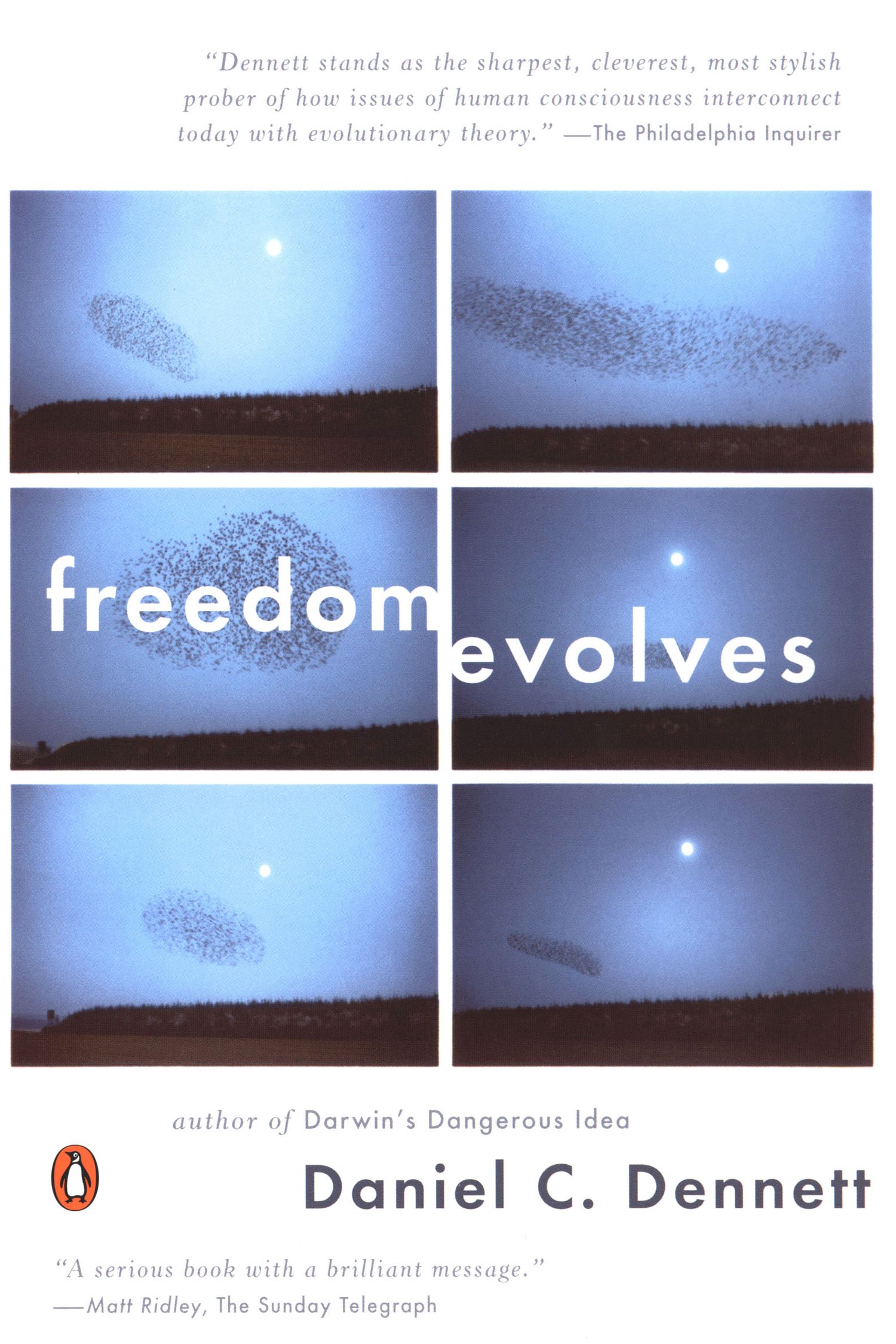
Review: Freedom Evolves by Daniel Dennet


Daniel Dennett is my favorite philosopher, for many reasons. One trivial reason: he writes to communicate, not obfuscate. On second thought, that's not trivial at all. His works on paper include web links, for another, and he chooses accessible illustrations to make his points. 

In the first section of Freedom Evolves, Dennett is discussing whether determinism—the idea that all outcomes/choices/decisions are set by the initial conditions, that "everything's fixed, and you can't change it," as 
Andrew Lloyd Webber's Judas complains to Jesus—means that no one is responsible for their choices in life. 

To illustrate that 
whether or not you believe in it, determinism cannot affect guilt, Dennett tells the story of the French Foreign Legionnaire who is hated by all at the fort. Tom, knowing that he will be sent on patrol the next morning, poisons the water in his canteen. Dick, unaware of Tom's actions, empties the Legionnaire's canteen and fills it with dry sand. Harry, also unaware of the previous interventions, pokes a small hole in the canteen so its contents will trickle away as the hated fellow marches out in the morning. When the Legionnaire does march off into the desert with his adulterated canteen, and eventually perishes of the lack of potable water, which man is responsible for his death? 

Dennett has said of Freedom Evolves, "If I accomplish one thing in this book, I want to break the bad habit of putting determinism and inevitability together. Inevitability means unavoidability, and if you think about what avoiding means, then you realize that in a deterministic world there’s lots of avoidance. The capacity to avoid has been evolving for billions of years. There are very good avoiders now. There’s no conflict between being an avoider and living in a deterministic world. There’s been a veritable explosion of evitability on this planet, and it’s all independent of determinism." [Emphasis mine, Dennet quote from a 2004 interview in ReasonOnline] 

Exercise for the reader: Was the Legionnaire's death by dehydration avoidable?*

This review is a brief visit because this is not a book to be grasped in a quick scan; that's the main reason I like Dennett's work. I read several pages, then sit back, stunned by the light of reason. Aha! And I must go reread this article, or that book, or even turn back to reread a few pages in Dennett, in the light of that new understanding. 

"Inevitable" is a word I'm hearing a lot these days. So is "guilt," and "blame." Dennet helps put them all into perspective for me.


Liner Notes:

My involvement with Dennett pre-dates this blog by decades; Darwin's Dangerous Idea was the my first encounter. I enjoyed the philosophical exploration of this scientific revolution, with its the pro-and-con arguments from Darwin's time and ours so much that I went Dennett-hunting. Consciousness Explained was next. I found this the toughest to read, because I was also reading Stephen Pinker's How the Mind Works at the time, and many of Dennett's thoughts on Thought run counter to Pinker's. Then I got Elbow Room: The Varieties of Free Will Worth Wanting, and had to reread both of those books in the light of what I learned. All, including Freedom Evolves, are now available on Kindle.

Other writings by Dennett are available on the Web: The Bright Stuff and Two Brights Side-by-Side are on The Brights web site. Kelby Mason does a good job of boiling down the naturalistic world view in Thoughts as Tools: The Meme in Daniel Dennett's Work. 
Google "naturalistic" or "determinist" plus "Daniel Dennett" for more. You may also be interested in the TED Talk: Dangerous Memes.

*And the Legionnaire's "inevitable" death? There was a fourth man involved with his canteen, the only one who ultimately needed to rely on its contents, whose responsibility it was to make sure the canteen was functional, and filled with clean water. A fourth man, who might, had he thought about it, have suspected that the canteen might have been tampered with. So while his death in the desert was not his fault—I'm not blaming the victim—it certainly was avoidable.

Monday, November 14, 2016

Growing Up, Growing Better

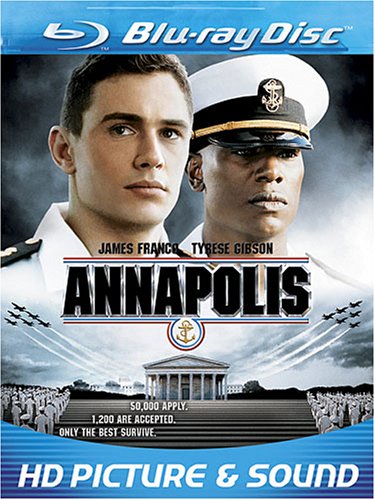
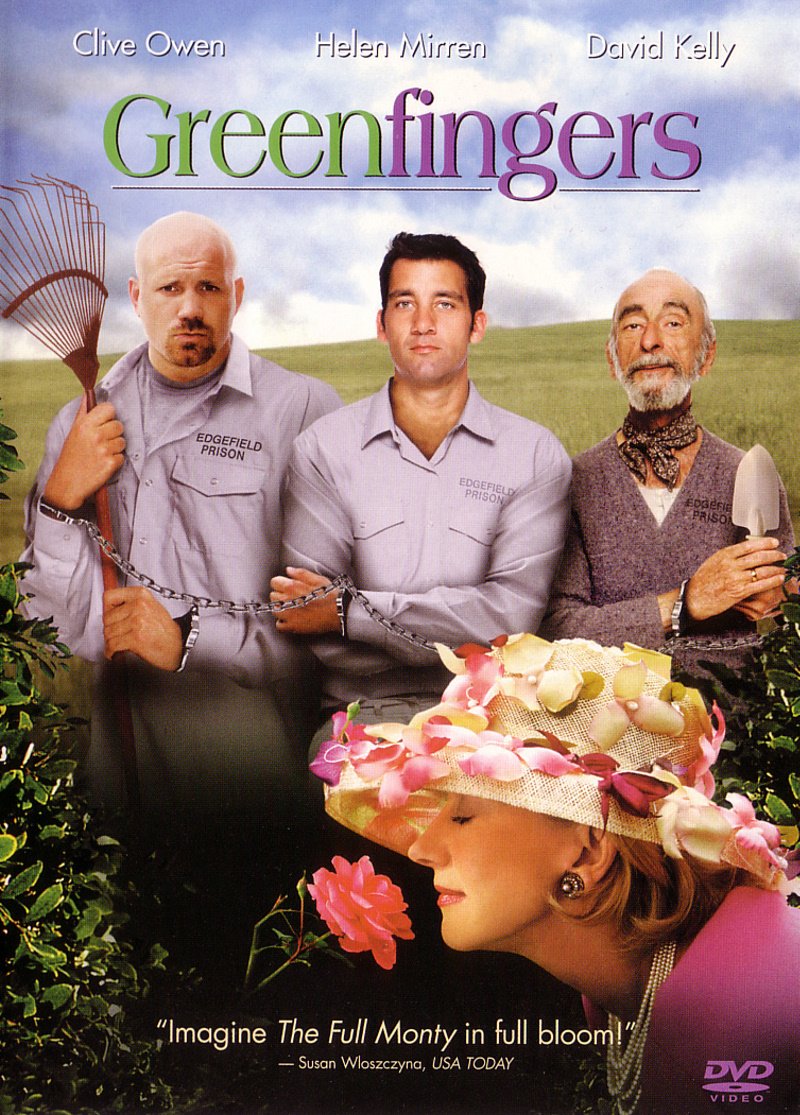
Review: Annapolis with James Franco, Tyrese Gibson, Jim Parrack; Greenfingers with Clive Owen, Helen Mirrin, Danny Dyer


Life after the semicolon; what changes in us after a disastrous life-turning event depends on what follows after. Do we wallow in victim-hood, or do we move on, up, and out of the pits life has landed us in?

Good films with this theme are not hard to find; it is a common story for us all. I was particularly inspired by two movies that share this theme by telling two very different stories: Annapolis (2006) and Greenfingers (2000).


Annapolis 


This is the tale of a ship-fitter, Jake Huard (played by James Franco), working for his father's construction crew on the docks across the river from the prestigious Naval academy. Jake's dream is attend Annapolis, but he was wait-listed when he applied. So he fills his days with the hard work of a welder and riveter, and his leisure with training as a boxer.

We first meet Jake as he prepares to go into the ring against co-worker AJ, a taller, heavier boxer. (AJ is portrayed by Jim Parrack, who was a main non-vampire character in the HBO True Blood series.) Jake refuses to fight as directed by his father, closing with the larger boxer and defeating him despite multiple knock-downs. The naval officer in the crowd of dockworkers, conspicuous in his whites, has come to offer him a place at Annapolis. Lt. Buxton (Donnie Wahlberg) comments on how unusual it is for an application to come from someone in Jake's position. We get another glimpse of Jake's persistence thereby: he had apparently pestered a Senator daily for over a month to help.
   People who live in Arkansas, you know what their favorite state is? Mississippi. Cause Mississippi's the only thing that keeps Arkansas from being the worst state in the whole country.
   I'm Mississippi.
   Well you sure as hell ain't California. Listen, Cole and Whitaker are so busy tryin' to run you out they forgot about me. As a matter of fact, they've forgotten about every other plebe in this whole company.

For Jake, the "semicolon" is not just leaving the comfortable environs of family and friends to join the company where he will be "boxing over his weight". It is facing life-crippling bias. Jake grows his life in the direction he chooses by feeding his habit of persistence in the face of prejudice, and staying true to his dreams. 
Some of you have only known success your entire life. But this year, your plebe year, you will know failure... because failure is a far greater teacher than success.

And that's the point. Failure is not a stopping place; it can be a launch-pad to success. One only has to survive, and persist.


Greenfingers


The theme I'm exploring, improvement over one's past, might seem to be belied by the opening scenes of Greenfingers, in which we see Colin (Clive Owen) stealing a bouquet of yellow roses and being reincarcerated in a British prison. But all is not as it seems in this movie based on a true story.

Immediately after the initial looting scene, we flash back to Colin's life in prison just one year prior. Facing his parole board, he learns that he is eligible for transfer to a new program in a lower-security prison. He's become resigned to his imprisonment, and tells the board, "If you don't mind, I'd just as soon not change."
Fergus: [Waking up and seeing the flower on the nightstand, then seeing Colin, who had received the flower as a parole gift] What's that old thing doing back here?
Colin: It wasn't ready for the outside world.

Nevertheless, he is transferred, and assigned a roommate, Fergus (David Kelley), and a grim job dealing with the prison toilets. For Colin, there is little to choose between his work and Fergus, whose cheerfulness in the face of life is an affront to Colin's pessimism. He tries, but Fergus refuses to be shut out. Eventually, they bond over the planting of a packet of violets in the snow, and protecting the fragile flowers that bloom despite Colin's conviction that they are doomed.

Like the violets, Colin and the other convicts who become involved in building the prison's formal garden bloom in the regard of professional garden-writer Georgina Woodhouse (Helen Mirrim).

The moral is that just as winter and death are inevitable, so too are spring and the flowering of whatever seeds we plant. The path to improvement for the convicts of Greenfingers was to choose which seeds to plant, and then tend then carefully.

One need not be a gardener to see the truth in that.

Saturday, November 12, 2016

Not Since Mad, Mad, Mad, Mad World

Review: Dancing Aztecs by Donald E. Westlake


There was a time when the Hustle was the dance we were doing, when a million dollars was a prize worth scrambling for—even in a city known for its hustle, NYC, that collection of "small towns and neighborhoods," where to daily life, "the fact of Manhattan upthrust on the horizon meant nothing."

In typical Westlake style, the story begins with a con game, building a cast of idiosyncratic characters, acting in their own self-interest, in expectable, even stereotypical ways. Their dance with each other creates a chaotic, unimaginably complex tangle of events and motivations, with a truly unexpected finale.

First, though, Westlake takes the entire first chapter of this book to list all the things people want in New York. A few that stood out to me:
The Parks Department is looking for trees to cut down and turn into firewood for local politicians. Residents of the neighborhood are looking for politicians who will stop the Parks Department from cutting down all those trees. Fat chance... 
People at the top of the Guggenheim Museum want to get to the bottom. So do ass-pinchers, river-dredgers, and investigative reporters... 
Blacks want to be equal. Women want to be equal. Puerto Ricans want to be equal without having to learn a new language...

Yes, the novel and its language are decidedly not PC. Keep the story's venue and era in mind as you read; the term "political correctness" was not yet even a twinkle in Richard Bernstein's eye. Characters are described using pre-PC stereotypes, in a way that would surely trigger sensitivities in the current social climate. Yet it works, the same way those stereotypes worked in the insanely funny 1963 movie It's a Mad, Mad, Mad, Mad World.

The scramble for riches, with an ever-widening crew of obsessed participants, reminds me of that movie as well. The big difference, of course, is that Mad, Mad World is about "kind, decent folks turning into law-breaking lunatics and ruining their lives for the sake of money." In Dancing Aztecs, folks come into the story already at that highly-cynical level, and proceed on the same lines throughout, albeit at an increasingly intense pace and focus. In both book and movie, the result is wonderfully hilarious.

None of the English covers provided a good visual for the statuette that is the eponymic center of the story. I had to go hunting. I found the best on the cover of the Italian mystery-translation series, Il Giallo Mondadori, which gives a good sense of the figurine's lack of beauty, if not its leg-up dancing pose or its crystalline eyes.

Every time I have picked up a Westlake novel, it's been the result of "outside forces": a clever review, a friend handing me the book with a "you must read this" comment, or a coincidental lack of other reading material at an idle moment. And I've never not enjoyed the thing excessively. So I don't quite know why I never collected the author's work as I have others whose writing I enjoyed.

That is about to change. Because epic wild rides like this don't come along too often, but if you miss them when they're new, you can always climb on once they come around again. 

And if ever this mad world—and I—needed such a diversion, it is surely now.

Wednesday, November 9, 2016

Shearly Wonderful with Absolutely No Message

Review: Shaun the Sheep Movie with Shaun, Bitzer, and The Farmer

I was really happy to see this clay-mation comedy turn up in the Amazon Prime movies list, just in time for my anti-election-returns movie binge. My spouse and I watched it on the 8-inch Fire Tablet, and enjoyed every goofy sight-gag, fart and manure reference, and running joke in the show.

For those who missed the Shaun the Sheep TV series—me among them—a quick recap is provided at the beginning of the movie, showing the lamb Shaun tenderly tended by The Farmer, gently gambolling with the puppy Bitzer, and generally enjoying life on Moist Bottom Farm.

Quick transition to present day, in which Shaun sleeps in a shed-sized barn with a fat spider overhead, and The Farmer follows a deeply-rutted routine of feeding, then shearing, his sheep. Shaun recruits the other sheep to assist in a plan to disrupt the routine by fooling The Farmer into staying in bed all day so they can have a day off.

Plans, as they tend to, go awry, and The Farmer winds up in The City, an amnesiac "Mr. X" with a thriving hair-dressing business (due to his long-honed skills at shearing), and it's up to Bitzer and the sheep to rescue him and bring him home.

Best thing about it? Absolutely no words. Not even from The Farmer and Shaun's human nemesis, the Animal Containment guy. Murmurs, shrieks, baas and barks, but no words. For zany antics and a complete lack of message—even "there's no place like home"—it is hard to beat Shaun as an antidote for the sturm-und-drang angst of election returns. 

And the doo-wop sheep chorus near the climax? Shearly brilliant.

Zeitgeist of the 80s


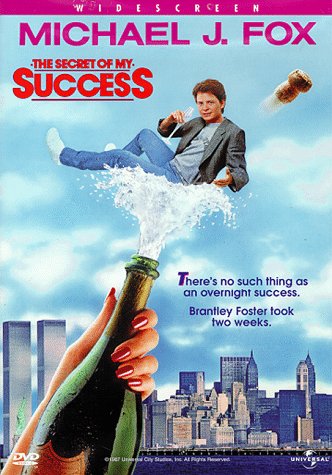
Review: The Secret of My Succe$s with Michael J. Fox, Helen Slater, and Richard Jordan


Remember the 80s? Those of you who were alive and aware then recall a time when the question wasn’t “will I ever find a job?” but “how fast can I get promoted?” Distilling the cream from the corporate life was a strong theme in the 80s—and since this was when I began my own checkered career, it resonates strongly with me.

Michael J. Fox was the poster child of those years. With movies like The Secret of My Succe$s, For Love or Money, and Doc Hollywood, Fox seemed to capture the image of the naive newcomer to the corporate ladder, yearning for the big score, but wanting to do it right. Playing off his highly-successful TV role as the conservative son of two ex-hippies in Family Ties, Fox caught the Zeitgeist of an era, and spun it well into the 90s.

Although all three of these movies share some of the 80s spirit, none is so evocative of the time as 1987’s The Secret of My Succe$s, whose tag-line was “There’s no such thing as an overnight success. Brantley Foster took two weeks.” Fox’s Brantley Foster is a college graduate with a fire in his belly, come to make it big in the big city. There he runs into the barriers a farm-boy might have anticipated.

Brantley Foster: No! No exceptions! I want this job, I need it, I can do it. Everywhere I’ve been today there’s always been something wrong, too young, too old, too short, too tall. Whatever the exception is, I can fix it. I can be older, I can be taller, I can be anything!

Interviewer: Can you be a minority woman?

Desperate, he finally asks his uncle, CEO of a large organization, for a job. Working the mailroom wasn’t what he envisioned in his years of college, but he can always work up from there, right? But “you can’t get promoted out of the mailroom—you can’t even get paroled out of the mailroom,” according to the laconic Fred, his mentor at the bottom of the ladder.

The fun starts when Foster, delivering mail, walks into a newly-emptied office and answers a ringing phone. A frantic voice at the other asks for help, and Foster provides it. He’s hooked—he may be paid as a mail clerk, but he’ll do the job he’s trained for, despite them all. The result of this resolution is a wild scramble as Foster assumes a second identity. He will become “Carleton Whitfield,” a suit-wearing executive in “the lofty air of the big cheeses.” Using the knowledge he has gleaned by reading the executive memos and corporate reports before he delivers them, Foster fleshes out his alter ego by creating orders for business cards, his name on the door, and an assistant from the secretarial pool.

The bedroom-chase farce that results from Foster’s need to dress for success whenever he’s masquerading as Carleton Whitfield, but dress down to allay the suspicions of his eagle-eyed mailroom supervisor, is simply hilarious. As his secretary, Jean, says, “I was having fun on this job! You had all this energy, and all these crazy ideas… and you kept taking your pants off.”

The sexual side of things is just as confused, for the same reasons. As “Brantley Foster,” he is assigned to drive an executive’s wife home. They wind up in the sack together before Brantley finds out that she is his uncle’s wife. Fortunately, the sexually aggressive “Auntie Vera” Prescott decides to help Foster up the corporate ladder while she helps herself to his boyish charm. Meanwhile, as “Carleton Whitfield,” Foster has become enamoured of a lovely corporate penny-pincher, Christy Wills—who just happens to be sleeping with his uncle. Coupled with the dual identity Foster is sustaining—which his aunt and uncle know nothing about—this results in a real French bedroom chase near the climax of the movie.

Howard Prescott: Let me get this straight – Brantley is Whitfield?

Brantley Foster: That’s right. Brantley is Whitfield; Whitfield is Brantley.

Vera Prescott: And Christy is the bimbo! Well, now that we’ve all had Mouseketeer roll call, I’m just going to go call my lawyer.

Howard Prescott: [obviously lying] No, wait a minute. Christy is not the bimbo I was screwing around with at the office.

Christy Wills: People better stop calling me bimbo!

This movie is decidedly sweet. Even the hostile takeover—complete with the usually-genial Fred Gwynn in what amounts to a cameo as the “evil investor”—is un-bitter, and merely serves as a springboard for the irrepressible Foster to triumph.

There were real corporate issues in the 80s, and truly hostile takeovers in an era which added terms like “poison pill” and “greenmail” to the language. If you want a glimpse of them, I could suggest Barbarians at the Gate. But for the nostalgic charm of the corporate climb, devoid of the need to do anything but sit back and enjoy, I’d rather recommend this charming comedy.

I guarantee you’ll sleep better afterward.

Coping with the Crescendo

In the multi-year runup to the election this year, I watched the primary debates for both parties. 

Then I watched the candidate's debates, listened to the talk shows, read the Twitter feeds and the blog posts and the op-ed articles, online and in the papers. I carefully made my decisions, and voted first thing Tuesday. 

But this year, I departed from my previous practice with Presidential elections. I eschewed the minute-by-minute follow-up and analysis on the network and cable news channels Tuesday night. Instead, I watched movies last night. In between movies (comedies at that!), I checked the Google Election Results, with its simple count nd report of percentage votes tallied and electoral votes won.

And I checked it first at 7 pm, because we went out to dinner first, in a nice restaurant with no TVs blaring from the walls.

Guess what? I woke Wednesday morning without a headache, without a sense of depression, without feeling abused. And the results had nothing to do with it; living in California, I can pretty much assume that local and state-wide polls will go against my own choices. I try not scoff, because they're my neighbors. Though I do wish they'd quit putting their hands in my pockets!

All this is to say that I'm glad I unplugged before the final moments of this election. If nothing else, it gave me a couple of good movies to review!